Skip to content

Organize!

organize-iconWhether we are engaging in acts of resistance or creating new, alternative institutions, we need to create sustainable, democratic organizations that empower their members while also protecting against disruption. This section provides articles about effective organizing, creating democratic decision-making structures, building coalitions with other groups, and more. Visit the Resources Page for tools to assist your organizing efforts.
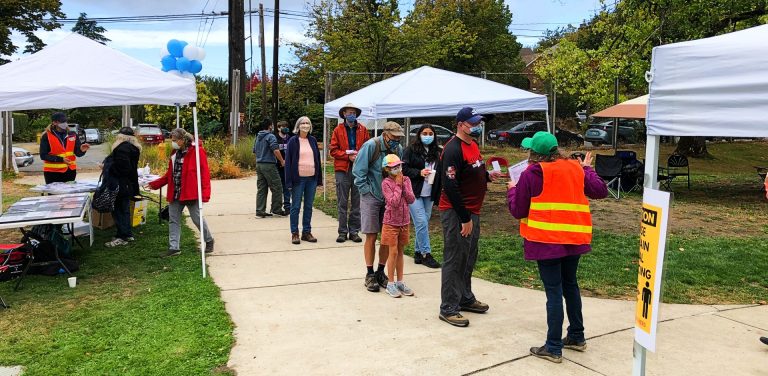
How Seattle’s Emergency Hubs Build A Disaster-Prepared Community

On Hanukkah Eve in 2006, a windstorm slammed into the Pacific Northwest. Wind gusts reached up to 100 mph along the Washington and Oregon coasts, and as high as 80 mph inland. Over 1.8 million residences and businesses lost power across the region. In Washington state alone, 1.2 million homes went dark. Puget Sound Energy reported 75 percent of its circuits damaged. The Seattle Post-Intelligencer couldn’t publish for the first time in 70 years. Eighteen people died, most from carbon monoxide poisoning in the days that followed as people ran generators in enclosed spaces.
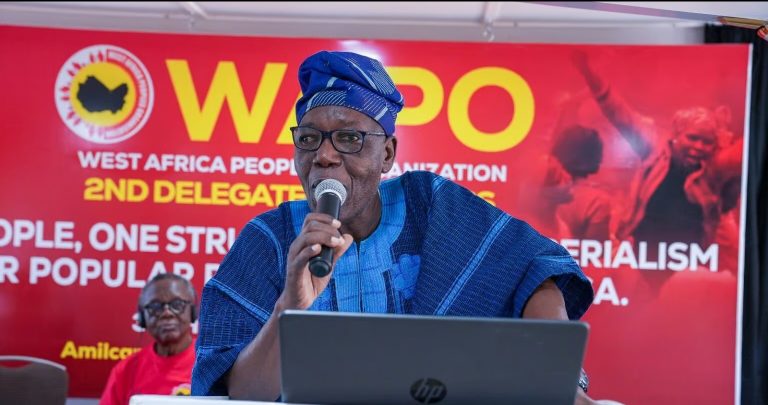
Building Popular Power Against Imperialism In West Africa

Under the banner “One People, One Struggle: Against Imperialism for Popular Power in West Africa,” the West Africa People’s Organisation (WAPO) convened its Second Congress at the Amilcar Cabral School in Agyanoa, Ghana, from October 31 to November 1. The two-day event gathered delegates from 29 organizations across 11 countries. Representing political parties, social movements, trade unions, peasant groups, and women’s organizations, participants assembled to construct a unified front against imperialist domination and chart a strategic path toward popular sovereignty across West Africa.

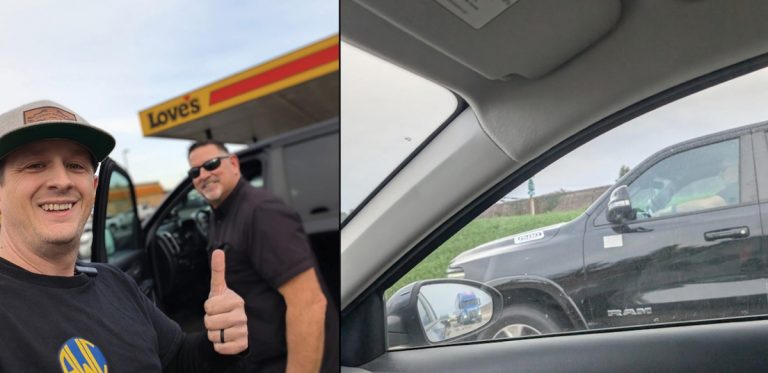
Reform Candidate Says UFCW Rep Tailed Him To Thwart Petition Effort

In a union that has been headed by one family with no competitive elections since 1984, a group of grocery workers is organizing for change. But this week, they say, union staff who back the incumbent administration went to outrageous lengths in an attempt to make sure there’s no election this year either. On Monday afternoon, Eric Marcuz, a veteran Northern California Safeway worker, stopped at the union office to pick up blank petitions to get on the ballot in the union’s upcoming election. Marcuz is running for president on the At What Cost slate in the 23,000-member United Food and Commercial Workers (UFCW) Local 8-Golden State, one of the largest locals in the union.

A Model For US-Mexico Cross-Border Solidarity

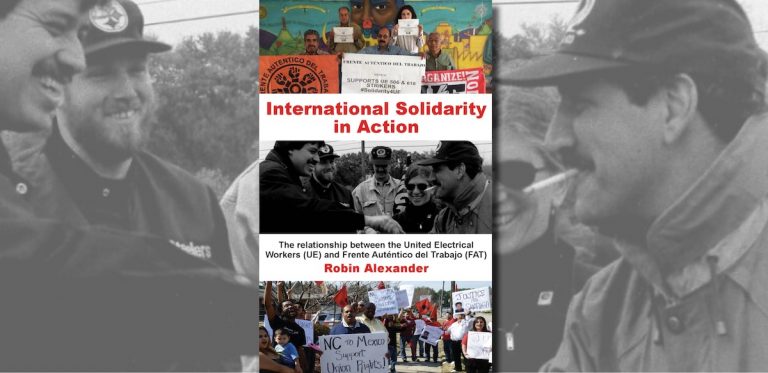
Labor law reform in Mexico has opened up a major opportunity for workers fighting for genuine, independent unions. What can U.S. unions do to support our brothers and sisters there? And how can we build cross-border campaigns to confront our common employers? Unions asking these questions will find valuable ideas in the e-book International Solidarity in Action: The Relationship Between the United Electrical Workers (UE) and Frente Auténtico del Trabajo (FAT), available for free download here. Author Robin Alexander, retired director of international affairs for UE, led her union’s partnership with the FAT, which began in 1992, during the campaign to oppose the North American Free Trade Agreement (NAFTA).

Setting The Stage For Growing Resistance To Carney’s Agenda

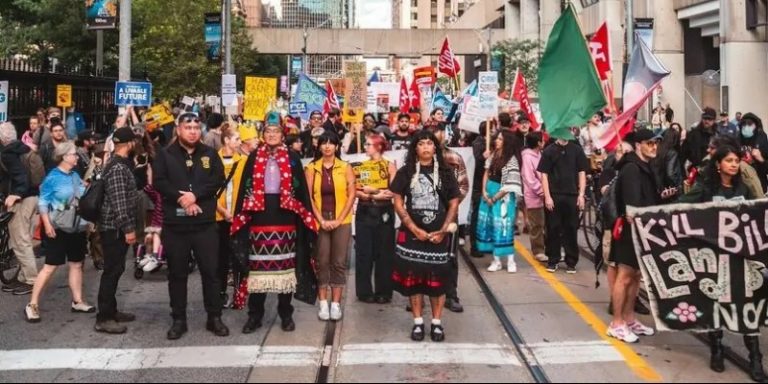
This past September, Prime Minister Mark Carney put together a summit of financial capital with a plan to pay for his neoliberal agenda of military investment, fossil fuel growth, extractivism, and attacks on working people and unions. In response, a large coalition of left-wing, environmentalist, Indigenous, anti-war, anti-capitalist, feminist, and Palestine solidarity organizations and activists organized a weekend of educational sessions, protests, panels, and workshops, culminating in a large demonstration to challenge that agenda. Initiated by the Council of Canadians, 8th Fire Rising, and World Beyond War, the “Many vs. the Money” counter-summit soon attracted over 50 other groups.

Bottom-Up Organizing: How We Got Clean Porta-Johns

The first day I showed up on the Marriott construction site in downtown Detroit, everyone warned me about the state of our bathrooms. You could smell them halfway across most floors. They were full in 24 hours, urinals were often clogged, and some people had taken to using buckets and hiding them in closets. Every electrician already had the same idea: we wanted the cleaning schedule changed from twice a week to three times. I had a long conversation with the steward about what had been tried. The first instinct of a construction worker is to “drag” (quit), drive over to the union hall, and pick up a new job. As expected, there was a steady trickle of drags, but no improvement to conditions.

Mass Worker Education: Governing From The Shop Floor

In Amazon’s vast logistics empire, warehouse workers and delivery drivers incur frequent injuries amid stringent performance monitoring and evaluation.1 The best data we have indicate that many workers are interested in organizing to improve their conditions, yet the same infrastructure used to relentlessly boost productivity is deployed to suppress collective action.2 Refusing to come to the table even when workers unionize, Amazon is looking to have traditional legal pathways for expressing worker voice abolished altogether—and its algorithmic systems given free rein.3

Members Alarmed By End-Run Around Democracy At Health Care Local

Things had been tense for some time inside the leadership of Communications Workers (CWA) Local 1168, a 4,800-member health care union based near Buffalo, New York. Still, it was a high-functioning local with a busy calendar of events, stewards handling grievances, organizers pursuing leads, and leaders organizing at work. So it was a surprise to members in June when their parent union, CWA, put the local into trusteeship, at the request of the local’s president and seven of the nineteen executive board members. Trusteeship meant the union’s bylaws and elected leaders were suspended, and most of its work temporarily ground to a halt.

Student List Defeats Vučić’s Serbian Progressive Party

On October 25, an election list formed after two years of student-led protests in Serbia toppled Aleksandar Vučić and the Serbian Progressive Party (SNS). The announcement was met with street celebrations that continued throughout the night, recognizing the outcome as a chance to break with 12 years of the former president’s anti-people policies.  Election turnout surged to almost 70% of registered voters. The Student List secured roughly 53% of the vote and the SNS came in second with close to 39%. The two options are set to be the only forces in parliament except for minority representatives.

Delegates From Around The World Demand End To US Interference In Latin America

Delegations from Uruguay's Frente Amplio and Partido Comunista de Uruguay warned of the consequences of Brazil's presidential election and the shifting tide of the region. Latin America's 'Pink Tide' of socialist and progressive governance has faltered with electoral defeats by the right wing and outright US intelligence and military interference. Delegates warned that, if Brazil’s president Lula da Silva loses in the October 25 election, the left-wing government of Uruguay would become completely isolated within the region. That warning came at the Second "Foro Internacional Por La Paz," convened on Friday, September 25th, in Rivas-Vaciamadrid, Spain.

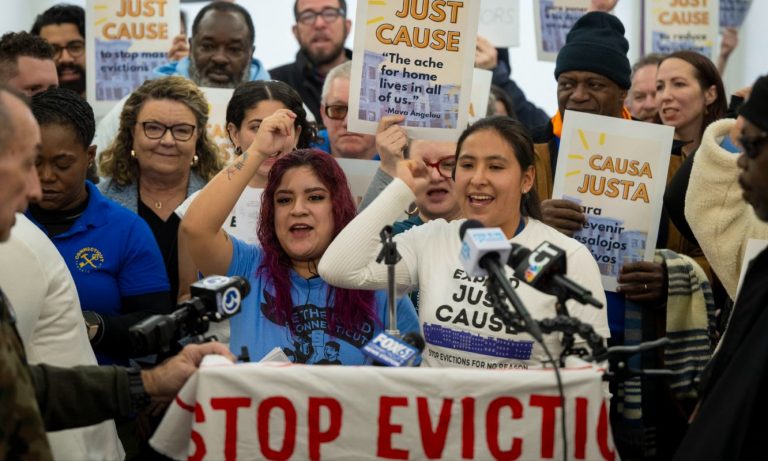
Building Tenant Power

My first collective bargaining meeting took place in the laundry room of an apartment building in Williamsburg. After a months-long rent strike, the tenants I had helped to organize finally forced the landlord to recognize their association and to negotiate with them collectively. When the landlord’s representatives arrived, they sat squeezed between broken washers and dryers in a basement that had not been properly maintained in years. They were surrounded by precisely the kind of neglect that had driven the tenants to organize in the first place.

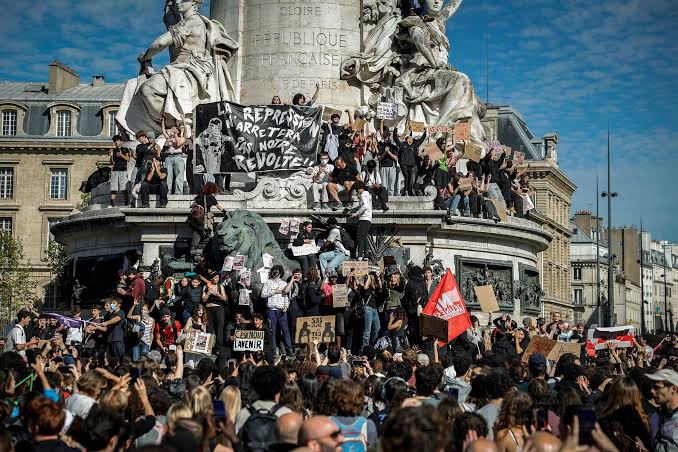
How Self-Organization Can Beat Repression

A brutal crackdown is being unleashed on France’s high school student movement.  The number of arrests of minors is reaching historic highs. Horrific images are flooding social media and the news: a 14-year-old maimed by a Cougar round fired at point-blank range; two high school students blinded, the first by a rubber bullet, the second likely by a grenade; a teenager whose hand was torn off after a grenade exploded; ram-car attacks in Troyes and Dunkirk carried out by the national police, who charged at high speed into groups of high school students; a helicopter deployed in Toulouse; a police commander accused by a high school student of attempting to drown him.

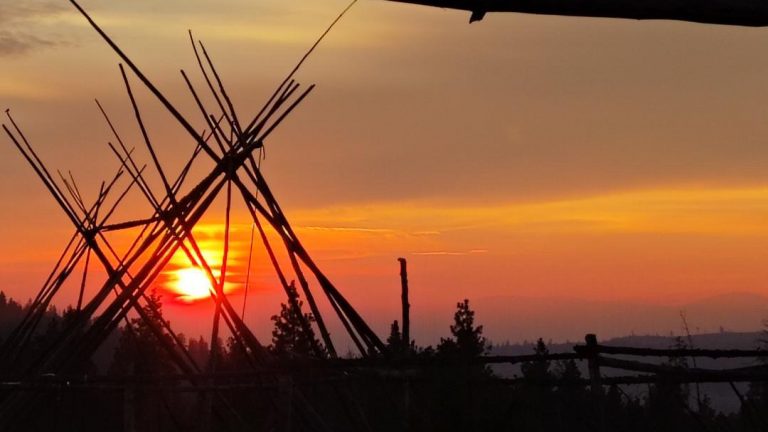
Indigenous Community Quickly Mobilized As Fire Raged On Reservation

The Confederated Tribes of Warm Springs are still reeling from the Bench Fire, which tore through more than 60,000 acres of the reservation in north central Oregon in July and August, but Indigenous activists are working hard to provide for the community amid an ongoing water crisis with limited state resources. Wildfires continue to grow more prevalent as a result of global warming, an outcome fossil fuel companies were well aware would come about decades ago, and Indigenous communities are forced to manage disproportionate impacts during a crisis that some see as a continuing erasure of their culture, people, and land.

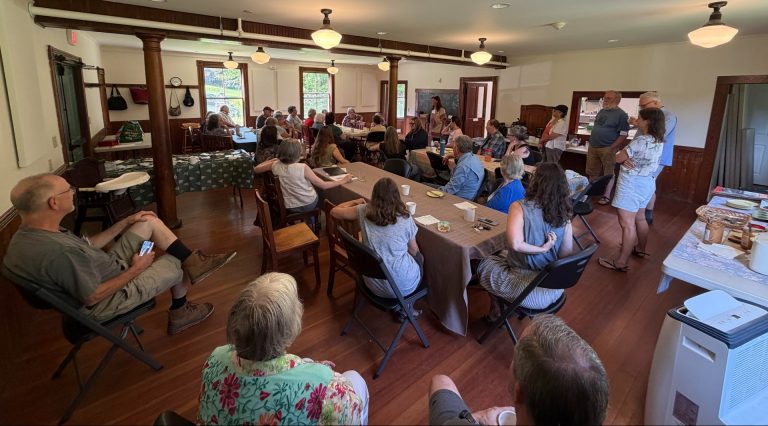
Building Community Work Exchange Networks

Last December, a gust of wind signaled the arrival of a blizzard, followed by wet, heavy snow that accumulated in Chuck’s garden storage and forced his 20-by-8-foot barn door off its hinges. Between Chuck, perched atop a stepladder, and his wife Mary, who held the door in place, it was clear how the barn door might be returned to its roller—all they needed was Roz from the Wild Robot, Marvel’s Iron Man, or the draft horses, oxen, and rope-and-pulley expertise of homesteaders of an earlier era. Having none of those, Chuck saw only the cost of a repair he could not handle himself, and he wasn’t sure who to call for such an unusual job.

Philadelphia Conference Takes Aim At Wall Street’s Grip

Public money should build affordable housing, support small businesses and repair the infrastructure communities depend on. But when governments borrow to meet those needs, private lenders collect interest payments that can burden public budgets for decades. This October, public banking advocates are gathering in Philadelphia to push for a different approach: publicly owned banks that put community needs at the center of financial decisions. Hosted by the Public Banking Institute, the Public Banking, Public Prosperity Conference will take place October 22–24, 2026, at Friends Center, 1501 Cherry Street.
assetto corsa mods

Urgent End Of Year Fundraising Campaign

Online donations are back! Keep independent media alive. 

Due to the attacks on our fiscal sponsor, we were unable to raise funds online for nearly two years.  As the bills pile up, your help is needed now to cover the monthly costs of operating Popular Resistance.

Urgent End Of Year Fundraising Campaign

Online donations are back! 

Keep independent media alive. 

Due to the attacks on our fiscal sponsor, we were unable to raise funds online for nearly two years.  As the bills pile up, your help is needed now to cover the monthly costs of operating Popular Resistance.

Sign Up To Our Daily Digest

Independent media outlets are being suppressed and dropped by corporations like Google, Facebook and Twitter. Sign up for our daily email digest before it’s too late so you don’t miss the latest movement news.