Skip to content

Infrastructure

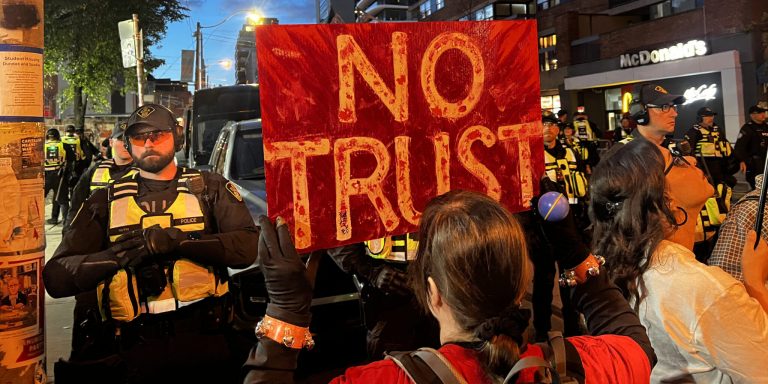
Protesters Unite Against Carney’s Investment Summit

A diverse group of critics voiced a wide-range of concerns this week as Prime Minister Mark Carney held Canada’s first-ever investment summit at the Four Seasons hotel in downtown Toronto.  The summit, which was attended by Blackstone Inc.’s Jon Gray and BlackRock Inc.’s Larry Fink among dozens of other CEOs and institutional investors, was offering investment opportunities in 167 projects across energy, mining, marine infrastructure, power, digital technology manufacturing and transportation sectors across Canada. 
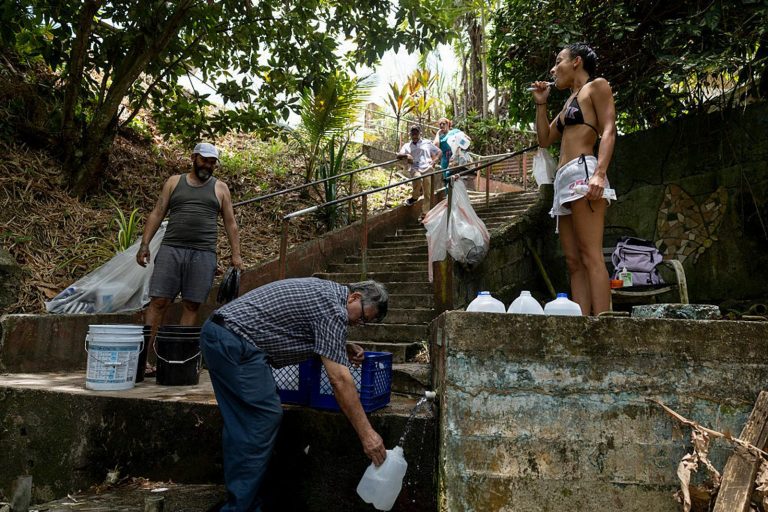
Congress Has A Responsibility To Reverse Water Crisis It Caused In Puerto Rico

The air in Puerto Rico is thick with the vibrant, unmistakable rhythm of life. Parrots cut bright streaks across the sky from roof to roof, and iguanas bask lazily on the grass. But the more telling sounds of daily life are the water trucks lumbering through neighborhoods — or the hollow, dry hiss of household pipes when the taps give out yet again. Nearly nine years after Hurricane Maria tore through the island, a dangerous myth persists: that Puerto Rico’s ongoing humanitarian crisis is a failure of local resilience or an unavoidable consequence of climate change. This is a lie. 

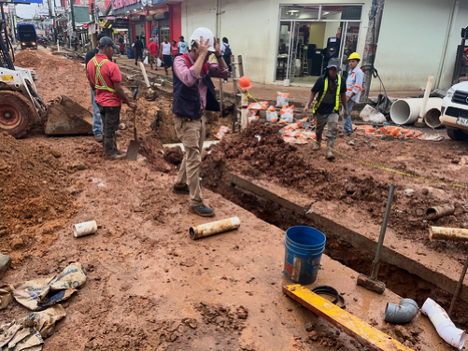
Nicaragua’s Socialist Government Is Building Infrastructure At Impressive Rate

Upon landing in Miami, a TSA agent asked me where I had just come from. “Nicaragua,” I said. “Aren’t the people there poor?” he asked. His inquisitiveness surprised me, but I went with it: “Yes, there is poverty in Nicaragua. But even families living in small homes with tin roofs know they can receive quality health care as well as education up to the university level. All of it is entirely free.” The young man checking my passport sighed. He lamented that he himself had been avoiding routine doctor visits, because they lead to expensive bills. He agreed a change is needed in the United States.

Puerto Rico Faces Major Water Crisis

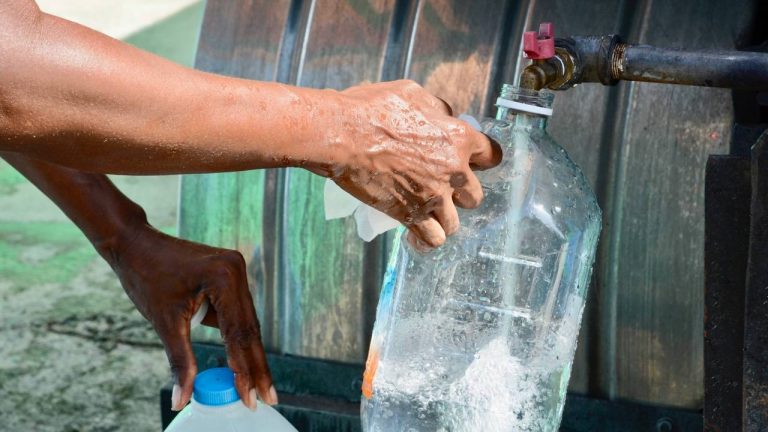
Puerto Rico continues to endure a prolonged water supply crisis that has caused enormous hardship and difficulties for the local population. The situation has affected hundreds of thousands of people on an island with a population of just 3.2 million. The crisis began in mid-June when authorities reported a serious leak in one of the pipes of the Superaqueduct, one of the island’s most important water distribution systems. While repair work was underway, two additional outages were identified, affecting more than 100,000 people in San Juan, Bayamón, Guaynabo, Caguas, Juncos, Loíza, and other surrounding areas.

Native American Tribes Secured Their Rights To Colorado River Water

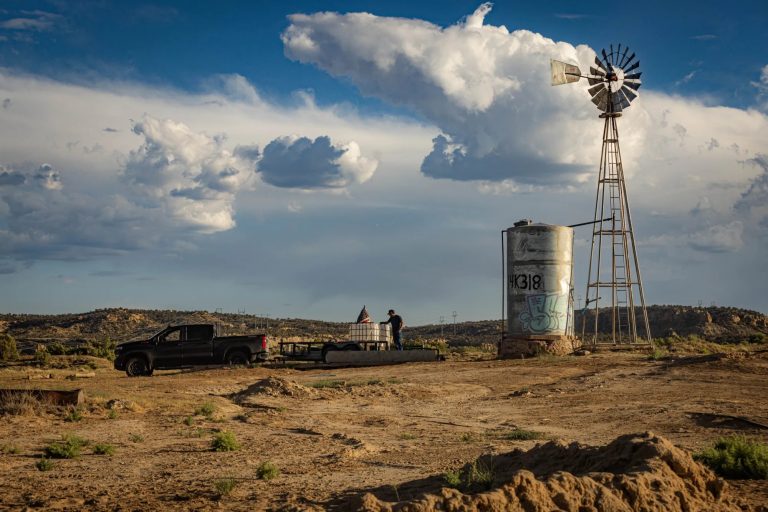
A deal to bring Colorado River water to Native American communities in northern Arizona, where a third of homes lack running water, is being blocked by neighboring states, caught up in a broader battle over how to divide the dwindling river. The largest tribal water rights settlement in U.S. history — the product of decades of negotiations to secure water for the Navajo Nation, Hopi Tribe and San Juan Southern Paiute Tribe — was on the verge of being realized before Colorado, New Mexico, Utah and Wyoming stepped in to oppose it being codified by Congress.

Pennsylvanians Are Beating Back A Wave Of Water System Privatization

In January, the Pennsylvania Supreme Court blocked the corporate takeover of a public water system in Chester, Pennsylvania. After a nine-year battle, the court ruled that Chester, a town of 33,000 outside Philadelphia, does not have the jurisdiction to sell the local municipal water system to Aqua, a massive company that owns water and sewer systems throughout the state. The ruling came in the wake of major public pushback, with hundreds of residents joining state legislators at public hearings to oppose the sale. Save Chester Water Authority, a grassroots campaign, warned: “In every acquisition it has made, [Aqua] hikes up water bills through rapid-fire rate increases and infrastructure surcharges.”

Iran Warns United States Of ‘More Destructive Phase’

Iran’s Islamic Revolutionary Guard Corps (IRGC) claimed responsibility for several strikes targeting US-linked energy and petrochemical sites in the Gulf, following US-Israeli attacks on major Iranian infrastructure.  The IRGC said it attacked US gas facilities linked to ExxonMobil and Chevron in the UAE. It also said it launched “a missile attack on US petrochemical facilities producing fuel materials for the US armed forces and military products for the Israeli entity in Al-Ruwais, UAE, causing a widespread fire.” It also confirmed that Tehran was behind drone attacks on US-linked petrochemical sites in Sitra, Bahrain, including the Bapco refinery, as well as in southern Kuwait’s Shuaiba. 

Iran: Four-Point Retaliation Ready If US Attacks Energy Sites

The spokesperson for Khatam al-Anbiya Central HQs, Lieutenant Colonel Ebrahim Zolfaghari, responded to US President Donald Trump’s recent threats, describing them as part of a continued pattern of aggressive behavior that destabilizes global security.  The warning comes after Trump issued a stark ultimatum regarding the strategic Strait of Hormuz.  In a post on his Truth Social account, Trump said: "If Iran doesn’t FULLY OPEN, WITHOUT THREAT, the Strait of Hormuz, within 48 HOURS from this exact point in time, the United States of America will hit and obliterate their various POWER PLANTS, STARTING WITH THE BIGGEST ONE FIRST! Thank you for your attention to this matter. President DONALD J. TRUMP."

Trump’s Cuts To Infrastructure Projects Harm Working People

You’re going to have the American dream back,” promised then-candidate Donald Trump on the campaign trail in 2024. But nearly a year into the President’s  second term, his administration is failing to live up to campaign promises. In fact, the Trump administration’s actions are pushing the dream of economic security and dignity even farther out of reach for working families across the U.S. Countless headlines have rightfully covered executive orders stripping a million federal workers of union rights. They’ve detailed legislation that defunds healthcare and nutrition programs while funneling money to massive corporations and billionaires.

Sudan’s People Are Rebuilding Their Capital Without Government Help

On a scorching morning in Al-Kalakla, southern Khartoum, Mohammed Rizq stood among rubble with a notebook in his hand, directing dozens of volunteers half his age. The 21-year-old high school student with metalworking training pointed toward a broken water station, its generator stolen by Rapid Support Forces during the paramilitary’s occupation of Sudan’s capital. He divided the group into teams: clear the rubble, salvage usable bricks, dig trenches to repair pipes the RSF had destroyed. “When I rebuild my neighborhood, it feels like I am rebuilding my life from the ground up,” Rizq says, standing where his elementary school once stood before artillery reduced it to debris.

Organizers Demand Release Of Katrina Funds In New Orleans

This month marks 20 years since Hurricane Katrina devastated the southeastern United States, causing at least 1,392 deaths and an estimated USD 125 billion in damages, much of it concentrated in the Louisiana city of New Orleans. This year, Louisiana-based organizers are launching a grassroots campaign to demand that New Orleans utilize USD 600 million dollars in unused public funds for long-awaited repairs.  In 2015, the Federal Emergency Management Agency (FEMA) gave New Orleans nearly USD 2 billion for post-Katrina infrastructure repairs, but USD 600 million still hasn’t been used, according to organizers.  Organizers with the Party for Socialism and Liberation held a press conference on Friday, August 22, which was hit with a sudden rainfall.

Water Crisis Deepens In Puerto Rico

The severe drinking water crisis in San Juan, Puerto Rico, is worsening, and is not limited to the old colonial city but also affects other municipalities across the country. However, San Juan has become the focus of public opinion due to the high influx of tourists who come to the city as part of Caribbean cruise itineraries, as well as for summer concerts, such as the upcoming Bad Bunny shows. The water shortage that began on July 24 is not only affecting tourism, but also other types of businesses, many of which have recently decided to temporarily close or reduce their activities, dealing a major blow to an already struggling economy.

Infrastructure Failure In The United States Of America

Recent events in America’s air transport system suggest that the system is becoming more prone to dangerous failures. Those failures include a January 29 mid-air collision between an Army helicopter and a passenger jet Washington, D.C.’s Ronald Reagan National Airport; a harrowing near miss between a landing passenger aircraft and an unauthorized business jet crossing the runway; a plane taxiing to the gate in Denver when an engine caught fire leading to the evacuation of all passengers, all of whom survived; and a blackout of air traffic controllers’ screens for 60 to 90 seconds at Newark Liberty International Airport.

Pennsylvania Governor Sues Trump Administration Over Frozen IRA Funds

Pennsylvania Gov. Josh Shapiro announced a lawsuit on Thursday against President Donald Trump’s administration for freezing funding made available through the Inflation Reduction Act. As Utility Dive reported, Trump ordered a freeze to IRA funds in an executive order made his first day in office. According to the governor’s office, Pennsylvania state agencies have not been able to access the Solar for All funds or other IRA funding, despite a federal judge ruling on Monday that the current administration must comply with a previous order that blocked the IRA funding freeze, CBS News reported.

‘Quantitative Easing With Chinese Characteristics’

China went from one of the poorest countries in the world to global economic powerhouse in a mere four decades. Currently featured in the news is DeepSeek, the free, open source A.I. built by innovative Chinese entrepreneurs which just pricked the massive U.S. A.I. bubble. Even more impressive, however, is the infrastructure China has built, including 26,000 miles of high speed rail, the world’s largest hydroelectric power station, the longest sea-crossing bridge in the world, 100,000 miles of expressway, the world’s first commercial magnetic levitation train, the world’s largest urban metro network, seven of the world’s 10 busiest ports, and solar and wind power generation accounting for over 35% of global renewable energy capacity.
assetto corsa mods

Urgent End Of Year Fundraising Campaign

Online donations are back! Keep independent media alive. 

Due to the attacks on our fiscal sponsor, we were unable to raise funds online for nearly two years.  As the bills pile up, your help is needed now to cover the monthly costs of operating Popular Resistance.

Urgent End Of Year Fundraising Campaign

Online donations are back! 

Keep independent media alive. 

Due to the attacks on our fiscal sponsor, we were unable to raise funds online for nearly two years.  As the bills pile up, your help is needed now to cover the monthly costs of operating Popular Resistance.

Sign Up To Our Daily Digest

Independent media outlets are being suppressed and dropped by corporations like Google, Facebook and Twitter. Sign up for our daily email digest before it’s too late so you don’t miss the latest movement news.