Skip to content

Pipelines

‘People’s Rights Are Being Signed Away,’ Claim Albertans

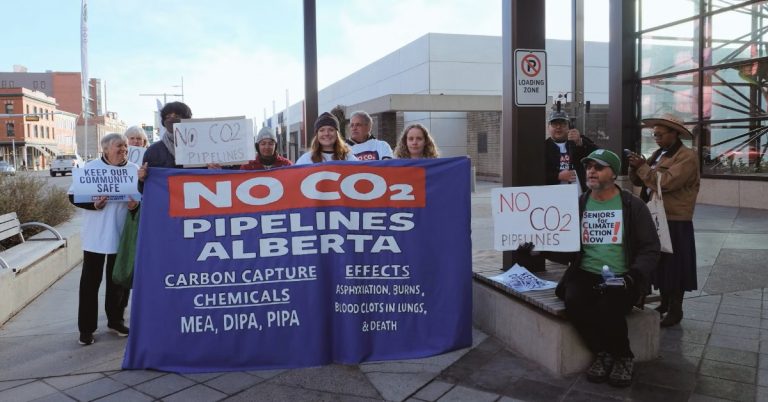
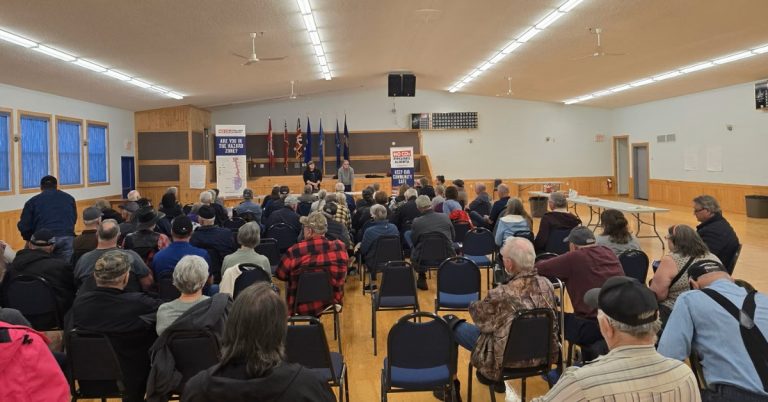
With only two months until a binding agreement on a major $20 billion carbon capture project is to be finalized, Albertans living in communities that could be directly impacted by the project say they still have not been consulted. “Industry and government have had two years to answer our questions, and they still haven’t,” Amil Shapka of No CO2 Pipelines Alberta, a grassroots organization opposing the project, said in a statement to DeSmog.  Shapka’s comments came after government officials, industry representatives, and technology advocates met in Edmonton in mid-September for the annual Carbon Capture Canada convention, which is Canada’s largest expo on carbon capture, utilization, and sequestration technology.

Inside The Grassroots Revolt Against Carbon Capture Pipelines

Dr. Amil Shapka was having a quiet day in the rural Alberta community of St. Paul when a worried neighbour showed up at his doorstep. The man, a senior citizen, had been approached by agents from Canadian National Resources Limited (CNRL), one of Canada’s largest oil and gas companies. The oil company agents were scouting routes for a new pipeline. But this proposed piece of infrastructure would be carrying a different product from what Shapka’s community was used to—carbon dioxide. Shapka was alarmed, and soon too were many inhabitants of the County of St. Paul.

Activists Throw Wet Blanket On FERC’s ‘Blanket Certificate Policy’ Changes

As they have for the past decade, the environmental activist group Beyond Extreme Energy (BXE), along with other frontline groups, has protested, demonstrated, and attended the Federal Energy Regulatory Commission (FERC) monthly public meetings at the Washington, DC headquarters to bring before the commission their concerns regarding an end to fossil fuel expansion. Before the July 16 meeting, BXE members began an early morning sit-in to protest FERC’s proposed blanket certificate policy changes. Activists blocked the building’s garage entrance where they disrupted access as arriving workers and commission members were turned away.

The Methane Hunters Of Melendugno

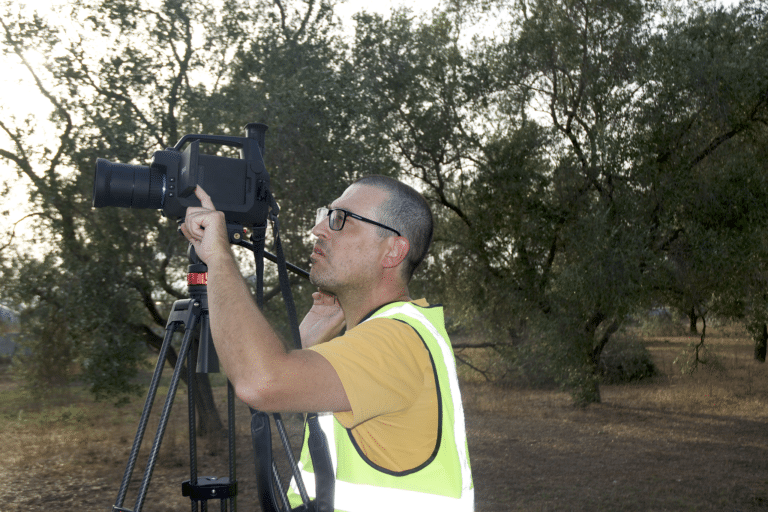
For centuries, farmers in Melendugno, a town located at the tip of southern Italy’s boot heel, built stone walls to mark the boundaries of their fields, shield their crops from the winds blowing out of North Africa, and divide farmland from pasture. Today, those same ancient stones stand watch over a changed landscape of parched olive groves, tall metal fences, and barbed wire. Beyond the fences, framed by a few remaining ancient olive trees, sits the Melendugno Reception Terminal — the western endpoint of the Trans Adriatic Pipeline (TAP).

Oil Pipeline Threatens Catastrophe For Tribes In Michigan – Again

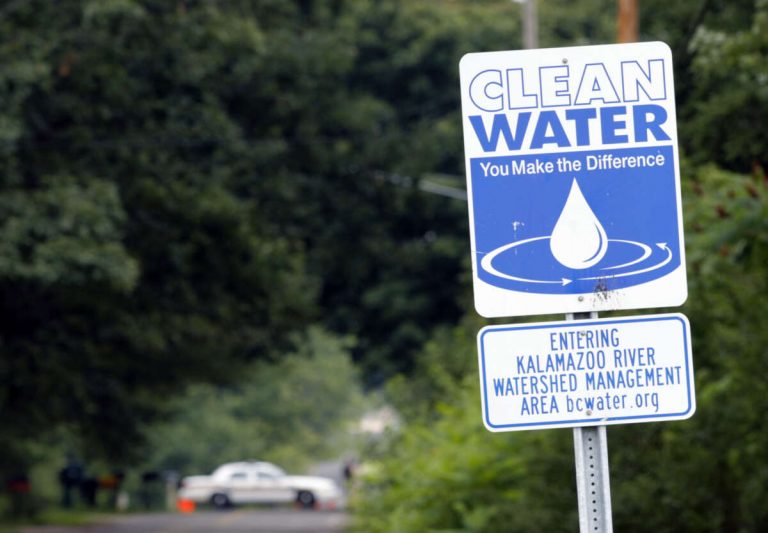
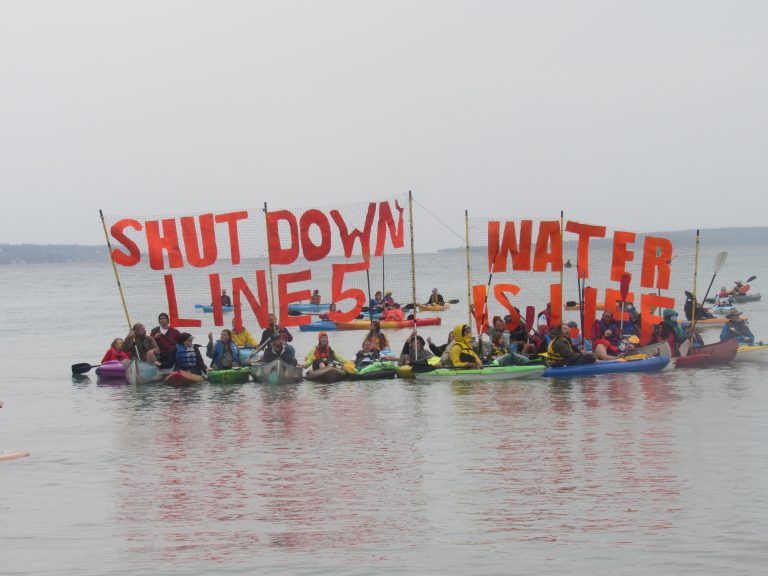
This Indigenous Peoples Day, the approximately 2,700 Ojibwe tribal members of the Bay Mills Indian Community in northern Michigan are marking the holiday amid fear that their region could face another environmental catastrophe like the one that occurred in 2010, when Enbridge’s Line 6B oil pipeline burst and spilled over a million gallons of tar sands crude oil, contaminating the Kalamazoo River and over 40 miles in its watershed. Today, the community is afraid that an even more potentially devastating event is looming: a future rupture of another Enbridge relic, the antiquated 72-year-old Line 5 pipeline, which originates and ends in Canada but travels across Wisconsin and Michigan, and crucially, through the Great Lakes under the Straits of Mackinac.

Join Michigan Tribal Nations In Opposing Line 5 Tunnel

Canadian oil corporation Enbridge is proposing a massive, six-year construction project to build a tunnel under the Straits of Mackinac—a location of immense ecological, cultural, and spiritual significance. The plan includes installing towering 400-foot cranes, flooding the area with round-the-clock artificial lighting, and disrupting one of the most pristine freshwater environments in North America. The consequences would be severe. Critical fish habitats would be destroyed, access to fishing—both commercial and subsistence—would be limited, and the construction site would cast light pollution across a designated dark sky park. The towering machinery would be visible from iconic landmarks like Mackinac Island.

Fast Tracking A Pipeline To BC’s Coast Will Undermine Canada’s Security

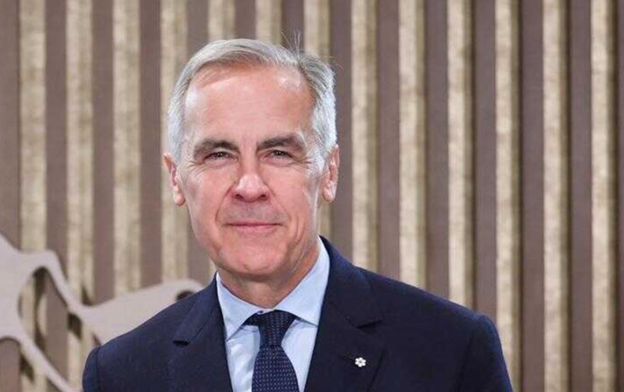
“Now the real work starts.” These words from Prime Minister Mark Carney marked the rapid passage of Bill C-5, which grants sweeping powers to his cabinet to fast-track infrastructure projects. While his recent meeting with Canada’s premiers was described as a love-in, the love may be short lived if certain powerful industries don’t get the pony they thought they were promised. I speak of course of the oil patch and their relentless demands for more pipelines, whether they are needed or not. The long-dead Northern Gateway proposal to B.C.’s north coast seems to be top of the fossil fuel wish list, backed up by recent comments from Carney. 

Germany In Crisis Part 2: A Short History Of Exploding Gas Pipelines

A single, brief phrase always comes to mind when I think of Germany. Whatever may be the specific matter to hand, sooner or later my thoughts go to three words that seem to me — and to many others, given they have survived so long in the discourse — to capture some essence of the nation and its place in the world. “Germany is Hamlet.” For a long time I attributed this pithy observation to Gordon Craig, among Germany’s great 20th century historians. Craig (Germany, 1866–1945; The Germans) was noted for succinct observations of this kind. He saw Germany as a nation divided in history between its humanist achievements (Goethe et al., Kant et al., Thomas Mann et al.) and its regrettable givenness to varieties of absolute power.

Canada Fossil Fuel Subsidies Hit $30 Billion Amid Pipeline Push

Amid trade war talk of expanding Canadian energy infrastructure, a new report reveals that direct Canadian subsidies to the fossil fuel and petrochemical sectors reached nearly $30 billion in 2024. For comparison’s sake, Canada spent between $38 billion and $39 billion on defense in 2024. “Oil and gas companies – emboldened by their influence over President Trump – are exploiting the current economic uncertainty to call on governments to double down on fossil fuels,” Julia Levin, associate director of national climate with nonprofit group Environmental Defence, which put out the report, said in a statement.

Fossil Fuel Giant Launches Legal Attack Over Standing Rock Protests

Energy Transfer, the US energy giant that owns or operates over 125,000 miles of oil pipelines throughout the US, is suing environmental activism group Greenpeace for USD 300 million in damages in a trial that began last week. The company claims that the nonprofit organized the mass demonstrations and protest camp at the Standing Rock Reservation against the Dakota Access Pipeline between 2016 and 2017. If Greenpeace loses this case and is forced to pay the hundreds of millions in damages demanded by Energy Transfer, it would effectively end their operations in the United States.

Energy East Pipeline Revival: Why Canada Shouldn’t Waste Billions

Like zombies rising from the grave, many long-rejected oil pipeline projects like Energy East are suddenly being promoted as national necessities in response to U.S. President Donald Trump’s musings about annexing Canada. To be clear, most Canadians agree that Canada needs to take Trump’s threats seriously and accelerate long-overdue efforts to make our country less economically dependent on our newly menacing neighbour. Previous political impediments to building interprovincial infrastructure are melting away as Canadians realize protecting our national sovereignty is more important than the priorities of any given region or industry. But before the country considers writing another blank cheque for an oil industry mega-project that may take a decade to complete, let’s make sure to “skate to where the puck is going, not where it has been.”

Court Of Appeals Hears Arguments Against Line 5 Tunnel Project

Attorneys representing Native American tribes and environmental organizations brought their case Tuesday before a three-judge panel in the Michigan Court of Appeals to challenge a 2023 permit from the Michigan Public Service Commission — one of three needed for Enbridge to proceed with its controversial Line 5 tunnel project. Enbridge’s Line 5 is a 645-mile pipeline stretching from Northwest Wisconsin through Michigan into Sarnia, Ontario, carrying 540,000 barrels of light crude oil, light synthetic crude and natural gas liquids daily through the Straits of Mackinac connecting Lake Michigan and Lake Huron.

Permit for Pipeline Reconstruction Near Sacred Site Rescinded

St. Paul, MN — Minnesota regulators have rescinded a controversial permit allowing Magellan Pipeline Co. to reconstruct a petroleum pipeline near Pipestone National Monument, following sustained opposition from tribal nations, community groups, and environmental advocates. The decision, made during a recent Minnesota Public Utilities Commission (PUC) public hearing, reflects mounting pressure to safeguard the sacred site and its surrounding environment. The PUC unanimously voted to revoke the route permit granted in Oct. 2024 and favored the RA-01 pipeline route (alternative proposed by the Mille Lacs Band of Ojibwe — 13.1 miles long), citing inadequate tribal consultation and incomplete cultural and archaeological surveys.

Who’s Funding ‘Newspaper’ Mailed To Potential Jurors In Greenpeace’s Trial?

In early September, fossil fuel executive and Donald Trump megadonor Kelcy Warren quietly made a large donation to a political action committee few people have ever heard of. Warren is CEO of Energy Transfer, the company behind the infamous Dakota Access Pipeline, which in 2016 faced thousands of protesters including members of the Standing Rock Sioux Tribe and other opponents. The timing is potentially significant because Warren made his $5 million donation to the super PAC called Turnout for America while his company pushed forward with a lawsuit against the nonprofit Greenpeace related to the Standing Rock protests.

Wisconsin Approves Pipeline Reroute Near Bad River Reservation

According to Indigenous water protectors, it’s not a matter of whether a pipeline will rupture and leak, but when. The federal government’s own data supports this, with the Pipeline and Hazardous Materials Safety Administration reporting that there were 1.5 incidents per day in 2023. But in northern Wisconsin on the Bad River Reservation, the incontrovertible claim that the safest way to build a pipeline is not to build one at all isn’t being heeded. On Nov. 14, the Wisconsin Department of Natural Resources (DNR) granted the Canadian pipeline corporation Enbridge the permits needed to proceed with a plan to build a 41-mile section of pipeline around the Bad River Reservation.
assetto corsa mods

Urgent End Of Year Fundraising Campaign

Online donations are back! Keep independent media alive. 

Due to the attacks on our fiscal sponsor, we were unable to raise funds online for nearly two years.  As the bills pile up, your help is needed now to cover the monthly costs of operating Popular Resistance.

Urgent End Of Year Fundraising Campaign

Online donations are back! 

Keep independent media alive. 

Due to the attacks on our fiscal sponsor, we were unable to raise funds online for nearly two years.  As the bills pile up, your help is needed now to cover the monthly costs of operating Popular Resistance.

Sign Up To Our Daily Digest

Independent media outlets are being suppressed and dropped by corporations like Google, Facebook and Twitter. Sign up for our daily email digest before it’s too late so you don’t miss the latest movement news.