Skip to content

Surveillance

Act Out! Episode 13 – #ShellNo, Sun Sets On Patriot Act

By Eleanor Goldfield in Occupy - This week we dive into the toxic sludge of the oil industry, beginning with Shell’s latest plans to drill in the Arctic. Luckily, activists are standing, and sitting, up to these corporate cronies. We talk to Bill Moyer of Backbone Campaign and George Edwardson, Inupiat leader, about the #ShellNo protests, how you can get involved and the importance of leaving the Arctic the f#@% alone. Moving on to Santa Barbara, Nigeria and the Outer Banks of North Carolina, the oil industry easily gets this week’s lowlife scum award. Speaking of lowlife scum, frack is wack and Beyond Extreme Energy is making sure the Federal Energy Regulatory Commission hears them loud and clear over the sound of their rubber-stamped fracking rigs. Join them this week!

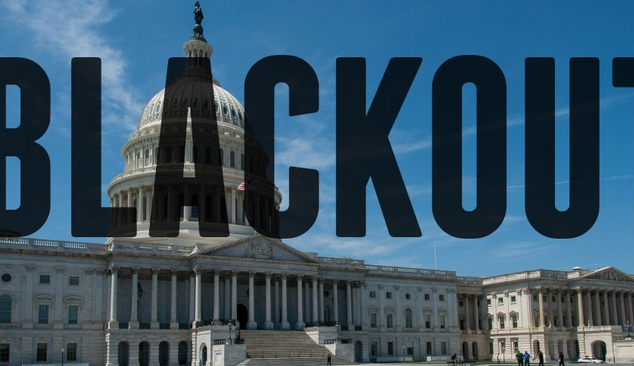
Even If Patriot Act Expires, Government Will Keep Spying

By Washingtons Blog. Mass surveillance under the Patriot Act is so awful that even its author says that the NSA has gone far beyond what the Act intended (and that the intelligence chiefs who said Americans aren’t being spied on should be prosecuted for perjury). Specifically, the government is using a “secret interpretation” of the Patriot Act which allows the government to commit mass surveillance on every American. So it’s a good thing that the Patriot Act may expire, but don’t get too excited … Wikileaks’ Julian Assange said today:

Critics Blast ‘Compromises’ As Patriot Act Barrels Toward Sunset

With the sunset of key spy powers on the near horizon and lawmakers scrambling to save them, privacy and internet freedom groups are dialing up the pressure on Congress to end mass surveillance as we know it. The Senate will return to Washington, D.C. for a rare session on Sunday, on the heels of a week-long Memorial Day recess. With sections of the Patriot Act barreling toward a 12am June 1 expiration, lawmakers are reportedly scrambling to come up with a last-minute deal to save the law after a series of Senate votes on Friday failed to resolve an impasse. The debate over the National Security Agency's (NSA) spy powers has some senators pushing to kill the Patriot Act entirely and others advocating for "clean" re-authorization.

On Patriot Act Renewal And USA Freedom Act

Even in the security-über alles climate that followed 9/11, the Patriot Act was recognized as an extreme and radical expansion of government surveillance powers. That’s why “sunset provisions” were attached to several of its key provisions: meaning they would expire automatically unless Congress renewed them every five years. But in 2005 and then again in 2010, the Bush and Obama administrations demanded their renewal, and Congress overwhelmingly complied with only token opposition from civil libertarians. That has all changed in the post-Snowden era. The most controversial provisions of the Patriot Act are scheduled to “sunset” on June 1, and there is almost no chance for a straight-up, reform-free authorization.

Julian Assange Speaks Of TPP, NSA & His Own Future

So the alternative proposal, which is something that was in the USA FREEDOM Act, which is pretty misnamed—it is a sort of milder version of the USA PATRIOT Act, in some ways. Instead, Verizon and the other—AT&T and other big telcos will hold the information, ready for the National Security Agency. But, you know, it doesn’t make much of a difference if that’s an automated system. It’s just—you know, 80 percent of the National Security Agency is outsourced anyway, in terms of the management of its data. In this case, if it has automatic connections to AT&T and Verizon, there’s no difference in terms of its searching ability. Now, in terms of whether there’s warrants that are used for searches, it is perhaps an aid, because the companies could be made legally liable—that’s up to Congress—for not insisting on a warrant to access that information.

Dept. Of Justice Flying Secret Airplane Fleet Over American Cities

When a friend happened to spot a surveillance flight over his neighborhood, it led Sam Richards, an independent journalist, to uncover a fleet of secret airplanes registered to fake corporations apparently created by the Department of Justice. While their purpose remains unknown, Richards has uncovered 100 of the aircraft and traced regular flights over major American cities. Richards, who writes under the nom de plume Sam Renegade, first published his findings on his Twitter account, @MinneapoliSam, before gathering them into a report on Medium. In his report, published on Monday, he outlines how each of the planes is registered to a fake corporation with a three-letter acronym for a name, such as “OBR Leasing,” which doesn’t seem to otherwise exist as a viable business from Internet or public records searches. Richards reveals that dozens of these aircraft, from front corporations like “FVX Research” and “KQM Aviation,” are registered at the same Bristow, Virginia, post office boxes used for planes which are openly registered to the DOJ.

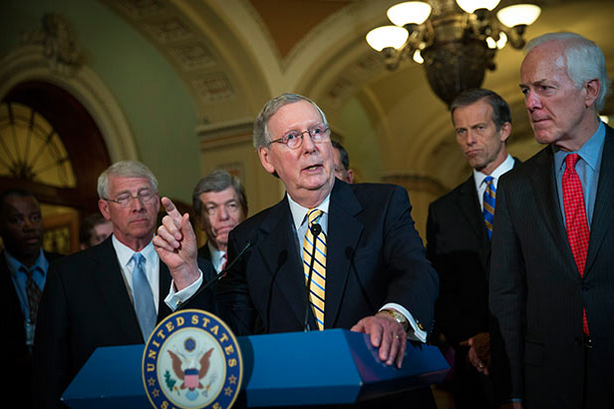
Patriot Act: Cool Mitch McConnell Gets Passionate — And Pays

Mitch McConnell rarely goes out on a limb on issues that divide Senate Republicans. He’s more prone to sit back and listen, let his conference work out their differences — and only then assert his own views. But the majority leader ditched that dispassionate approach when it came time to renew the country’s anti-terrorism surveillance laws — he spoke out early and vociferously against reforming soon-to-expire PATRIOT Act provisions — and the departure now threatens to undermine the Kentucky Republican’s vow to bring more responsible governance to the Senate. For weeks, McConnell tried to lay the groundwork for an extension of the post-9/11 law, only to be boxed into a corner by the House GOP leadership and his junior senator from Kentucky, Rand Paul, who’ve pushed to substantially change or end the program.

A ‘Compromise’ Bill Could Put AP’s Sources Away For 10 Years

The Associated Press(5/23/15) reported on what reporter Ken Dilanian called efforts by Congress “to prevent an interruption in critical government surveillance programs” by extending a section of the PATRIOT Act set to expire May 31. If you’re more worried about the government spying on you than you are about the government losing “valuable surveillance tools”—well, I guess AP is not the news service for you, then. One such PATRIOT Act preservation effort is labeled a “compromise” by AP—Senate Intelligence Committee chair Richard Burr’s proposal to extend the NSA’s bulk collection of domestic phone records until 2017—in what AP calls a “transition.” As Marcy Wheeler of Expose Facts (5/26/15) points out, Burr’s plan would actually not be a simple extension of the PATRIOT Act’s Section 215, but instead would be “a breathtaking expansion of surveillance authority, probably even bigger than the FISA Amendments Act passed in 2008.”

Senate Moves To Check Executive Spying Power

Congress approved the Patriot Act in 2001 with neither debate nor an understanding of what it entailed. Since then, it has accepted - from both the Bush and the Obama administrations - secret legal interpretations contorting statutes into mass surveillance programs recently held illegal by a federal appellate court, as well as lies under oath by senior officials aiming to hide domestic spying programs from congressional and public oversight. The American people have never gone along quietly. During the Bush administration, years before the Edward Snowden revelations amplified mass outrage in 2013, nearly 500 cities and eight states issued official declarations decrying mass surveillance.

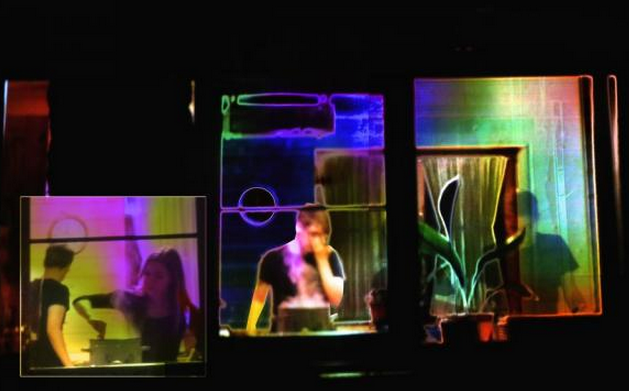
Eyes On The Spies: Art On Hyper Surveillance

Repression breeds resistance, Sixties radicals once insisted – and sometimes, as newspaper headlines remind us, repression simply silences citizens from China to Chile and the Czech Republic. Then, too, repression makes for mighty fine protest art all around the world. In London recently, an anonymous artist painted an immense street mural that showed a man on a ladder printing the words “One Nation Under CCTV,” while another man in uniform films him. (CCTV stands for Closed Circuit Television, now a fixture in many cities from London to New York and Chicago.) Now, a new exhibition opening Thursday in San Francisco, called “Bearing Witness: Surveillance in the Drone Age” (May 21 - June 7), features eight artists from the group 1030 – which uses art to make people more aware of the depth and breadth of spying, listening, recording and gathering data – along with installations by at least 15 others.

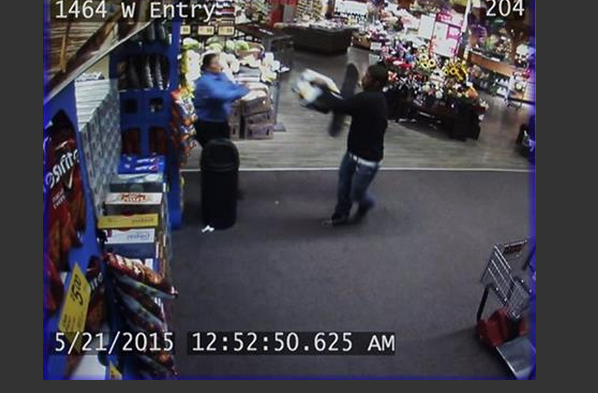
Police Release Surveillance Video In Shooting Investigation

Law enforcement officials on Friday released surveillance video from a grocery store that is part of an investigation of an officer-involved shooting that wounded two men who were suspected of trying to steal beer. The video released by the Thurston County Sheriff's Office in Washington state shows two young black men walking into a store holding skateboards. Olympia Police Department spokeswoman Laura Wohl said in an email that officials have confirmed "that the individuals in the Safeway surveillance are the two suspects who were shot." One is seen leaving with what appears to be a case of beer. When confronted by a store employee, the man tosses it near her and the case breaks, splattering liquid on the ground. The man then runs away. Olympia Officer Ryan Donald was among those who responded about 1 a.m. Thursday to a 911 call from the Safeway store, which was released by Olympia police on Friday. In that call, the store worker says her hand was hit when the case of beer was thrown at her.

NSA Planned To Hijack Google App Store To Hack Smartphones

The National Security Agency and its closest allies planned to hijack data links to Google and Samsung app stores to infect smartphones with spyware, a top-secret document reveals. The surveillance project was launched by a joint electronic eavesdropping unit called the Network Tradecraft Advancement Team, which includes spies from each of the countries in the “Five Eyes” alliance — the United States, Canada, the United Kingdom, New Zealand and Australia. The top-secret document, obtained from NSA whistleblower Edward Snowden, was published Wednesday by CBC News in collaboration with The Intercept. The document outlines a series of tactics that the NSA and its counterparts in the Five Eyes were working on during workshops held in Australia and Canada between November 2011 and February 2012.

Gyrocopter Face 9.5 Years In Jail, Facing Six Charges

The Florida postal worker who flew his gyrocopter under the radar into Washington and onto the West Lawn of the Capitol earlier this year faces nearly 10 years in prison after being indicted by a federal grand jury on Wednesday. Doug Hughes, 61, was indicted in U.S. District Court in D.C. on two felony counts of flying without a pilot's certificate and lacking registration for his small aircraft, each carrying up to three years in prison. He was also indicted on four misdemeanor counts, including flying in restricted airspace, that carry a total of three and a half years in prison as well as potential fines. Hughes is scheduled to appear in court Thursday afternoon. If convicted on either felony count, Hughes would be forced to turn over his gyrocopter and any property involved in the stunt to the United States government, according to his indictment.

Why NSA surveillance Is Worse Than You’ve Ever Imagined

Last summer, after months of encrypted emails, I spent three days in Moscow hanging out with Edward Snowden for a Wired cover story. Over pepperoni pizza, he told me that what finally drove him to leave his country and become a whistleblower was his conviction that the National Security Agency was conducting illegal surveillance on every American. Thursday, the Second Circuit Court of Appeals in New York agreed with him. In a long-awaited opinion, the three-judge panel ruled that the NSA program that secretly intercepts the telephone metadata of every American — who calls whom and when — was illegal.

FBI Violated Its Own Rules While Spying On Keystone XL Opponents

The FBI breached its own internal rules when it spied on campaigners against the Keystone XL pipeline, failing to get approval before it cultivated informants and opened files on individuals protesting against the construction of the pipeline in Texas, documents reveal. Internal agency documents show for the first time how FBI agents have been closely monitoring anti-Keystone activists, in violation of guidelines designed to prevent the agency from becoming unduly involved in sensitive political issues. The hugely contentious Keystone XL pipeline, which is awaiting approval from the Obama administration, would transport tar sands oil from Canada to the Texas Gulf coast.
assetto corsa mods

Urgent End Of Year Fundraising Campaign

Online donations are back! Keep independent media alive. 

Due to the attacks on our fiscal sponsor, we were unable to raise funds online for nearly two years.  As the bills pile up, your help is needed now to cover the monthly costs of operating Popular Resistance.

Urgent End Of Year Fundraising Campaign

Online donations are back! 

Keep independent media alive. 

Due to the attacks on our fiscal sponsor, we were unable to raise funds online for nearly two years.  As the bills pile up, your help is needed now to cover the monthly costs of operating Popular Resistance.

Sign Up To Our Daily Digest

Independent media outlets are being suppressed and dropped by corporations like Google, Facebook and Twitter. Sign up for our daily email digest before it’s too late so you don’t miss the latest movement news.