Skip to content

Water Protectors

Line 5 Opponents Confront Wisconsin Governor Evers

Milwaukee, WI — As Governor Tony Evers took the stage during the annual Wisconsin Association for Justice dinner, an audience member rose to lead a toast for the state’s leader. But rather than honoring Evers’ accomplishments, the patron issued a challenge. Thrusting a glass of thick black fluid into the air, Tom Hoy asked Evers to drink the liquid which served as a representation of Lake Superior’s waters which protesters say will be contaminated by oil and other hazardous waste from Enbridge’s Line 5 pipeline if the state, and Evers specifically, doesn’t revoke the company’s construction permits.
S. 5653: Congress Threatens 60 Years Of Water Protection

October 18 marked the 60th anniversary of the National Historic Preservation Act (NHPA), a landmark law enacted in 1966 after decades of unchecked development and federal projects destroyed historic places, displaced communities, and permanently altered landscapes across the United States. The law emerged from a growing recognition that the places holding our collective histories and cultural heritage deserved protection, and that federal agencies had a responsibility to consider what might be lost before moving forward with projects.

Mexican Activists Fight Climate Crises By Stopping Extractive Violence

Atahualpa Sofía Enciso’s children don’t know what a normal river is, she says. Living by the Santiago River in the state of Jalisco, Mexico, which overflows with dense white foam from the hundreds of industries that pollute it, she notes that the area is also getting hotter. “My father talks about how when he was younger, he didn’t need sweaters, because it was never that hot or cold, but now there are these extremes, because the river is polluted and it can’t regulate temperatures as it used to,” she tells Truthout. For activists like Enciso, the term “climate change” is insufficient for describing such violence perpetrated by industry against the environment and against residents.

Minneapolis Holds Canoe Rally To Defend Boundary Waters

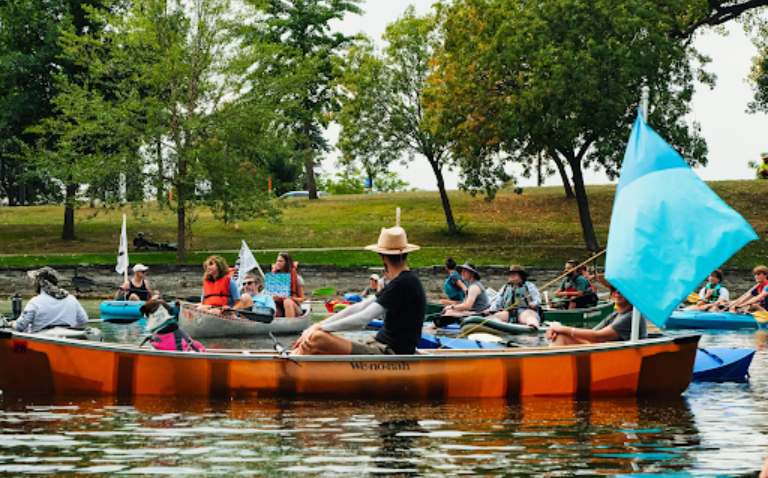
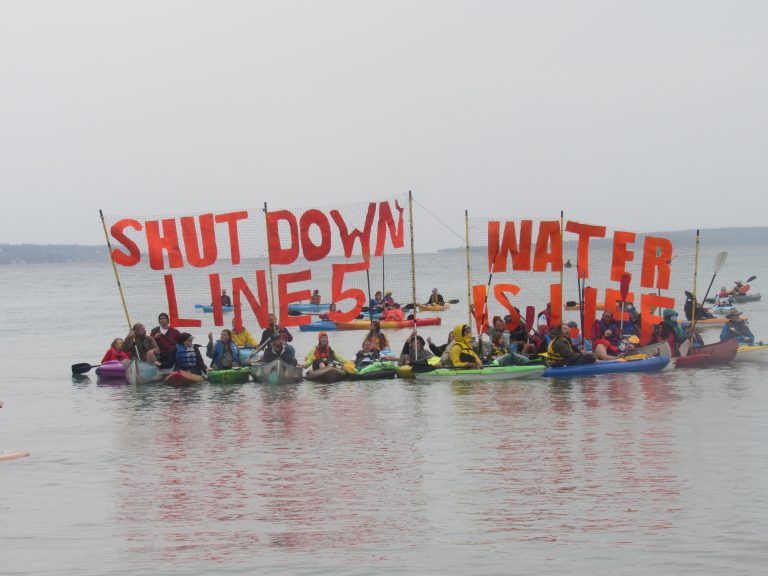
Minneapolis, MN – On Saturday, September 5, over 50 people converged on Minneapolis’s urban lakes to pressure Minnesota’s presumptive governor Amy Klobuchar to take a stand against sulfide mining. While the majority of those assembled took to canoes and kayaks, another contingent marched alongside the flotilla on the lakeshore. Chants of “Hey hey! Ho ho! Sulfide mining has got to go!” and “Water is life!” could be heard across the water as the protesters navigated the chain of lakes in vessels bearing flags with slogans such as “Defend MN waters” and “No sulfide mining.”

Activists Drop ‘Stop Line 5’ Banner From Stone Arch Bridge

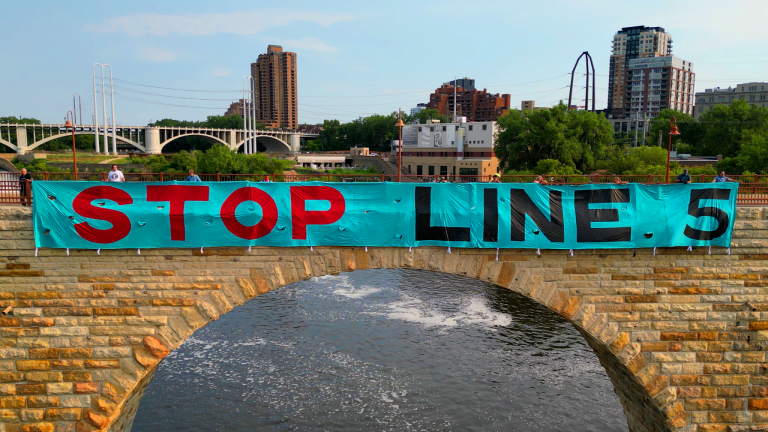
Minneapolis, MN — Stop Line 5 activists dropped a huge banner that read “Stop Line 5” from the Stone Arch Bridge, which spans across the Mississippi River on Tuesday morning and called on Michigan Governor Gretchen Whitmer to “Deny the Line 5 tunnel permits.” One of Enbridge’s two contentious oil pipeline construction proposals for Line 5 includes tunneling across the Straits of Mackinac, a sacred land to the Anishinaabe people of the Bay Mills Indian Community, who’ve banned the project. The Line 5 permit would use horizontal directional drilling for a planned 21‑foot‑wide concrete tunnel beneath the straits, which split Lake Michigan and Lake Huron.

Indigenous Water Governance Models Emerge Amid Growing Water Crisis

A sweeping analysis of academic research shows that Indigenous peoples are increasingly asserting influence over water governance systems around the world. Published in Nature, the study reviewed 226 peer-reviewed articles and drew from 183 case studies across 15 countries to assess how Indigenous communities engage with dominant, often colonial-era, water governance frameworks. Among the study’s central findings is that Indigenous peoples are increasingly asserting influence in water governance globally, through legal action, resistance, partnerships, and their own forms of engagement.

Indigenous Protest Over Amazon Water Decree Enters Second Week

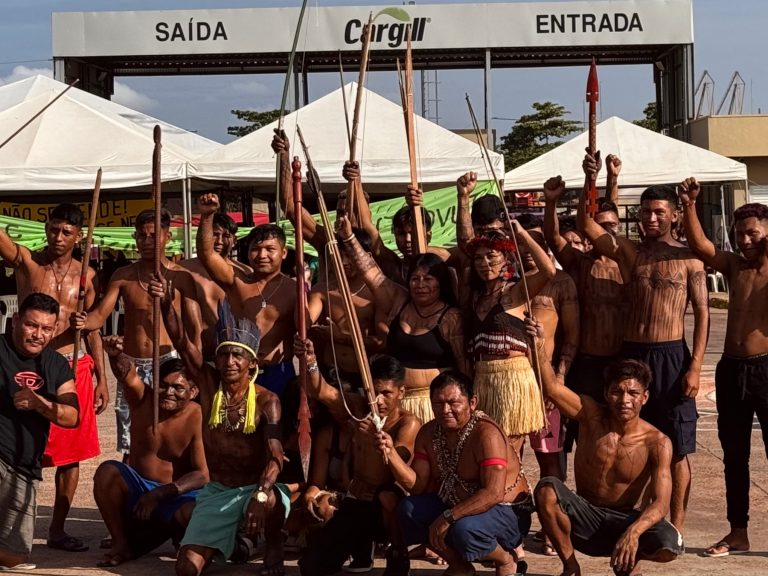
Santarém, Pará, Brazil – On the 13th day blockading Cargill’s grain terminal in Santarém, Indigenous protestors are demanding in-person dialogue with Brazil’s federal government, following its failure to send representatives to a meeting last week. The arrival of dozens of Munduruku representatives from upstream on the Tapajós River bolstered this key demand to be heard and expanded the 700-strong Indigenous blockade prior to a meeting scheduled for today.  The blockade is led by 14 Indigenous peoples from the Lower Tapajós basin and calls for the revocation of Decree 12,600/2025, which incorporates segments on the Tapajós, Madeira, and Tocantins rivers into Brazil’s National Privatization Program (PND).

Logging Blockade Brewing In Alberta’s Rocky Mountains

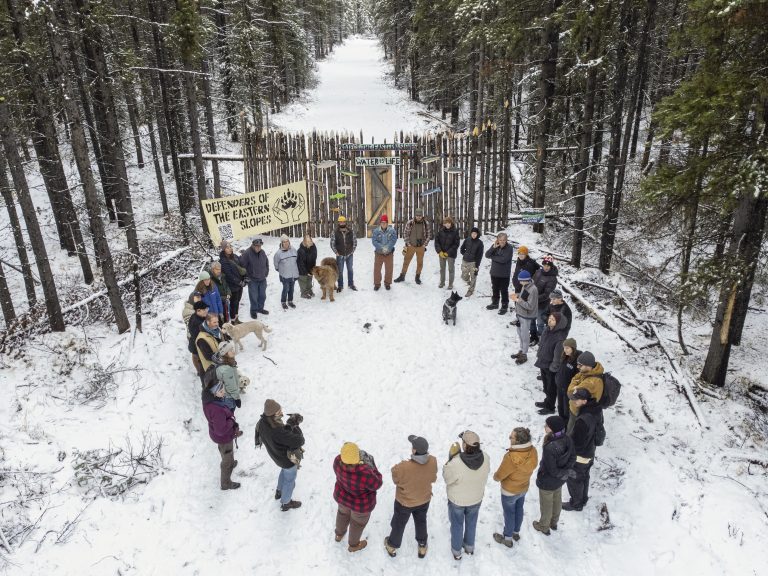
The woods surrounding the Highwood Pass, a mountain valley southwest of Calgary, are quiet. The traffic snarls of fall, which brought day trippers flocking to see larch trees pop yellow against the green hills, are gone. The road through the pass is closed until the spring. Gone too is a temporary camp and barrier across a logging road, set up to protest in advance of clear-cut operations in this popular corner of Kananaskis Country along the rocky spine of southwestern Alberta. At least for now. At first blush, it’s odd for protesters opposed to logging to leave the area before the logging starts, but that wasn’t really the point of the camp set up by a group called Defenders of the Eastern Slopes. 

Community Pledges To Pursue Remediation Of Red Hill Contamination

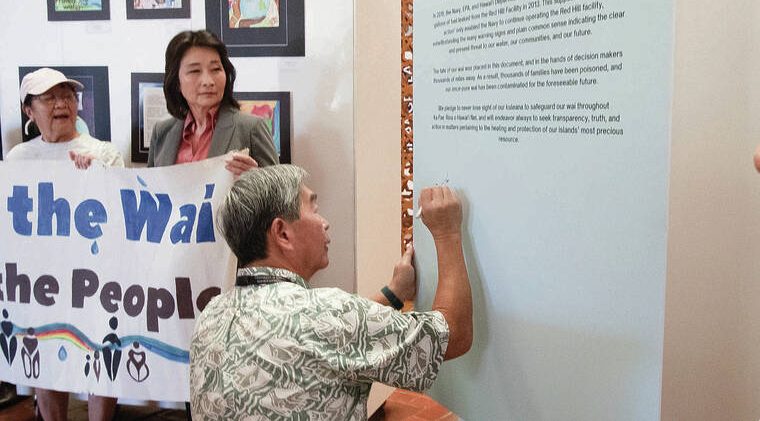
Honolulu, Hawaiʻi - In a moment of reflection and commitment, community organizations, government leaders, and water protectors from all walks of life today launched a “Pledge to Our Wai, Pledge to Our Keiki,” in response to the ongoing contamination of Oʻahu’s primary drinking water aquifer, after it was catastrophically impacted by fuel spills from the U.S. Navy’s Red Hill Bulk Fuel Storage Facility in May and September of 2021. The pledge takes note of the ten years that have passed since a widely-criticized 2015 consent order was signed by the Navy, U.S. Environmental Protection Agency, and Hawaiʻi Department of Health, after a reported spill of 27,000 gallons from the Red Hill Facility; based on the demonstrated shortcomings of this document, the pledge recognizes the need for heightened and continual engagement in order to ensure transparency, truth, and action in the healing and protection of water on Oʻahu, and across the islands.

Join Michigan Tribal Nations In Opposing Line 5 Tunnel

Canadian oil corporation Enbridge is proposing a massive, six-year construction project to build a tunnel under the Straits of Mackinac—a location of immense ecological, cultural, and spiritual significance. The plan includes installing towering 400-foot cranes, flooding the area with round-the-clock artificial lighting, and disrupting one of the most pristine freshwater environments in North America. The consequences would be severe. Critical fish habitats would be destroyed, access to fishing—both commercial and subsistence—would be limited, and the construction site would cast light pollution across a designated dark sky park. The towering machinery would be visible from iconic landmarks like Mackinac Island.

Wai Bill Becomes Law: Major Victory For Water Protectors

Honolulu, Hawaiʻi — After more than two years of steadfast community advocacy and legislative effort, the Water Alliance Initiative Act—addressing long term clean up and remediation of Oahu’s water and land and protecting the water source for over 400,000 residents—was signed into law on Friday, June 6, 2025, and is now officially Act 197 (Gov. Msg. No. 1297). This landmark law creates a WAI Policy Coordinator under the Department of Land and Natural Resources and establishes a Red Hill Remediation Special Fund to support long-term cleanup, monitoring, public education, and restoration of Oʻahu’s primary aquifer in the wake of the 2021 Red Hill fuel contamination crisis.

Court Of Appeals Hears Arguments Against Line 5 Tunnel Project

Attorneys representing Native American tribes and environmental organizations brought their case Tuesday before a three-judge panel in the Michigan Court of Appeals to challenge a 2023 permit from the Michigan Public Service Commission — one of three needed for Enbridge to proceed with its controversial Line 5 tunnel project. Enbridge’s Line 5 is a 645-mile pipeline stretching from Northwest Wisconsin through Michigan into Sarnia, Ontario, carrying 540,000 barrels of light crude oil, light synthetic crude and natural gas liquids daily through the Straits of Mackinac connecting Lake Michigan and Lake Huron.

Honolulu City Council Passes Resolution To Protect Water From Navy Pollution

The Sierra Club of Hawaiʻi is deeply grateful to the Honolulu City Council for Wednesday's passage of Resolution 24-216, FD1, urging the Navy to heed the calls of the Honolulu Board of Water Supply and the Red Hill Community Representation Initiative for data needed to help keep our drinking water system safe from potentially catastrophic contamination. To be clear: the City Councilʻs no-nonsense call for more frequent and reliable data gathering and sharing by the U.S. Navy will be absolutely critical to tracking a contamination plume of approximately 200,000 to 2 million gallons of fuel, forever chemicals, and other hazardous substances that the Red Hill Facility has released since World War II.

Judge Dismisses Charges Against Water Protectors In The Interests Of Justice

As three Native women Water Protectors prepared for trial next week in Aitkin County, Judge Leslie Metzen dismissed all remaining criminal charges against Winona LaDuke, Tania Aubid and Dawn Goodwin late Thursday afternoon, September 14, 2023.  The nearly three-year-old charges stemmed from a peaceful and prayerful gathering on the banks of the Mississippi River on ceded Anishinaabe land as Enbridge began construction of its Line 3 tar sands pipeline.  Joined by several dozen other Water Protectors, the three women wore ceremonial jingle dresses, and sang, danced, and prayed for the water as heavy construction equipment tore into the earth.  

Colorado-Based Water Protector Faces Trial, Shares Wisdom

When Mylene Vialard followed her 21-year-old daughter across the US to join the thousands of the resistance by Water Protectors led by Indigenous women at Enbridge’s Line 3 pipeline, her aim was clear: to help make change, not just for the Indigenous people whose treaty rights, lifeways, and bodies have been violated, but for everyone. What she didn’t know was how much the experience would change her. That was two years ago. Today, up to 760,000 barrels of tar sands oil (bitumen), a particularly resource-intensive and harmful form of crude petroleum, gush from Alberta to Wisconsin through the completed pipeline, and the Boulder-based activist is one of several activists around the US who face felony charges in northern Minnesota’s Aitkin County. Vialard’s trial is the week of August 28.
assetto corsa mods

Urgent End Of Year Fundraising Campaign

Online donations are back! Keep independent media alive. 

Due to the attacks on our fiscal sponsor, we were unable to raise funds online for nearly two years.  As the bills pile up, your help is needed now to cover the monthly costs of operating Popular Resistance.

Urgent End Of Year Fundraising Campaign

Online donations are back! 

Keep independent media alive. 

Due to the attacks on our fiscal sponsor, we were unable to raise funds online for nearly two years.  As the bills pile up, your help is needed now to cover the monthly costs of operating Popular Resistance.

Sign Up To Our Daily Digest

Independent media outlets are being suppressed and dropped by corporations like Google, Facebook and Twitter. Sign up for our daily email digest before it’s too late so you don’t miss the latest movement news.