Skip to content

Women

Incarcerated Women Push For Decarceration, Not ‘Trauma-Informed’ Prisons

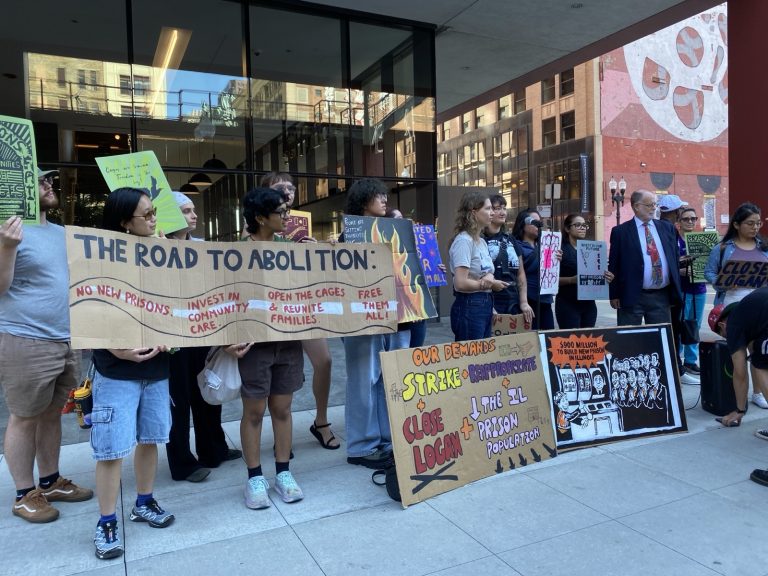
As abolitionists across the United States push for decarceration, a backlash has emerged in the form of new prison construction, demonstrating the resiliency of mass incarceration. Several new women’s prisons are being built despite a growing chorus of voices arguing that prisons only inflict more harm on women who have already endured abuse and trauma. Last year, a new prison to hold nearly 1,000 women was opened in Louisiana to replace the prison that flooded almost a decade earlier. What the news media described as a “campus” (a word used to conflate imprisonment with voluntary settings like colleges and corporate parks) includes a rehabilitation center, classrooms, and a delivery room for women forced to have their babies in prison.
Women In Power Or Power-Hungry Women?

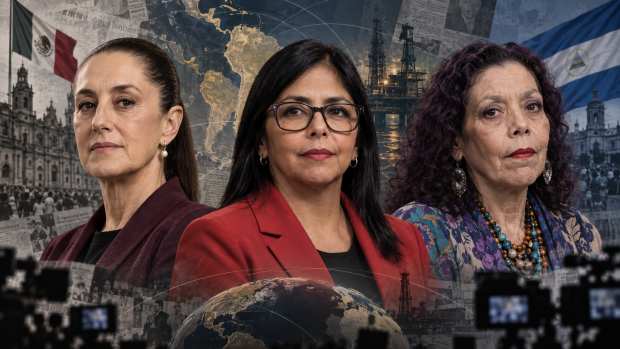
Women who attain political power are often judged by the US-aligned corporate press not simply by what they do but by how politically acceptable they are. This is evident in the strikingly different media treatment of three Latin American leaders, all lifelong leftists, raising the question of how relations with the US shape media judgments of political legitimacy. The Guardian’s profile of Venezuela’s Acting President Delcy Rodríguez acknowledges that she is a “pragmatic, witty and intelligent workaholic” who worked her way up the ranks. But the take-home message of the hatchet-job by author Tom Phillips is that she is a “belligerent, power-hungry chameleon…responsible for Venezuela’s slide into poverty and dictatorship.”

Indigenous Women Already Have The Climate Solutions

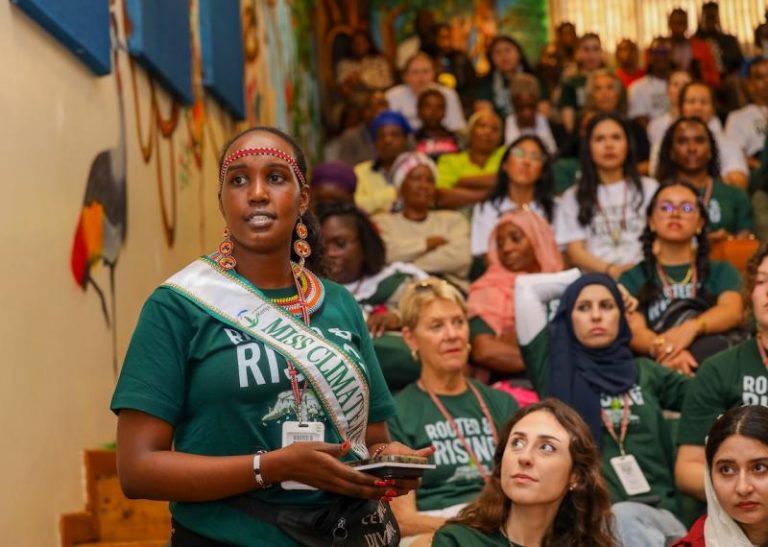
When Lenantoiye was growing up in northern Kenya’s Samburu County, the rain became less and less frequent. The river ran dry and the livestock, the lifeblood of her Indigenous pastoralist community, shrunk to bone. For the Samburu, cycles of drought, which have intensified with climate change, drive food scarcity and foster conflict and violence as people struggle with fewer economic resources. Families are forced to migrate, girls drop out of school due to household duties and the pressure to marry early, and women, who walk longer and longer distances for water and firewood, bear the weight of an entire family’s survival.

Women Join Hunger And Labor Strike At Delaney Hall ICE Jail

Nearly 40 women have joined the hunger strike at Delaney Hall immigrant jail in Newark, New Jersey, releasing a new set of gender-specific demands as the strike enters its fourth week. On June 11, dozens of women detained in unit 1 of the jail announced that they were joining the hunger strike. Their demands include improving conditions in the facility; the release of female detainees, beginning with those who are under 21 years old, mothers, and women with medical conditions; and the firing of a guard who they say has sexually assaulted at least 10 women detained in the facility.

Lessons From The Sahel For The International Day Of Peasant Struggle

On April 17, 1996, military police in Eldorado dos Carajás, Brazil, killed 21 landless workers who were blocking a road to demand agrarian reform. They were members of the Landless Rural Workers’ Movement (MST). Since then, La Via Campesina has designated April 17 as the International Day of Peasant Struggle – a global day to honor those fighting for land, seeds, water, and food sovereignty, and to hold accountable those who profit from their dispossession. As we observe the 30th anniversary of this day in Africa, we are compelled to pay closer attention to important developments in the Sahel region of our continent, where, when the terrorists arrived, the women of Burkina Faso hid seeds in their hair.

Collaboration And Mutual Care

Maputo, Mozambique - Isaura Matola (pictured above), a widow and mother of four, wakes up every day at 5 a.m., before sunrise, to begin collecting recyclable waste at the Hulene landfill on the outskirts of Maputo, Mozambique’s capital. After losing her job as a domestic worker in 2023, Matola faced unsuccessful attempts to secure other employment. Waste sorting at the landfill became her only viable option. “With what I earn here, even though it is not much, I manage the basics to live. It’s different from doing nothing,” she says, while separating plastic, paper, and metal from large piles of rubbish. “At least my children are able to go to school.”

The Far Right Goes To War Against Women

Across Latin America, a strange war has been declared. It is fought not only in parliaments and courts but in classrooms, kitchens, churches, and the restless spaces of the internet. Its targets are women, queer and trans people, and the movements that insist life can be lived differently. The contemporary far right of a special type claims to defend the patriarchal family, morality, and tradition. But beneath these words lies another project: the restoration of old hierarchies at a moment when the world that sustained them is trembling. For decades, feminist movements have unsettled the foundations of power in Latin America.

Why Canada Needs A Universal Parental Income Support Plan

Finally, a major economic actor in Canada has recognized the important contributions of self-employed Canadians. The Business Development Bank (BDC)’s report, The Entrepreneurial Spark of Canada’s Self-Employed, confirmed what many advocates have long argued: self-employed Canadians have distinct needs and make significant contributions to our economy. But the report also revealed something else — a narrow and troubling definition of economic value. BDC places particular emphasis on what it calls “agile and ambitious self-employed” individuals, those who plan to hire employees and transition into employer firms.

What A Century-Old Press Service Teaches Us About Worker Power

This won’t come as a surprise to union activists, but the mainstream press doesn’t always fairly represent the labor movement. That was true in 1919, the year the Federated Press (FP) was founded, and it remains true today. The FP was created to counteract the anti-labor bias in the mainstream press during the post-World War I strike wave. At the first convention of the Farmer-Labor Party, a coalition of labor activists, editors, and socialists hatched the idea for a cooperative, labor-oriented press service that would provide national and international news to subscribing labor newspapers. Imagine the Associated Press, but written by and for labor.

Reimagining NGO Relationships With Cooperatives

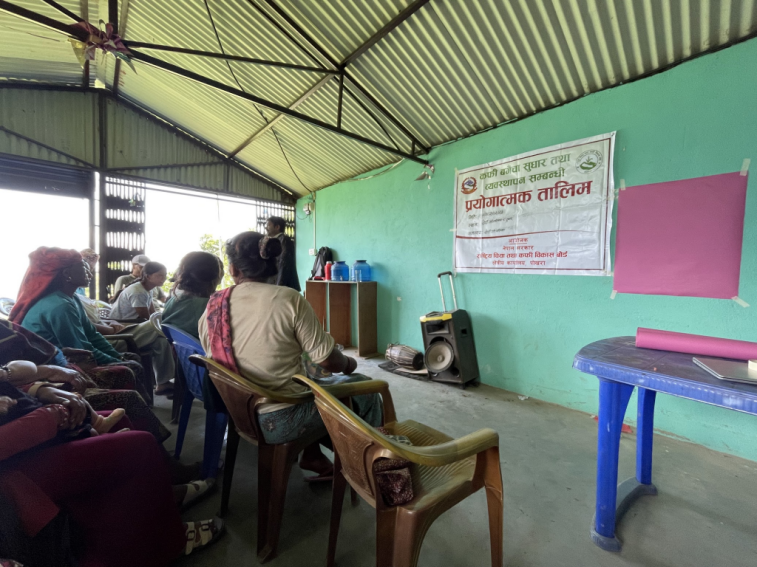
On her last commute, she sprained her ankle. Still, every morning in the beginning of the month, Lalmaya—the president of Milijuli cooperative—walks two hours down steep hills to reach its office. Halfway there, she pauses to rest, smiles through the pain, and says, “See, we have to have love, you know?” Behind her face, I see the resilience of enduring a lifetime of gender- and caste-based oppression as a Dalit in Nepal, yet continues to pour her passion into transforming the economic lives of women in her village through the collective power of the Milijuli Cooperative. In Nepal, more than 34,000 cooperatives—known locally as sahakari—have sprung up over the past few decades. With principles democratic member control and economic participation, the cooperative stands apart from similarly ubiquitous organizations in Nepal: NGOs.

Challenging The Media Myth Of Latino Machismo

Patriarchy is alive and well throughout the world. But the English-language media flatters itself by one-sidedly portraying machismo as a particularly Latin American malady, all the while overlooking significant feminist gains made in the region. Take, for instance, the entry under “machismo” in the latest edition of Britannica which asserts: “It has for centuries been a strong current in Latin American politics and society.” But the encyclopedia makes no such recognition for its own Anglo society. An article in the AP on sexual bias in Mexico blames “Mexico’s ‘machismo’ culture and strong Catholic roots,” calling out patriarchy as a defining and harmful feature for the whole of Latin American culture.

Unilateral Coercive Measures And The War On Women

In 1945, when the United Nations Charter was drafted, its authors and those who first adopted it carefully crafted language on how to deal with armed conflict in the world. Between the signing of the charter in June and its coming into force in October, the United States dropped atomic bombs on two Japanese cities: Hiroshima, on 6 August, and Nagasaki, on 9 August. It is hard to digest the fact that as the charter’s solemn preamble was being formalised, setting out to ‘save succeeding generations from the scourge of war, which twice in our lifetime has brought untold sorrow to mankind’, the United States armed forces were preparing to destroy two civilian cities in a country already on the brink of surrender.

Transit Stations Aren’t Designed For Women And Caregivers

A new report takes mobility hubs (traditionally, transit stations) and asks: How can planners design these spaces around the needs of women and caregivers? Imagine a centralized place in your neighborhood where you can chat with your friends over coffee, buy a few carrots for dinner, fill a prescription or watch your kids play on a playground – all while accessing the train, bus, bikeshare or rideshare. “Part of the feedback that we’ve gotten from practitioners is that it seems a bit utopian,” says Natalia Perez-Bobadilla, Research Communications Specialist at the Shared-Use Mobility Center (SUMC) and one of the authors.

Sewing Network Shows How Entrepreneurs Can Thrive In Place

Despite no formal sewing training and few successful entrepreneurship examples in her neighborhood, Pittsburgh-based entrepreneur Nisha Blackwell has spent the last 10 years using her love of sewing to show her community that successful entrepreneurship is possible. Her boutique bowtie company Knotzland, upcycling rescued textiles and materials into high-quality bows through a distributed production model, shows how small-scale manufacturing can bring new life to struggling neighborhoods.

Women In The Biden Administration Complicit In Israeli Genocide Of Gaza

As we in the United States sat down to Thanksgiving dinners, Palestinians in Gaza on Day 419 of the Israeli genocide of Gaza and U.S. complicity in that genocide are facing starvation, lack of water, tents purposefully destroyed by U.S. bombs dropped by Israeli warplanes and drones and rain and cold from the winter storms. Here in the U.S. families are enjoying meals prepared by mothers and wives. Yet, many mothers and wives and aunties of these families have day jobs with the Biden administration and have been key participants in the U.S. complicity in the Israeli genocide of the 44,000 Palestinians in Gaza whom we known have been killed by U.S. weapons, the hundreds of thousands who have been injured and perhaps 100,000 who are still buried underneath the rubble.
assetto corsa mods

Urgent End Of Year Fundraising Campaign

Online donations are back! Keep independent media alive. 

Due to the attacks on our fiscal sponsor, we were unable to raise funds online for nearly two years.  As the bills pile up, your help is needed now to cover the monthly costs of operating Popular Resistance.

Urgent End Of Year Fundraising Campaign

Online donations are back! 

Keep independent media alive. 

Due to the attacks on our fiscal sponsor, we were unable to raise funds online for nearly two years.  As the bills pile up, your help is needed now to cover the monthly costs of operating Popular Resistance.

Sign Up To Our Daily Digest

Independent media outlets are being suppressed and dropped by corporations like Google, Facebook and Twitter. Sign up for our daily email digest before it’s too late so you don’t miss the latest movement news.