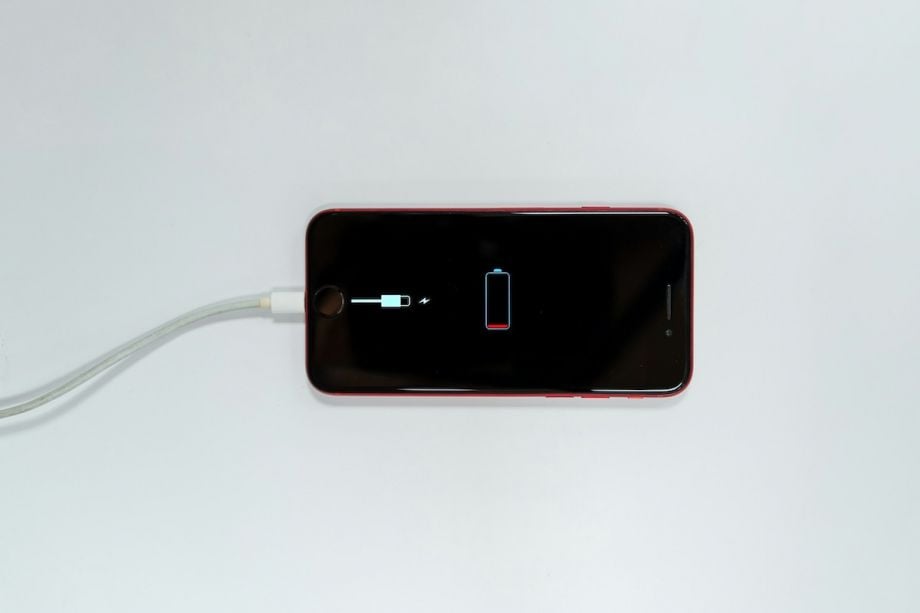
Above photo: Wengang Zhai / Unsplash.
As businesses and governments increasingly digitize services, often without offering analog alternatives, we’re creating new forms of civic exclusion and device dependence.
Our inventions offer solutions and convenience; the systems we build bind us to them.
Just look at our roads, wide strips of asphalt laid down for one invention: the car. Designed for mobility and convenience, the car quietly restructured our lives. Most of us spend our days behind the wheel, navigating a system built for cars. I see roads as canyons stretching between cities and suburbs, isolating homes, schools, offices and stores. In a car, we glide through them — we are part of the system. On foot, we are stranded, as if the world were not built for us.
In a recent showing of a documentary organized by a local cycling club, I sat in the theater with good company — people eager to make our city safer to navigate by foot-powered means. As the theater darkened, the screen lit up with a satellite image of Los Angeles, a scene dominated by dull gray. Asphalt and pavement dedicated to moving and parking cars account for 60% of the landscape. Houston? Nearly 80%.
It is unmistakable: Our cities are built for cars. The newfound mobility offered convenience, and individual ownership was inevitable. Our cities grew around cars; federal and state governments poured billions into building roads. Then came gas stations, overpasses, traffic lights, parking garages and strip malls.
The roads spread us apart, carving distance between people and essential services. They moved us so far away that the average American has no choice but to drive to get to work, school or the grocery store. We do not dare walk — it is too far. We consider riding a bike — it is too dangerous. Car ownership is not optional, but necessary.
Then the documentary got personal. The camera zoomed in on the driver’s seat: a bored parent staring at red taillights, inching forward to drop their kids at school; a frustrated hospital worker glancing at their watch, stuck in gridlock, late for a shift. I saw people confined inside machines they would rather escape.
There was resistance to building car dependency. In New York, Jane Jacobs fought against the car-centric development plans, advocating for more human-centered design – preserving the independence to move through communities on foot. She had some successes, but nationally, we built a world with negligible room for those on foot: a few crosswalks, limited buses and shoddy sidewalks.
Escaping the car is not a reality for most of us. A small percentage of Americans live in walkable areas where they can access essential services on foot — places that are often desirable and expensive. For the rest, walkability is a novelty; we find reprieve from the car by visiting pedestrian-only farmers markets, walkable Disney properties and quaint historic downtowns.
The film concluded with a hopeful turn: urban planners huddled around blueprints, working to rebuild a car-centric city and make room for people. The group lobbied relentlessly for funding and political support for pedestrian- and bike-friendly infrastructure. Their goal? To give people the option to safely navigate their communities without a car.
When the film stopped rolling, the organizer pointed to the screen: Please scan the QR code to sign up for the next advocacy meeting. As I watched glowing bricks lift to scan the black-and-white hieroglyph, a realization hit me. We are building a system that, like our roads, assumes ownership of a specific device – this time, the smartphone.
The smartphone, invented just two decades ago, offers conveniences such as instant information, connection to loved ones and powerful tools at our fingertips. But we are building a system that binds us to them.
Every day, we see more examples of services requiring a smartphone. Restaurants place QR codes on the table to order; paper menus are absent. Parking meters require an app for payment; coins are no longer an option. Events require e-tickets linked to a phone’s Near Field Communication (NFC) chip, the “tap to pay” technology, without an option to attend the event without one. Even my local public disc golf course requires you scan a QR to access a map of the course. At first glance, these seem like efficiency upgrades, but without a smartphone, you may be excluded.
More concerning, smartphone dependence is creeping into essential services we need to function in society. Public transit only offers routes and schedules on apps. Workplaces require authentication apps to clock in. Clinics require apps to check in. Grocery stores offer discounts only through apps. Government services demand app-based ID verification. When essential services become smartphone-only, we are left with no choice but to have the connected device at our fingertips.
Organizations embrace app-based services to cut costs, reducing staff and paperwork. Most likely do it with good intentions to improve efficiency, but no one is telling them to preserve analog alternatives. They quietly reinforce a world where we all need a connected device to function.
Sitting in the theater, I sat still. I did not have a smartphone on me to scan the QR code. I am among a small group of “dumbphone” users. We are people who ditch the smartphone for phones not connected to the internet, like flip phones or the many new dumbphones on the market.
There is a sense of freedom not carrying a device connected to the internet. No constant app notifications. No ability to doomscroll. Some call us Luddites, but I think of us as cyclists who keep biking to work because they enjoy the physical and mental benefits. Like the cyclist who watched impassable roads paved over their cities, we now watch QR codes being pasted between us and daily life.
Car commuters dream of reclaiming hours lost inside a car. We are already dreaming of reclaiming our time from smartphones, too. Books, articles, and documentaries warn of smartphone addiction. Many try to regain control by setting screen limits — often with limited success. Some even pay thousands to attend smartphone-free retreats. We are desperate to reclaim time and attention.
Mental health professionals increasingly recommend limiting smartphone use, particularly for the unfocused student, the anxiety-ridden doomscroller or the blue-light-flooded insomniac. Many benefit from removing smartphones from their daily lives, but will that remain possible?
Even as we proclaim the benefits of reducing screen time, double standards bind us to the screen. We advocate for screen-free childhoods, but schools communicate via social media or apps. Employers discourage phones on the job, but they require authentication and timekeeping apps.
There is a reason the most desirable places in the country are walkable: We are closer, more connected and freer when not confined to a car. Communities are reclaiming foot-powered mobility options, investing billions in bike lanes and pedestrian bridges.
Will we need to reclaim autonomy from the smartphone, after we have built complete dependence? We can avoid that fate if we act with collective will.
Allowing access to services with or without a smartphone is a matter of dignity and choice. When we build a system that forces smartphone use, we quietly erode autonomy and inclusiveness. We need leaders who recognize this — and strong voices, like Jane Jacobs once was, to push back. Local government and business owners must be encouraged to preserve offline alternatives. Just as the Americans with Disabilities Act mandates physical access, we must treat non-smartphone access as a basic right.
We are at a crossroads. Smartphone-dependent highways are being laid down into our daily lives — not with asphalt, but with QR codes and apps. Once paved, they are difficult to undo. If our infrastructure assumes everyone carries a smartphone to function, then all efforts to reduce screen time are futile.
Let us avoid waiting until it is too late. Otherwise, we will look back with nostalgic envy for a time when we did not require a smartphone to live — a time when we could navigate the world without a connected device in our pockets. We will only be able to retreat to smartphone-free enclaves to escape the always-connected systems we built.
Perhaps, in a few decades, someone will sit in a theater at a dumbphone club event, watching a documentary about people fighting to rebuild services so they are accessible without a smartphone. And they will sit, perplexed, wondering how we built total reliance on a device we knew we wanted to escape.