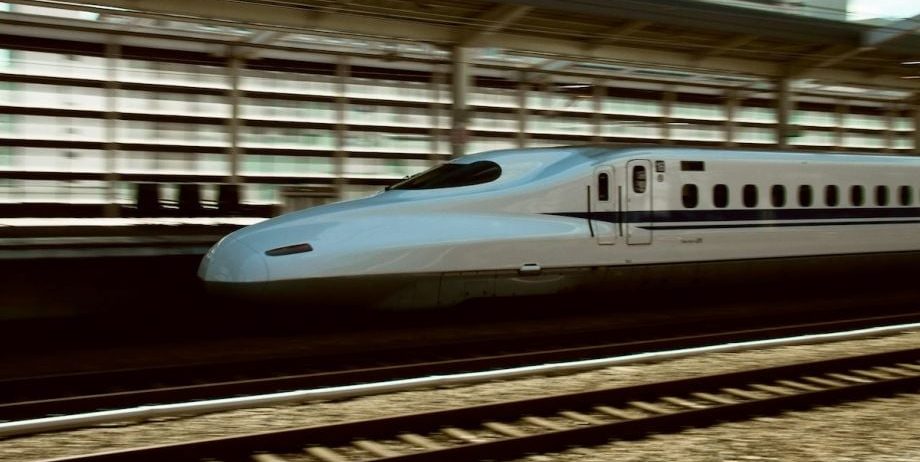
Above photo: Mariola Grobelska Unsplash.
I’ve followed the D.C. to Baltimore high-speed train proposal for close to a decade.
Our residents deserve better transportation systems, but this isn’t it.
Like many Marylanders, I want a faster, more reliable way to get around. But speed without equity, sustainability, or connection to real community needs isn’t progress — it’s just a flashy detour.
The proposed Superconducting Maglev (SCMaglev) train between Washington, D.C., and Baltimore is being marketed as a bold leap forward in transportation. In reality, it risks becoming another expensive infrastructure project that bypasses the people it claims to serve.
For nearly a decade, I’ve followed the SCMaglev proposal through public meetings, community briefings and presentations to elected bodies. Its proponents have promised everything from reduced traffic congestion to job creation to futuristic innovation. But when pressed for details, the vision often unravels.
I recall a spokesperson presenting to the Maryland General Assembly who claimed the train would reduce regional traffic by 30%. When I asked what data supported that number — what models, assumptions, or studies informed it — there was no answer. That kind of vagueness doesn’t inspire trust, especially when public resources and long-term impacts are at stake.
Let’s be honest about who this train is for. A one-way ticket on the SCMaglev is projected to cost between $60 and $80, a number far out of reach for most daily commuters. This isn’t transit for the working class. It’s designed for business travelers and tourists who can afford to pay a premium for speed. That’s not public transportation — that’s private luxury infrastructure, marketed under the guise of innovation.
Meanwhile, our existing transit systems — MARC, Metro and local buses — are chronically underfunded, poorly integrated, and often unreliable. These are the systems that everyday Marylanders rely on. What could billions in investment do for them? Expanded service, cleaner vehicles, more frequent trains, safer stations and increased access in underserved areas. These changes wouldn’t just move people, they’d uplift communities.
Environmental concerns are also front and center. As a resident of Laurel, I’m deeply concerned about the proposed route’s impact on the Patuxent Research Refuge, one of the region’s last preserved natural spaces. My twin boys and I walk its trails regularly, watching birds, exploring wetlands, and enjoying a rare patch of quiet. Running a massive high-speed rail line through it would disrupt fragile ecosystems and degrade an irreplaceable public resource.
The communities along the Maglev route — particularly in Prince George’s County, where I live — would bear the burdens without reaping the benefits. There’s no stop planned here. No promise of permanent, good-paying jobs. No integration with our existing transit grid. Just construction, disruption, and the environmental toll of a project that passes over us — literally and figuratively.
All this would be in the name of shaving a few minutes off a commute for a privileged few. The Maglev promises a 15-minute ride between Baltimore and D.C., but that number ignores the full commute picture. Travelers still need to get to the station, find parking or transfer from another line, and navigate the final leg of their trip. When you add it all up, the time savings may be minimal, especially for those not living directly in the urban cores. Without seamless integration into local transit systems, this project could actually make commuting more fragmented and less efficient.
Maglev supporters often point to Japan as a model. But Japan’s success with high-speed rail is rooted in decades of public investment, dense megacities and a deeply embedded rail culture. Maryland doesn’t share that context. Our cities are more spread out, our transit infrastructure is fragmented, and our commuter culture is built around cars. Borrowing technology from abroad doesn’t guarantee it will work here without the cultural and structural foundation to support it.
We absolutely need big, visionary thinking in transportation, and there is much we can learn from transportation overseas. But vision shouldn’t be confused with spectacle. A truly transformative transit system is one that connects more people affordably, sustainably and equitably. That means funding and fixing what we already have, centering the needs of those most dependent on public transit, and protecting the land and communities we claim to serve.
Maglev might be fast, but that doesn’t make it right. Let’s stop chasing speed, and start building systems that bring everyone along for the ride.