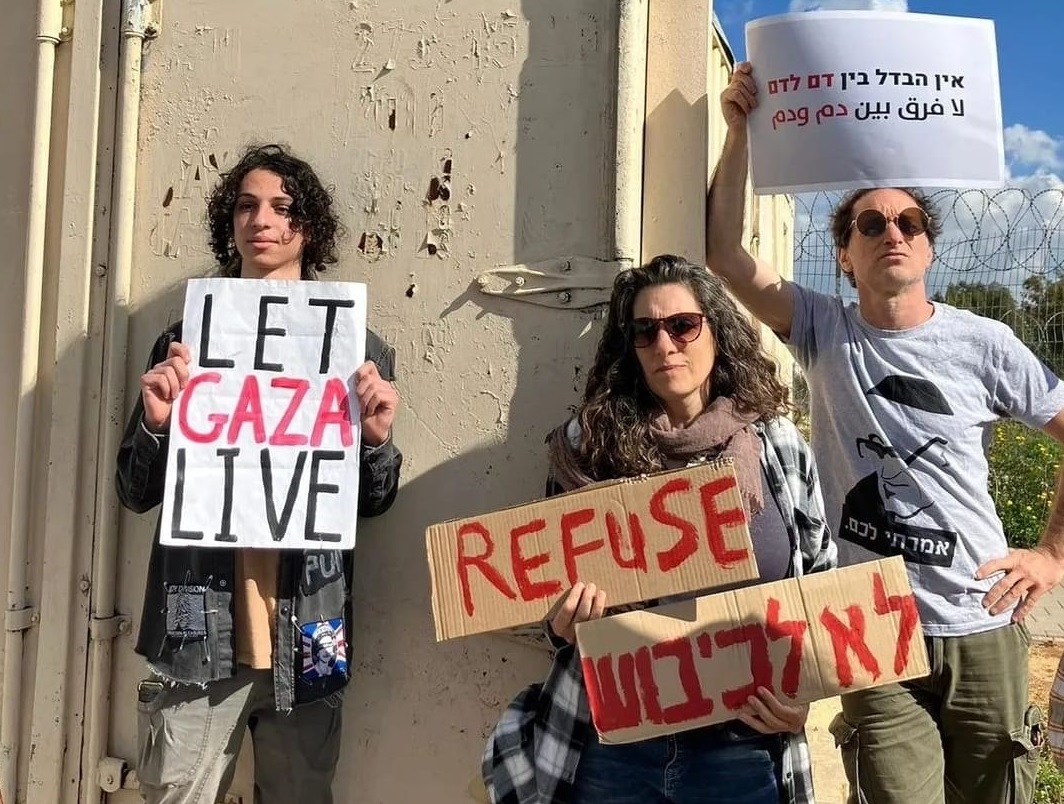
Above photo: Soul Behar Tsalik and Iddo Elam, both 18-year-old, will refuse to enlist in the Israeli Army in protest over the war of destruction in Gaza and the ongoing occupation of Palestinian lands. Facebook/Mesarvot.
Two recent reports within the UN system have reaffirmed that the right to conscientious objection to military service is an essential part of the right to freedom of thought, conscience, and religion.
Special Rapporteur On Freedom Of Religion Or Belief
In her latest report to the UN General Assembly on Freedom of Religion or Belief of People on the Move, the Special Rapporteur, Nazila Ghanea, makes explicit reference to conscientious objection. She notes that:
“…conscientious objection to military service relates to freedom of religion or belief and the rejection thereof may constitute religious persecution” (para. 44).
The report also highlights the challenges faced by conscientious objectors (COs) seeking asylum, including the “exacting standards and burdens of proof” that make it difficult for deserters and draft evaders acting on conscience to achieve refugee status.
Among her recommendations, the Special Rapporteur calls on States to:
- Respect the principle of non-refoulement on the basis of conscience, religion, or belief, including non-belief (para. 71(o));
- Provide thorough training for asylum decision-makers on international best practice, including UNHCR guidelines, and ensure familiarity with the risks faced by conscientious objectors (paras. 71(p) & (r)).
In addition, under the section Guiding questions to the relevant authorities, the report asks States to consider:
- To what extent is the right to conscientious objection to military service enshrined in domestic law and implemented in practice? (para. 70(b))
These references strengthen the recognition of conscientious objection not only as a human right but also as an urgent protection concern for refugees and asylum seekers.
UN General Assembly Report On Combating Intolerance
A second report, on Combating intolerance, negative stereotyping, stigmatization, discrimination, incitement to violence and violence against persons based on religion or belief, also highlights developments related to CO.
- In Lithuania, amendments to the Law on Military Conscription were adopted in 2024 to implement a European Court of Human Rights judgment, ensuring that those who object to military service on religious grounds can perform an alternative civilian service (para. 38).
- Civil society organisations, including Conscience and Peace Tax International, stressed that best practice in recognising conscientious objection is also an effective way of countering intolerance and stigmatisation of religious or belief communities (para. 39).
- Serious violations continue: Jehovah’s Witnesses reported that 64 of their members remain in custody in Eritrea as of April 2025, 21 of whom were allegedly abducted and jailed solely for refusing military service on grounds of conscience (para. 39).
Why This Matters
These reports reaffirm that conscientious objection is a recognised human right within UN frameworks. Crucially, they link conscientious objection to refugee protection and non-refoulement, underlining that objectors facing persecution must be granted safety.
For advocates, these references are valuable tools: they can be cited in policy dialogue, asylum cases, and international advocacy to press governments to respect the right to refuse military service, to provide genuine alternatives, and to end the punishment of objectors. By embedding conscientious objection into the broader UN human rights agenda, these reports strengthen the case for protecting COs everywhere, especially in times of war.
Read the reports: