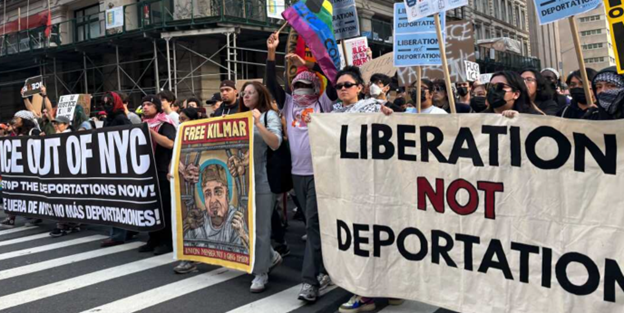
And Please Get Out There!
Nonviolence and Discipline go hand in hand in our Resistance.
There has been some media coverage of the U.S. government’s surveillance of (mostly nonviolent) dissent, resistance and protest. Little attention is given to the historical, covert use of disinformation, infiltration and counterprotestors in the government’s toolbox of techniques aimed at discrediting, and disrupting domestic activists and political groups.
You can be sure that the current regime is working overtime using its own versions of tactics used by Federal agencies in the bad old days (particularly from 1956 and into the 1970s). These tactics include discrediting people through psychological warfare; smearing individuals and groups using forged documents and planting false reports in the media; harassment; wrongful imprisonment; and violence.
Attorney Blake Kremer wrote the following advice for protestors to understand some probable risks of nonviolent protest and how to be prepared to deal with them. Please share this widely with everyone in your resistance communities.
What Protesters Should Know About Counter-Protesters and Infiltrators
By Blake Kremer
A Lesson from History
In the 1970s, the Socialist Workers Party (SWP) discovered that FBI agents had infiltrated their movement under COINTELPRO. These agents spread disinformation and even urged violent acts to discredit the movement. After a 15-year legal fight, the SWP won in federal court. The court confirmed the FBI had violated their constitutional rights, and the SWP received damages, rare proof that infiltration and provocation are real.
Why It Matters Today
- Provocateurs are real and may push violence to delegitimize a movement.
- Counter-protesters may bait participants, often trying to provoke a reaction for cameras.
- Media clips can distort. A few seconds of chaos can erase hours of peaceful protest.
Practical Guidance for Protesters
1. Stay Nonviolent
Nonviolence is both a principle and a shield. It denies provocateurs the excuse to criminalize your cause.
2. Use De-Escalation Teams
Assign trusted people to watch for strangers pushing violence. Calmly separate agitators and document behavior if safe.
3. Communicate Clearly
Let the public and media know when someone is not part of your group. Reaffirm your nonviolent commitment often.
4. Protect Each Other
Watch carefully who joins your actions. Do not let outsiders steer the group into dangerous behavior.
Bottom Line
Discipline and organization are the strongest defense. History shows that provocateurs lose power when movements stay true to their nonviolent principles and make them visible to the public.
The lesson of the SWP case is simple: infiltration is real, but nonviolence and discipline are stronger.
Click here to download a one-page printable (PDF) version of Blake’s essay.
Blake Kremer is a longtime attorney and has represented activists in federal and state jury trials for years. Blake does pro bono work including victim advocacy, hospice work, non-profit board work and work for a pediatric HIV/AIDS support organization. He has also advised and assisted peace activists, including defending Father Bill Bichsel, Sister Anne Montgomery, and several others after they broke into Kitsap Naval Base-Bangor in 2010 to bring attention to the base’s stockpile of nuclear weapons. Blake is an injury attorney when not assisting activists.
Read more from Blake: LEGAL CONSEQUENCES [of nonviolent direct action] FOR ACTIVISTS, as presented by Blake Kremer at Ground Zero Center for Nonviolent Action. You can also watch the video of Blake’s presentation.