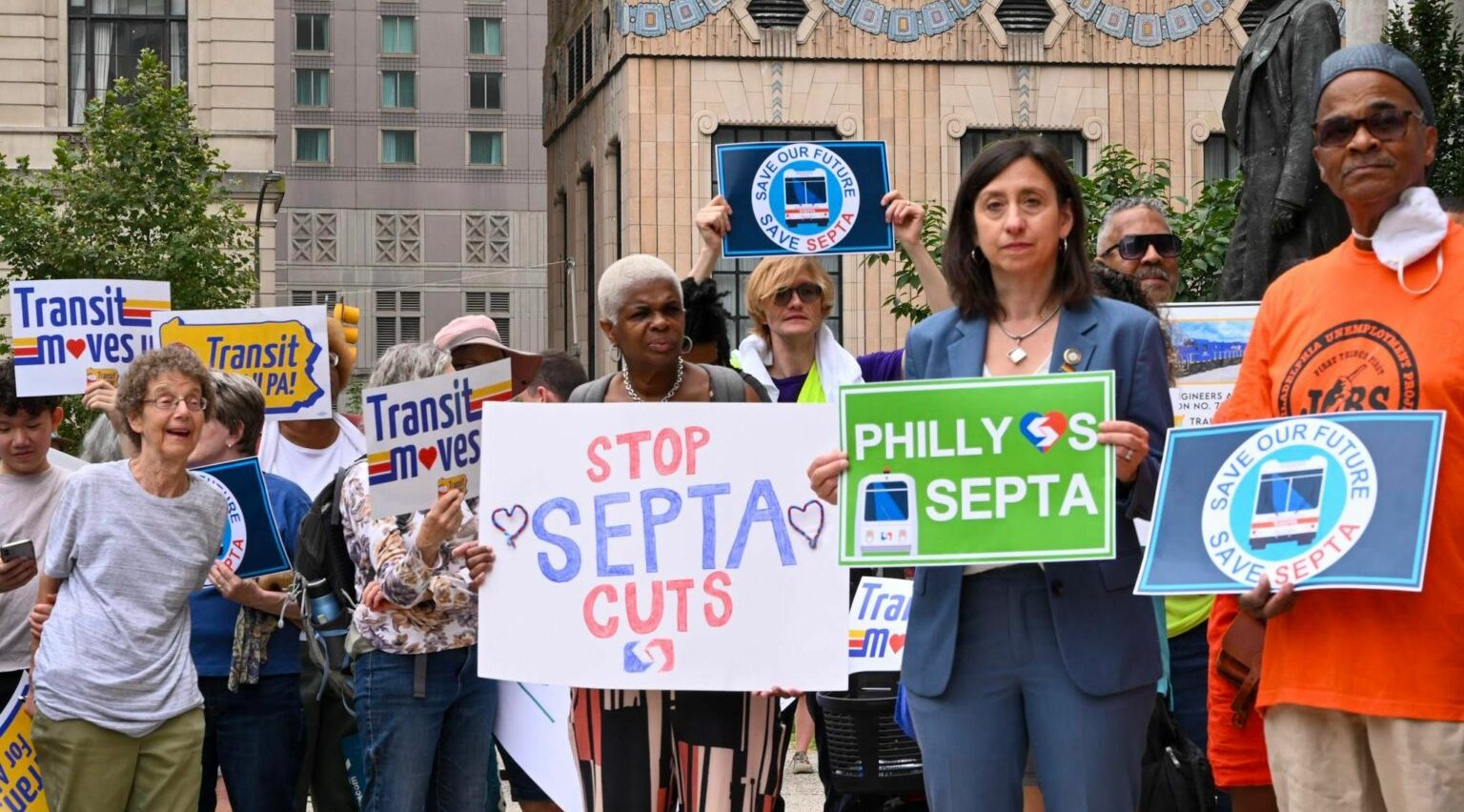
Above photo: Hundreds of people rally in Philadelphia to protest cuts to mass transit, Aug. 6, 2025. WW/ Joe Piette.
Over 300 people rallied outside Philadelphia City Hall on Aug. 6 to demand no cuts in services or fare increases for South East Pennsylvania Transportation Authority (SEPTA) trains, buses and trolleys.
Faced with a $213 million deficit, SEPTA plans to cut 45% of its services in the coming year unless the Pennsylvania legislature increases its budget proposal to include $292 million in new funding for public transit statewide.
The first 20% cuts in SEPTA services are set to start on Aug. 24. Plans include eliminating 32 bus routes and shortening 16 additional routes, cutting frequency of SEPTA metro and regional rail line service by 20% and raising fares by 21.5% on Sept. 1. Another 18 bus routes would be shut down sometime between Aug. 24 and Jan. 1.
Further cuts going into effect in January 2026 would include the elimination of five Regional Rail lines and a 9 p.m. rail curfew. SEPTA has the fifth-largest overall transit system in the country but these draconian cuts will shrink its size and create many problems for workers, students, seniors, people with disabilities and shoppers.
SEPTA officials say they need an answer from the state by Aug. 14 in order to set schedules and update information sources.
A question of priorities
A state budget standoff is now into its second month as negotiations have stalled well beyond the June 30 deadline. While the state legislature claims no funds are available for Philadelphia’s transit needs, it really comes down to priorities.
Pennsylvania purchased $65 million in Israel bonds this year for the Zionist state to conduct genocide in Gaza. That money could fund mass transit instead.
Pennsylvania is spending $3.3 billion in its 2025 budget to incarcerate 37,000 people. Reducing mass incarceration would increase funds available for mass transit and other community needs.
And on the federal level, the military budget for 2026 is projected to be around $1.01 trillion, which represents a 13.4% increase from the previous fiscal year. Cutting the U.S. war budget by around .02% would cover SEPTA’s deficit.
Meanwhile, China’s mass transit is expanding
As the transit system in the sixth largest city in the U.S. is threatened with massive cuts, China has built the most extensive and rapidly expanding transit systems in the world over the last 20 years. With over 40 cities operating networks and more under construction, China’s urban rail transit has become a cornerstone of its infrastructure development.
These systems are not only a testament to the country’s engineering prowess but also a critical solution to the challenges of urbanization, traffic congestion and pollution. China’s planners understand that mass transit effectively alleviates traffic congestion and reduces pollution, thus contributing to more sustainable cities.
A report titled “Public Transportation in China: An Efficient Journey” by HROne indicates that investments in public transportation can yield considerable economic returns, with every dollar spent potentially generating up to $4 in economic activity.
Again, it’s a question of priority. Do people’s needs come first, as in China, or does the drive for profits from the military-industrial complex outweigh the transportation, health care, education and other needs of the majority of people?