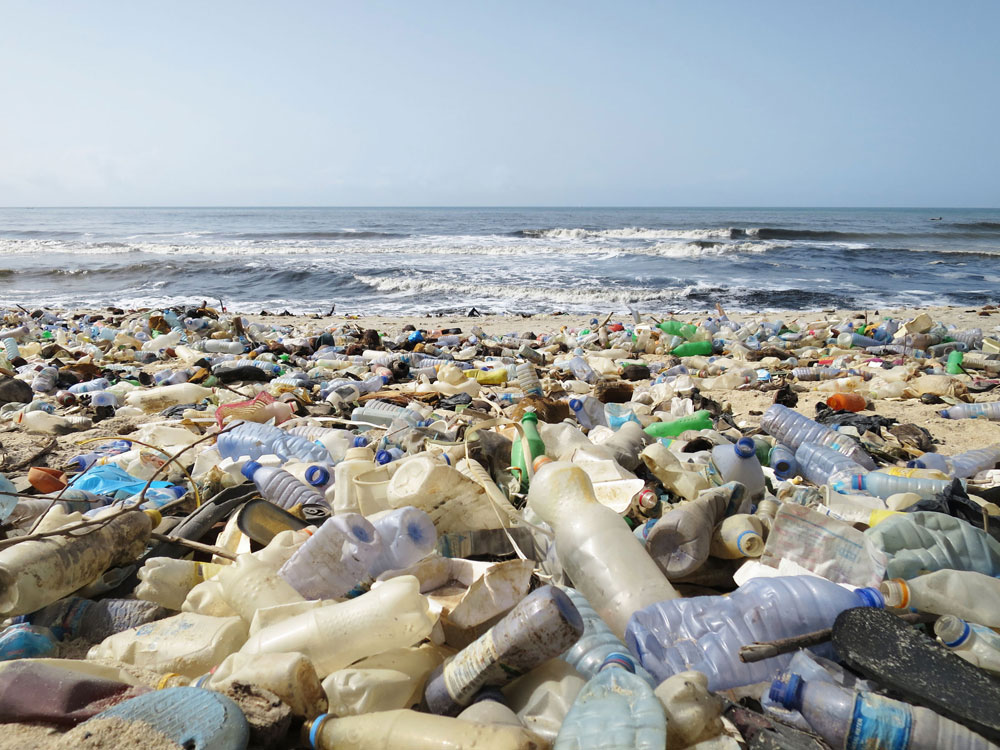
Above photo: Atlas of the Future.
Hundreds of Precious Plastic workshops worldwide convert waste into products and profits.
Most used plastic winds up in landfills, the ocean, or the landscape, where it kills wildlife or degrades and puts toxins and microplastics into the environment. And plastic put in recycling bins often isn’t recycled— sometimes it’s shipped from rich countries to poor countries and surreptitiously burned as fuel, creating and spreading even more toxins. Some researchers characterize the global trade in plastic waste as a new form of colonialism.
But a worldwide network of microrecyclers is turning local plastic waste into commercial products, while building community and expertise. The 10-year-old Precious Plastic movement encompasses hundreds of workspaces, ranging from Precious Plastic Gambia, which culls plastic pollution from tropical beaches in Africa, to Yukon Plastics, which commercializes waste plastic donated by businesses in northern Canada. One affiliate, Robries in Indonesia, has 20 full-time employees and serves clients worldwide. That’s not local, it’s true, but it’s still cool.
These recycled plastic businesses are generally more viable as primary sources of income in lower-income countries, and are money-making hobbies in pricier areas, but the shared innovation over DIY plastic recycling crosses all borders, and Precious Plastic shops in all sorts of countries are assisted by grants for economic development, environmental protection, hands-on education, and other good causes.
The basic equipment that the Precious Plastic shops use— shredders, presses, extruders, injection molders— are all open-source designs that the global community builds, improves on, and shares, although some locations also use commercial equipment. Products that the shops make and sell range from buttons, combs, and flowerpots to bricks, beams, and large sheets used in furniture and construction.
My local shop, Peninsula Precious Plastics, was started by David Schick (the primary source for this piece) and his wife and son. It’s a happening place. Among other things, it’s where a local designer shreds prescription pill bottles and molds them into Cocoplum sunglasses frames, and where an 8th grader recently started turning broken, discarded pickleballs into dry-erase boards favored by her A.P. Environmental Sciences teacher. The location also collects plastic from and hosts groups from ServiceNow, which supports Precious Plastic shops located near its four main offices, as a way to give back to their communities.
The Peninsula shop’s setup includes several open-source machines, plus a commercial granulator, flatbed CNC, and a cold press that makes sheets smoother and uniform after they come out of the hot press. For safety (and convenience), they also have HEPA fume extractors, a downdraft table, masks, and a PlasTell spectroscope that identifies types of plastic without your having to test what temperatures they melt and smoke at. To minimize creating microplastics, they only use blades and planes to remove excess plastic, never files or sandpaper.
Precious Plastic’s origin story starts with Dutch industrial designer Dave Hakkens, who learned how little plastic is recycled, and that it’s only done at an industrial scale. He started trying to create smaller machines that anyone, anywhere could build in order to turn waste plastic into a useful and valuable resource, and some engineers joined the effort. They published and promoted their open-source designs, supported them with how-to information and online community tools, and Precious Plastic shops have been sprouting up ever since.
Last month, Hakkens announced the Precious Plastic v5 effort to expand in several ways, including by developing a plastic credits system similar to how carbon credits currently work. Backed by standards and a verification trust chain, such a market would let small plastic recyclers label their products with statements like “This product offsets 3.7 kg of new plastic” while earning additional income from foundations, government agencies, or companies that want to buy recycled plastic offsets. The v5 expansion also includes plans to research viable substitutes for plastic, such as mushroom-, seaweed-, and bamboo-based materials.
So, are you looking for a new source of income that’s creative, and hands-on with something other than a keyboard or a steering wheel? As one of the Dustin Hoffman character’s parents’ friends tells him in The Graduate (1967), I have one word for you: Plastics.