Above photo: EPA.
The funds have been described as ‘really significant’.
And are part of Washington’s push to disarm the Lebanese resistance.
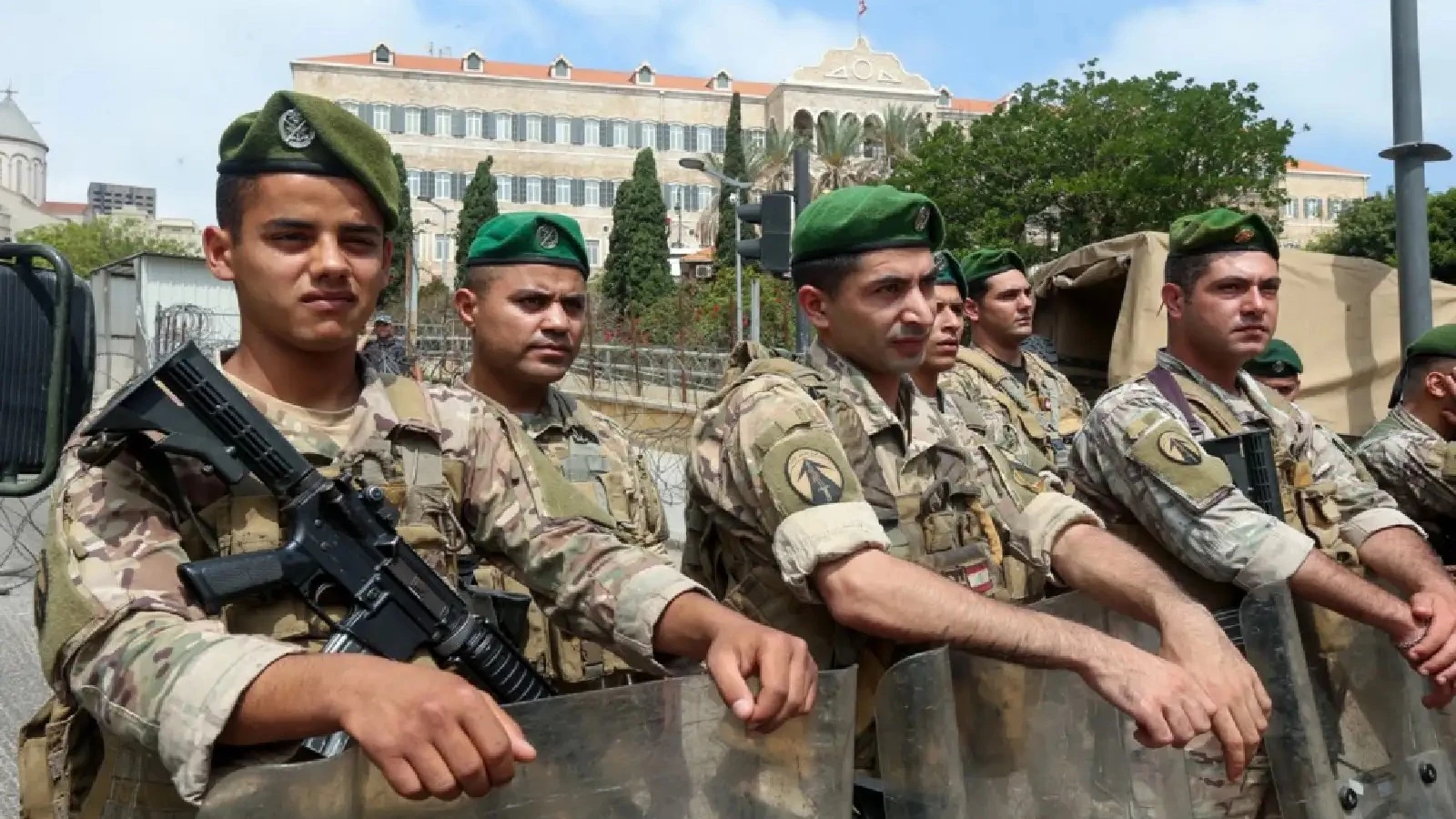
The US government has approved $230 million for Lebanon’s security forces to bolster Washington’s push for the disarmament of Hezbollah, sources told Reuters on 3 October.
“The funding includes $190 million for the Lebanese Armed Forces (LAF) and $40 million for the Internal Security Forces,” an informed Lebanese source said. “The funding will allow the Internal Security Forces to take over internal security in Lebanon so the LAF can focus on other critical missions,” the source added.
“For a small country like Lebanon, that’s really, really significant,” a US congressional aide said, adding that the funds were released “just before Washington’s fiscal year ended on 30 September.”
A State Department spokesman said in a statement to Reuters that US assistance aims to support Lebanese forces “as they work to assert Lebanese sovereignty across the country and fully implement UN Security Council Resolution 1701, the only viable framework for a durable security arrangement for both Lebanese and Israelis.”
Last month, Washington approved a $14.2-million package of assistance to help the Lebanese army disarm Hezbollah and other armed groups across the country. The Pentagon said it was aimed at “empowering the LAF in degrading Hezbollah in alignment with the administration’s priority to counter Iranian-backed terrorist groups in the region.”
The Lebanese government adopted a decision to disarm Hezbollah in August under heavy pressure from Washington.
Hezbollah has rejected the decision. It says it is open to discussing a national defense strategy, which would see its weapons incorporated into the Lebanese army and be available for use in defending the country if needed.
Yet the resistance group has emphasized that these talks cannot take place as Israel continues to attack Lebanon and occupy its territory in the south.
At least 300 people, including scores of civilians, have been killed by Israeli attacks on the country since the ceasefire was reached in November last year. Israel has also expanded the occupation it established during the ceasefire in violation of the deal, and Tel Aviv has said that it will not consider withdrawal until Hezbollah is disarmed first. Washington has publicly backed Israel’s position.
In early September, Lebanese army chief Rudolphe Haikal presented his disarmament plan to the government after being tasked to draft a strategy following the 5 August disarmament decision, which Hezbollah continues to reject. The Lebanese resistance movement and its allies withdrew from the Cabinet session before the army chief presented the plan.
Deliberations have been kept confidential, and the army has been ordered to present monthly updates about the implementation.
Given the confidentiality, the timelines of the plan remain unclear. Some Lebanese media reports have said that the government “backtracked” from its decision.
“The Lebanese … all they do is talk. There’s never been one act. We told them, you want our help? We gave them a playbook, but they can’t get there,” US envoy Tom Barrack said last month.
“It’s a good organization, it’s well-meaning, but it’s not well-equipped,” Barrack told The National in an interview. “Because who are they going to fight? We’re gonna arm them so they can fight Israel? I don’t think so. So, you’re arming them so they can fight their own people. Hezbollah.”
He also said Israel is going to “take care” of Hezbollah if Lebanon does not disarm the resistance group.
French President Emmanuel Macron has endorsed a plan for a Saudi-hosted conference to arm the LAF.
“Lebanon will breathe easier when Hezbollah is weaker and the rest of Lebanon will breathe even better when all of the arms held by Hezbollah are back in the force, in the hands of the Lebanese Armed Forces, there’s no other choice,” Macron said at the UN on 23 September.