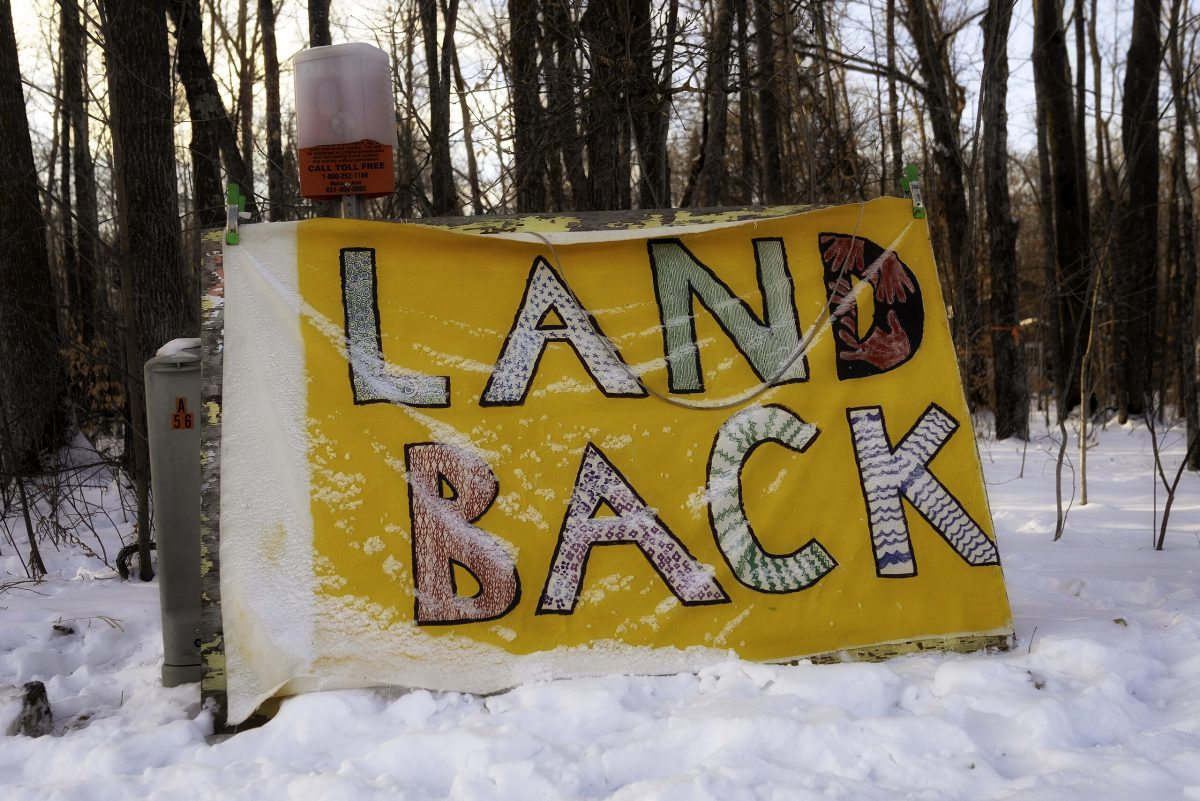
Above photo: Land back sign along The Great River Road in Aitkin County Minnesota.
Few phrases spark more panic in Canada than “land back.” The moment people hear it, a familiar fear floods the air: Are they going to take over? Kick us out of our homes? Erase entire towns?
We saw how this hysteria plays out in Oka, Gustafsen lake, and Caledonia. Headlines screamed disruption and disorder. In each case, the public fixated on road blockades, police and military clashes, and ‘vengeful’ protesters while largely ignoring the deeper story of Indigenous Peoples that were simply standing their ground. The recent Cowichan ruling sparked the same colonial reflex: homeowners braced for eviction, commentators predicted chaos, and officials rushed to reassure the public.
This kind of hysteria speaks volumes about Canada’s failure to reckon with Indigenous land rights. It also exposes an uncomfortable truth that Canadians rely heavily on logical fallacies to justify their beliefs. Without even realizing it, politicians, pundits, and social media warriors lean on a straw man—distorting land back into a fantasy of mass eviction—then escalate it with a slippery slope, suggesting that one recognition of title will unravel the entire country. Add in an appeal to fear, and suddenly Indigenous justice is framed as a threat to Canadian survival. It’s a false dilemma dressed up as inevitability: either Canadians stay secure, or Indigenous peoples take over.
As I explore in my forthcoming book Real Harm: How Logical Fallacies Impact Indigenous Lives, these flawed arguments do more than confuse debates—they actively harm public health and block meaningful change while locking us into a zero-sum conflict, where one side must lose for the other to win.
But here’s the truth: land back isn’t about mass evictions or revenge. It is about honoring broken agreements, restoring balance, and renewing the living systems that sustain us all. When Indigenous nations take back their lands, forests grow again, rivers run clean, salmon return—and communities gain the possibility of a future rooted in sustainability and care. Land back, in other words, is not the end of Canada. It is an invitation to build something better together.
The Tŝilhqot’in Nation: Canada’s First Title Victory
Before: For generations, the Tŝilhqot’in people of British Columbia saw their homelands logged, mined, and developed without their consent. Despite treaties never being signed, governments treated the land as if it were Crown property, erasing Tŝilhqot’in authority and opening the territory to destructive projects.
After: In 2014, the Supreme Court of Canada issued a historic ruling: the Tŝilhqot’in hold Aboriginal title to more than 1,700 square kilometers of their territory. It was the first time in Canadian history that Aboriginal title was fully recognized in law. Today, the Nation manages those lands on their own terms, pushing back against extractive industries and building sustainable futures rooted in their laws and governance. The ruling set a precedent that continues to shape Indigenous land claims across the country.
The Yurok and the Return of the Salmon
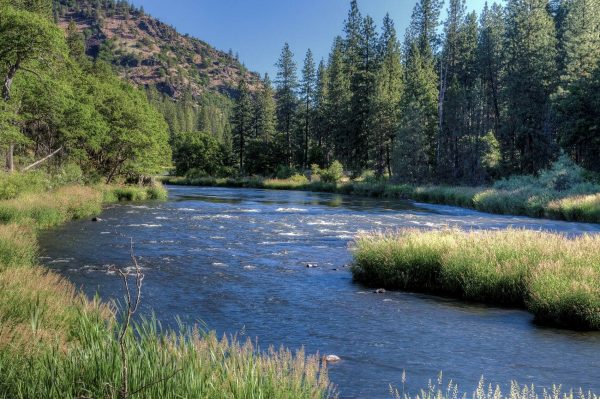
Before: The Klamath River was choking. Four massive dams cut salmon off from their spawning grounds. Algal blooms turned the water toxic. Fish numbers collapsed. For the Yurok Nation, who call salmon a relative, it was cultural and ecological devastation.
After: In 2022, after years of Yurok resistance, the dams started coming down. Tributaries reopened. Salmon are returning. Scientists say this could be the largest river restoration in U.S. history. For the Yurok, it’s not just science—it’s survival, ceremony, and future generations being able to fish again.
Australia’s Firestick Farming
Before: Government bans on Indigenous burning turned the land into a tinderbox. Bushfires raged hotter and deadlier, killing wildlife, torching homes, and sending smoke across the globe.
After: Aboriginal fire knowledge returned. Small, cool burns done at the right time patchwork the landscape, protecting trees, sheltering kangaroos, and reducing carbon emissions by millions of tonnes a year. What the world calls “innovation” is simply Indigenous knowledge finally being heard.
The Ogiek of Kenya and the Mau Forest
Before: The Mau Forest—Kenya’s water tower—was being gutted by illegal logging and state-backed evictions. Streams dried up. Wildlife vanished. Ogiek families were pushed aside in the name of “conservation” and profit.
After: In 2017, a landmark ruling gave the Ogiek their rights back. Now, communities are restoring wetlands, replanting native trees, and reviving beekeeping traditions. The forest breathes again, and with it, water security for millions of Kenyans downstream.
Haida ownership of Haida Gwaii
Before: In British Columbia, the ancestral expanse of Haida Gwaii—13,000 years of Haida stewardship—was treated as provincial Crown land. Treaties were absent, and the Haida Nation’s connection to their homeland went unrecognized. The colonial legal framework offered little acknowledgment of their enduring sovereignty—until now.
After: A groundbreaking shift. In April 2024, the Haida Nation and British Columbia government finalized the Gaayhllxid/Gíihlagalgang “Rising Tide” Haida Title Lands Agreement, formally recognizing Haida ownership of all Haida Gwaii. For the first time in Canadian history, a provincial government recognized Indigenous title across an entire traditional territory—outside of court decree. After a two-year transition, the Haida will manage 98% of the archipelago, including forests and protected areas.
Awas Tingni’s Triumph in Nicaragua
Before: The Mayangna community of Awas Tingni in Nicaragua watched helplessly as logging concessions were granted on their ancestral forest—without consultation, consent, or any recognition of their rights. The government’s actions threatened both their homeland and their survival.
After: In a landmark 2001 ruling, the Inter-American Court of Human Rights affirmed that the Awas Tingni people held a collective right to their traditional lands—a powerful acknowledgement of Indigenous sovereignty. By 2008, Nicaragua had completed the surveying and official titling of 73,394 hectares to the Mayangna, securing their land and enabling them to steward it on their terms.
Saugeen First Nation Restores Lake Huron Shoreline
Before: For 170 years, the Saugeen First Nation—whose connection to a stretch of Lake Huron was assured under an 1854 treaty—had that land silently omitted from their reserve. A mapping error left a 1.5-mile shoreline out of their territory, even as the rest of their treaty boundary remained intact. Still, the First Nation had long managed the southern portion as a public park. Many cottagers leased land within the reserve, while the disputed northern section remained under municipal purview.
After: In August 2025, Canada’s courts upheld the Saugeen First Nation’s claim and affirmed that the federal government had erred by excluding this sacred shore. With the Supreme Court rejecting the town’s appeal, the decision stands: that stretch of beach is now formally returned to the Saugeen First Nation. Saugeen has allowed the beach to remain open for community gatherings.
The Real Story of Land Back
The real before-and-after story is not just about rivers, forests, or wildlife—it’s about people, futures, and survival. When land is returned, languages return. Ceremonies rekindle. Children grow up learning to fish, farm, and gather in the ways their ancestors did. Health improves, cultural pride deepens, and communities heal. Land back is not a loss for Canadians—it is a gain for everyone who depends on clean water, stable climates, and living ecosystems.
Meanwhile, the “before” of colonial land management surrounds us: rivers poisoned by industry, farmlands stripped by monocrops, fires raging hotter than ever. That model is collapsing. The “after” of Indigenous stewardship is already visible in the Klamath River, the Mau Forest, the Tŝilhqot’in highlands, and beyond. These aren’t isolated miracles. They are living proof that Indigenous governance works—not just for Indigenous nations, but for all life that shares the land.
Canada, and the world, now face a choice. Do we cling to fear and hysteria about being “kicked out,” or do we embrace a future where Indigenous nations are empowered to lead the way? The evidence is undeniable: where Indigenous peoples hold rights to their lands, biodiversity thrives, carbon is stored, and balance is restored. If we want a livable future, the path runs through Indigenous sovereignty.