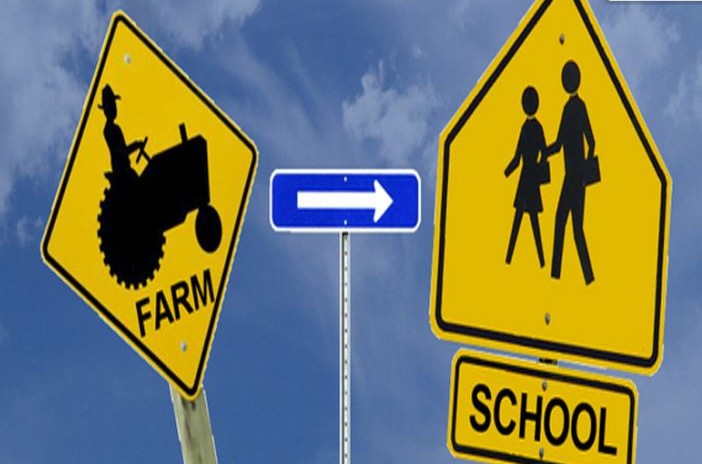
Farm to school is a program that connects local school and farms with the main objective of serving healthy meals in schools while improving children’s nutrition, supporting local farmers and introducing children to agricultural and environmental opportunities. There are many schools throughout the country that already participate in a Farm to School program. You can see if there is a school in your area here.
You can also start a Farm to School Program at your child’s school on your own — with the help of the school, community and student families. It’s an amazing program that when implemented correctly can have a huge impact on the school, environment, and community. All the while teaching children the importance of properly caring for the environment, eating healthy whole foods, and learning to be an eco-conscious adult.
#1: Farm to School Committee
The first step to implementing a farm to school program in your school is to form a committee of parents, students, school staff members and community volunteers to run the program. This type of program will need a large support system to run successfully – so the more individuals that you can get involved in the process, the better. The committee could have monthly meetings to organize, implement and ensure that the program is running smoothly.
#2: Gardening Program
If your child’s school doesn’t already have a gardening program, this would be the perfect opportunity to start one. Gardening is great for children on so many levels; it teaches responsibility, healthy eating habits, and is great for teaching science, botany, nutrition and even math in a fun, engaging environment. Each of the school’s grades could focus on a particular vegetable or fruit, or different grades could take care of different parts of the program. For example, the older children could care for egg-laying chickens while younger children could focus on weeding and watering the garden.
#3: Cooking Program
Another great program to introduce to your child’s school is a cooking program. The cooking program can be integrated with the gardening program to allow the children to plant, grow, harvest and then prepare and enjoy the bounty from the garden. Again, cooking is an amazing program for any school to have – it gives children real life experience learning a skill that they will utilize their entire lives. There are also opportunities to teach other skills during the process including math, nutrition and social skills.
#4: Local Farm Tour
Many school aged children have never even experienced a real-life working farm. Work with a local farm to organize a tour of the facilities. It helps children understand the program more if they are actually able to see how it works. You can also include as part of your farm to school program that participants are required (you won’t have to enforce, your members will want to go!) to spend time outside of school volunteering at your local farm.
#5: Farmer in the Classroom Classes
Invite a local farmer to participate in classroom sessions where the farmer can talk to the children about what is happening on the farm during that particular time of the year. It’s a great way to introduce the children, parents and school staff members to the farm, while giving the farmer a platform to discuss how their farm operates. If you have ever met a farmer, they are very passionate about whatever their farm grows, they will love to interact with your school’s community and your school will learn a lot in the process.
#6: Chef in the Classroom Classes
Another idea is to invite a local farm to table chef to participate in a classroom session discussing the importance of a farm to school program. These types of sessions are the perfect platform to invite new guests to. They can ask any questions that they have and get answers from someone who knows what they are talking about. You can have the chef emphasize the importance of cooking with whole ingredients and ways to prepare the harvest with the children by doing a cooking demonstration where children can try the finished meal.
#7: Visit the Farmer’s Market
A great way to jumpstart a farm to school program is to take a field trip to your local farmer’s market. It’s a fun activity that students, their families and the school staff will really enjoy. Teachers can help children to come up with a list of questions to ask the different farmers during their visit. Farmers will be more than happy to discuss how their organic goat soaps are made, where their organic tomatoes are grown or what makes their farm tick. It’s a great way for students to talk to a lot of different farmers during one trip – and it will open them up to all of the possibilities that are available through the farm. Farms are not only comprised of produce and vegetables, there are many other items that come to us directly from the farm.
#8: Volunteerism
Back to number four, where we discussed touring a local farm, volunteering at a farm on a regular basis is an even better option. Many farms have CSA programs in place where members work at the farm during the season to help grow and harvest the foods they will be consuming. Children and their families will really enjoy volunteering at a local farm. It’s a great way to be a part of the growing food process, it’s fun to get your hands dirty and you can learn a lot from the farmers who own the farm about the environment and what keeps a farm healthy and happy.
Have you considered starting a farm to school program at your child’s school? What are your thoughts?