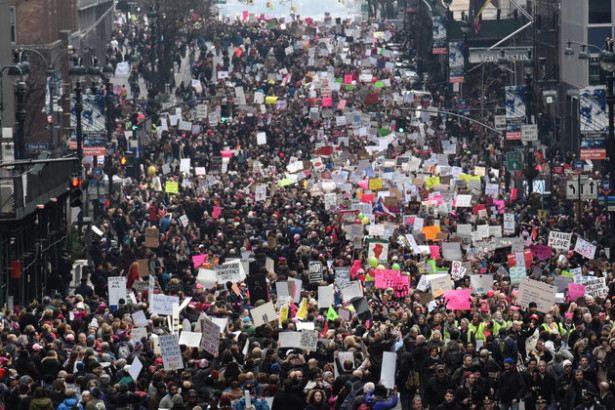
Above Photo: People participate in a Women’s March to protest against U.S. President Donald Trump in New York City, U.S. January 21, 2017.
Note: We applaud people coming out and protesting against Donald Trump. One issue need to think through is how Trump is building on the policies of Barack Obama. The seven nations were Trump has put forward a temporary ban are nations that Obama had also listed for restricting visa’s. We need to understand Trump is a product of systemic problems of Wall Street and war that dominates both political parties. Our goal should be transforming that system and we need to understand that we do have the power to make those changes. KZ
“I feel like it’s my duty to go out there.”
1. “We’ve always been ‘allies,’ but this year has turned us into ‘activists.’”
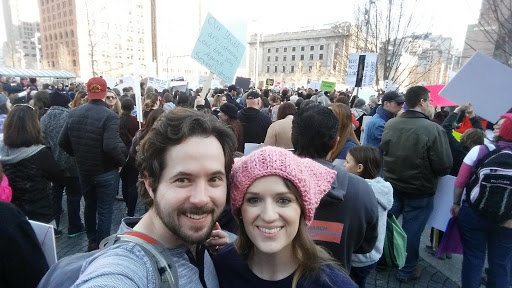
Kate Lantz and her husband at the Women’s March in Cleveland.
“The Women’s March in Cleveland was the first time both my husband and I have taken part in any political action other than voting.
“We are very privileged people: We’re both college-educated, heterosexual, married white people. None of the current administration’s plans would drastically affect our lives ― but we love and care about people who would be affected, so we felt it was important to be there to support them.
“We’ve always been ‘allies,’ but this year has turned us into ‘activists.’” ― Kate Lantz
2. “Being a person of color, under the LGBTQ umbrella, I really feel like it’s my duty to go out there.”
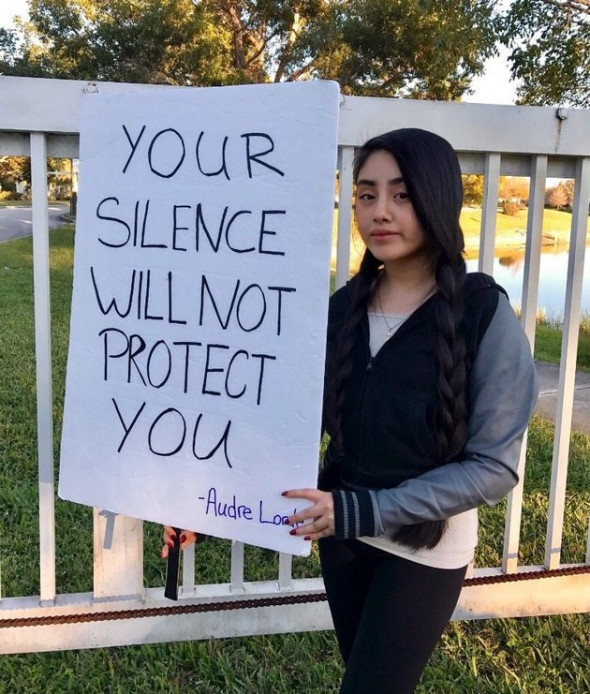
Kayla Alamilla, before going to an Inauguration Day protest in Miami.
“I went to my first protest march in Miami on Inauguration Day. Before then, my depression and anxiety had prevented me from going out and protesting, but now that I’m 18, I’ve got it under control. My father is an immigrant, and being a person of color, under the LGBTQ umbrella, I feel like it’s my duty to go out there.
“There were black and brown women there, and there were also white women ― a few of them pushed me trying to get to the front of the line with their signs. I think we should all learn to listen to other people who don’t have the same struggles as us, and white women should really look out for women of color.” ― Kayla Alamilla
3. “I was a lifelong Republican.”
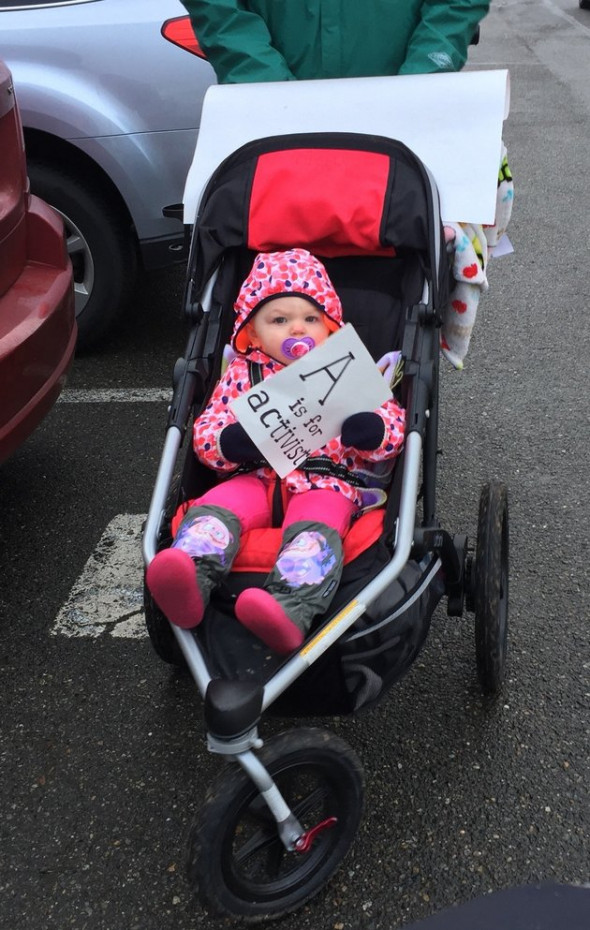
The child of one of Barbara Zimmerman’s friends, Jessica Foster, who marched with her in the Women’s March in Olympia, Washington.
“I was a lifelong Republican. My friends and I ― a small group of middle-class military spouses ― all held varying degrees of conservative viewpoints, followed the church and tended to be on the quieter side of things. No longer.
“Our weekly girls nights are normally innocuous talk, but around the election it started to get deeper. Two of my friends have been victims of sexual assault ― and that just can’t be the norm.
“Before the election, I switched from a Republican to a Democrat. We marched in the Olympia, Washington, women’s march. We marched because the world needed to know we were here, and we aren’t going anywhere.” ― Barbara Zimmerman
4. “I was a child refugee from Afghanistan.”
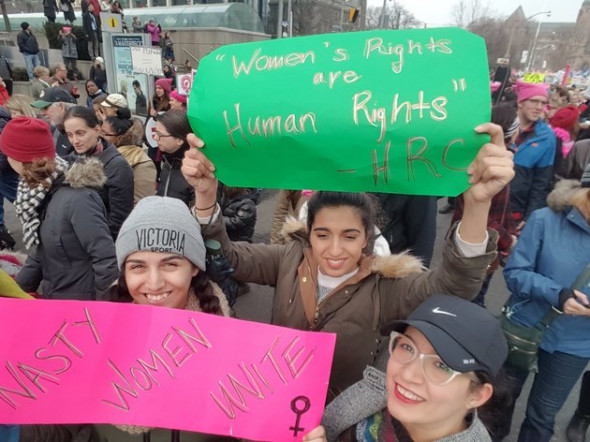
Tamana Riviere, right, with her sisters at the Women’s March in Toronto.
“I was a child refugee from Afghanistan. My family fled in the early ’90s and came to Canada. If the Red Cross had not been there, I would not be where I am now.
“The recent ban on refugees has been very disheartening. It could have been me. Refugees are fleeing war, fleeing terrorists ― and then to have them identified as such, just for practicing the same faith or coming from the same place…. And the Quebec attack on the Muslim mosque…. You think you’ve found safe haven, but 20 years later, it all comes shattering down beneath you.
“My concern is that we in the Western world have grown accustomed to having women’s rights and don’t know how privileged we are. But the march showed we as women are not going to stand for this.” ― Tamana Riviere
5. “I’m the former People magazine reporter who taped Trump pretending to be his own publicist.”
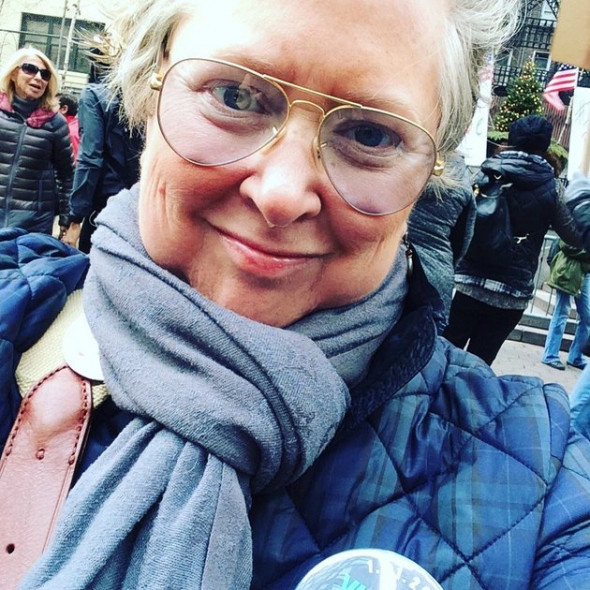
Sue Carswell at the Women’s March in New York City
“It was my first time marching, at 50, for the Women’s March in New York City.
“I’ve known the psycho-in-chief since the 1990s. I’m the former People magazine reporter who taped Trump pretending to be his own publicist, John Miller. We talked for about 20 minutes. He talked about how people like Madonna and Kim Basinger were trying to pick him up. But he always denies that he says things.
“I’m just so infuriated with him. I’m so against this administration. I just can’t believe what he’s doing to all people. I had to get moving. I had to march for women’s rights because they are my rights, my friends’ rights, my nieces’ rights.” ― Sue Carswell
6. “My family is a mix of both legal and illegal immigrants.”
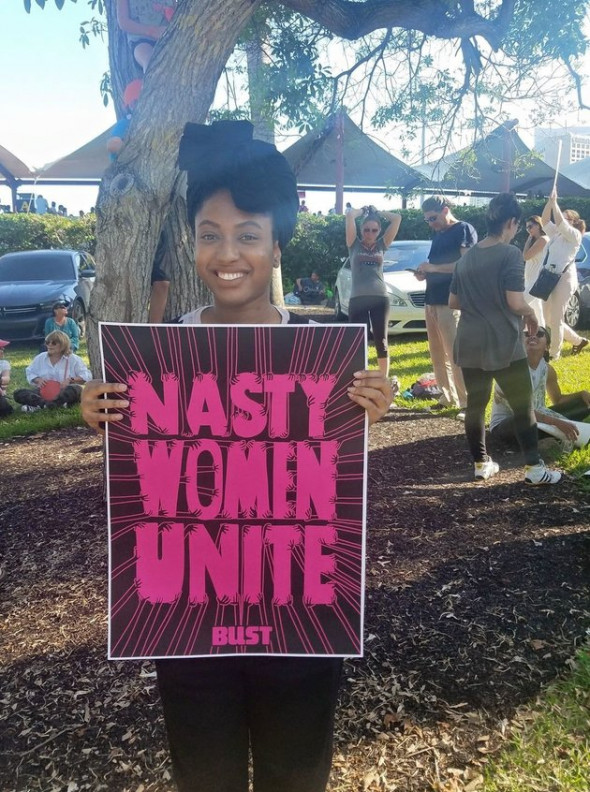
Christine Coleau says her family came from Haiti. She sees America becoming more like the land they fled.
”I marched in protests after the election, the inauguration and in the Women’s March. My family is a mix of both legal and illegal immigrants from Haiti, a poor country that’s been torn apart by corrupt leaders, disasters and extremists. They fought to get into this country, this supposedly perfect country, which is slowly becoming exactly what they fled.
“When I see that we’re putting bans on countries, not allowing them in, I think of my family. People don’t leave home just to leave home, there’s always a reason.
“To be fair, the reasons why we voted for Obama was because he gave us hope, and for a lot of poor white people, Trump gives them hope. It’s … well, I can understand it.” ― Christine Coleau
7. “I marched the day my fiancée deployed, because we’re afraid we may lose the right to marry.”
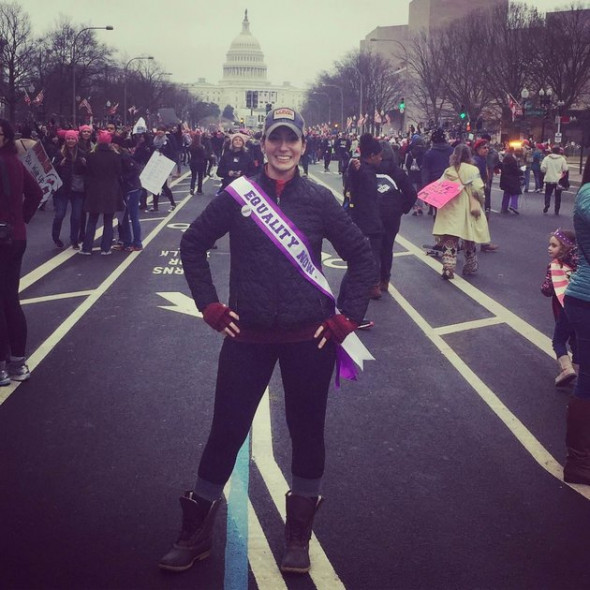
Carmen Warner marches proudly in Washington.
”I marched for the first time in the Women’s March on Washington. I marched on the day that my fiancée deployed instead of watching her ship depart, because we are afraid that when she returns from her deployment we, as members of the LGBTQ community, may have lost the right to marry.
“We got engaged in the last couple months. We want the white dress and walking down the aisle and all that. One of my friends, who is a lesbian and married, said you might want to do it before she gets deployed. But we don’t want to get married just because we’re afraid.” ― Carmen Warner
8. “Even as a conservative, I feel like the whole world has turned upside down.”
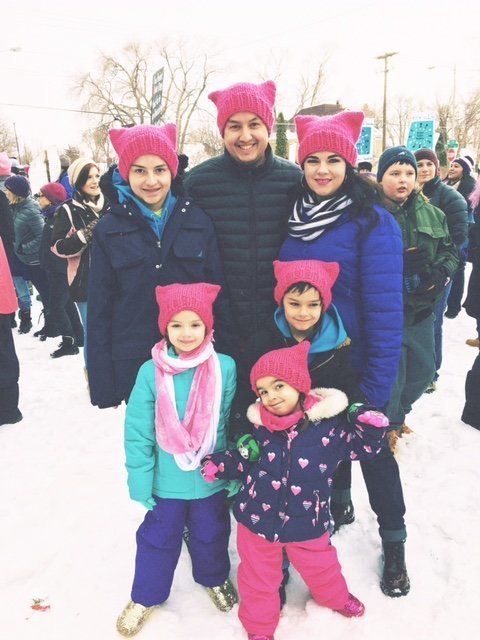
The Peterson family in Pocatello, Idaho, sister march for women.
”I am a Republican, and I marched in the Pocatello, Idaho, sister march. Even as a conservative, I feel like the whole world has turned upside down. I completely fail to understand how anyone could have voted for Trump, with his rhetoric about women, minorities, Muslims, LGBT. Is there a single group he hasn’t demeaned?
“I voted for Hillary Clinton ― the first time I ever voted for a Democrat.
“Women’s equality is not a partisan issue. Religious freedom is not a partisan issue. Protecting our immigrant friends, family and neighbors, most of whom are here legally, is not a partisan issue.” ― Kim Petersen
9. “I’m a queer woman, born into a Muslim family, whose father is an immigrant. I’m the poster child of what is happening.”
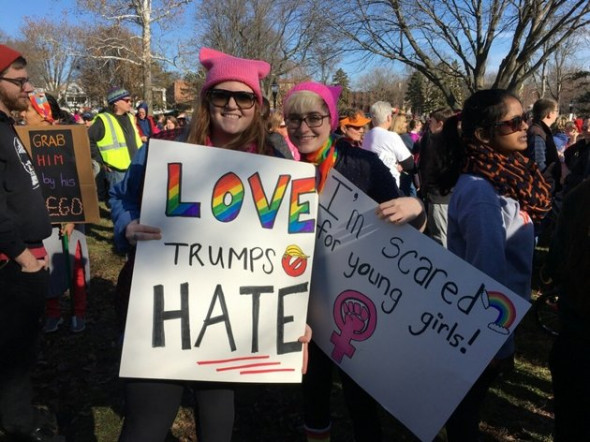
Seda Calbay and a friend at the Women’s March in Champagne, Illinois.
“I’m a queer, plus-size woman, born into a Muslim family, whose father was an immigrant. I guess you can say I’m the poster child of what is happening to this world ― although in person I have light skin, freckles and naturally red hair.
“I’m 25 now. At 15 my political views were: I don’t care, as a well-off, white-passing, then-straight woman. But after I started finding myself ― as queer, and being born in a Muslim family ― after Trump was elected, I decided I can’t be quiet anymore. Enough is enough.” ― Seda Calbay
10. “My great-grandmother, who lived in Germany during WWII, told me not to make the same mistake she did of staying silent.”
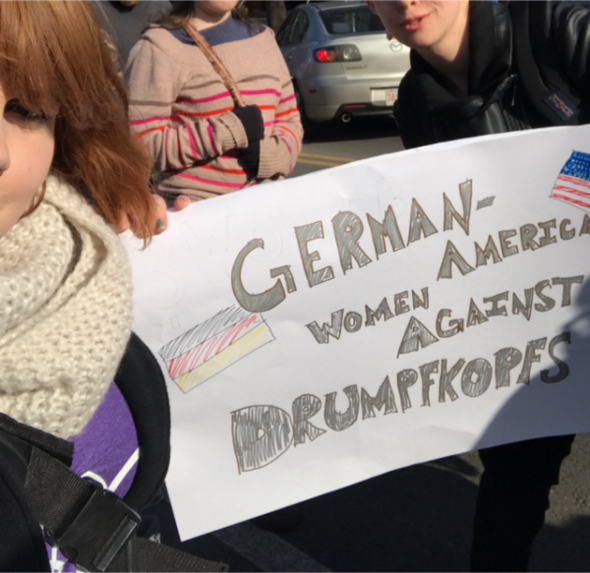
Elizabeth at the Women’s March in western Massachusetts.
“I’m a queer, disabled, 23-year-old student in western Massachusetts. I normally don’t engage in a lot of physical activism because I have a disability that makes it hard to go out into these large crowds ― but at this point, I feel like I have to stand up for my rights, as disabled and someone who is queer.
“My great-grandmother is 101 years old. She lives in Germany and lived there during World War II. She said everything she’s reading reminds her so much of what she witnessed before WWII with the Jews and told me not to make the same mistake she did of staying silent. I can’t be complicit, I can’t just sit by.” ― Elizabeth (She asked that her last name not be used, due to threats her family has received in the past.)