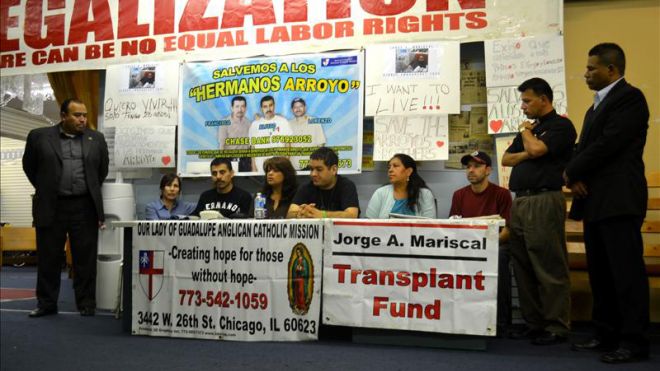
Hunger Strike for Health
On June 29, a group of 14 people began a hunger strike at Our Lady of Guadalupe Mission, 3442 W 26th St Chicago. The strikers are protesting discriminatory health care practices that deny undocumented people in need of transplants a place on the transplant waiting list. Hospitals routinely deny life-saving patient care based on immigration status and inability to pay: in a profit-driven medical system, only certain lives are deemed to be worth saving. Hunger strikers include patients and loved ones who demand that hospitals place people on transplant lists based on need and not on immigration or insurance status.
The Hunger strikers are calling for solidarity to help escalate the campaign and increase the pressure on hospitals and legislators. The schedule is changing every day in response to unfolding events, we will try to provide updates and latest news.
From Facebook Page:
Actions
Tuesday, August 6, times TBA (probably noon) – action at Christ Medical Center
Sunday, August 4, 3PM — Overnight protest in front of Northwestern Memorial Hospital
Saturday, August 3, 1PM – Press Conference @3442 W 26th St
Saturday, August 3, 6PM — Open Planning Meeting to develop an action for Monday at Christ Medical Center. Support needed develop more large-scale actions and increase the direct pressure on the target hospitals.
Friday, August 2, noon — action at Northwestern Memorial Hospital: we demand a meeting!
Thursday, August 1 — 6PM. Meeting with community and public officials
Wednesday, July 31 — Noon: Press Conference at UIC Medical Center, (corner of S Wood St and Taylor St)
Background
Patients, families and loved ones are on hunger strike to demand life-saving treatment be offered to everyone, including undocumented patients. ” We have been told there is no financial assistance for a transplant for uninsured patients. We find this to be unjust and inhumane. We cannot sit and wait until our loved ones die.” The strikers’ demands:
1. Critically ill undocumented patients who urgently need organ transplants should be placed on the organ transplant waiting list.
2. Policies should be put in place to evaluate each case and place patients on transplant waiting lists based on need and not on legal or financial status.
3. Policies are implemented that ensure affordable medicine for all waitlist candidates before and after transplant.