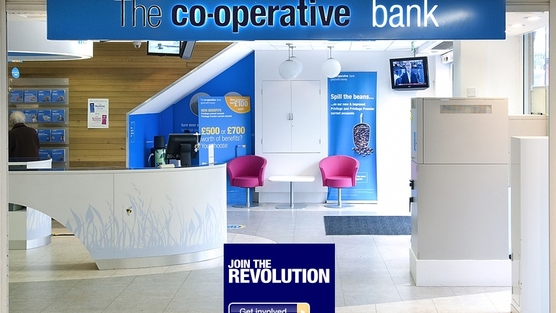
Restore the Co-operative Bank
By signing this petition, you will generate letters to Vince Cable (Department of Business), Companies House, Financial Conduct Authority, Prudential Regulation Authority and the financial institutions that are undermining co-operative values and principles in the birthplace of the co‑operative movement.
What You Need To Know
The Co-operative Group traces its history directly to the Rochdale Pioneers – recognised by the International Co-operative Alliance (ICA) as the birthplace of the co-operative movement. The Co‑operative Group is currently under threat from US hedge funds because its banking subsidiary – The Co-operative Bank – has been forced to plug a £1.5 billion ‘shortfall’ in its capital reserves. A few months ago, the Co-operative Group put forward a proposal to hold 70% of shares in a restructured bank, with the other 30% held by bondholders. Investors – led by New York hedge funds Silver Point and Aurelius Capital, taking advice from the investment bank Moelis – have rejected this proposal. Under a new proposal, outside investors will take a 70% stake and reduce the the Co-operative Group’s stake to 30%.
See the story at: http://www.bbc.co.uk/news/business-24605864
See Euan Sutherland’s announcement at: http://www.youtube.com/watch?v=RJxc0Cjjez8
Euan Sutherland claims that the values and principles of the co-operative will be embedded in the constitution of the reformed bank. This does not make it a co-operative – the ownership structure itself is a breach of co-operative principles and its legality will be questionable if the name ‘co-operative’ is used. Ian Snaith, the UK’s leading expert on co‑operative law points out that:
* The new bank does not conform to the definition of a co-operative as a ‘jointly owned and democratically controlled enterprise” passed by the 1995 General Assembly of the ICA.
* Nor does it conform to Recommendation 193 on Co-operatives passed at the International Labour Organisation (ILO) in 2002.
* Nor does it conform to the 2003 regulations for a European Co-operative Society (Regulation No 1435/2003) which explicitly rejects control by outside investors.
* Nor is it consistent with a United Nations (UN) resolution in 2009 on co-operative development.
* Nor will it conform to FCA guidance on the governance of co-operatives because it deviates from one-person, one-vote principles.
(see http://www.iansnaith.com/?p=670)
UK banking laws set out an ‘unequal playing field’ for financial services. The Co-operative Group cannot incorporate its bank as a Co-operative Society: it has to incorporate under the Companies Act 2006. This does not exempt it from operating in accordance with co-operative values and principles if it wishes to use the word ‘co-operative’ in its name because the Co-operative Group’s own objects include a commitment to carry on “business as a co-operative in accordance with Co-operative Values and Principles” (Clause 1.3) and to ensure that “the Society’s businesses and affairs are conducted in accordance with [the Co-operative Group’s] Purposes and Objects” (Clause 2.10.2).
The FCA, therefore, can exercise its consumer protection powers to protect bank customers from being misled by the use of the word ‘co-operative’ in the name of the bank if a majority of its shares are not owned by the co-operative movement.
Furthermore, section 76 of the Companies Act covers the way the activities of an organisation must be consistent with its name. The courts have already upheld an important test case. An association claiming its members were ‘certified accountants’ was required to change its name because it would mislead the public regarding the quality of its advice. The name ‘Co-operative Bank’ implies that the ownership of the bank is that of a co-operative – either directly or as a majority owned subsidiary. Ian Snaith’s review of the law shows that this will no longer be the case under the proposed ownership structure.
The Secretary of State has the power to force the Co-operative Bank to change its name on the grounds that it ‘misleads’ and ‘is likely to cause harm to the public’.
There is unequivocal evidence that public harm follows the demutualisation of financial institutions. The demutualisation of building societies in the 1980s and 1990s contributed directly to the global financial collapse in 2008.
What You Can Do
* Sign this petition to send a letter to the Secretary of State (Vince Cable) asking him to exercise his powers under section 76 of the Companies Act if the name continues to be used after it is no longer subject to majority control by the co-operative movement. It calls for the Co-operative Bank board to:
- Outline its plan to return the bank to democratic member-control within a fixed timeframe so that it conforms to ICA, EU and FCA guidance and law on co-operatives
- Change the bank’s name if it fails to return it to democratic member-control so that the public is not misled about its structure, characteristics, operating values and principles.
- Work with the FCA and Co-operative Group to act in accordance with its own rules that require its ‘businesses and affairs’ to operate in a way that is consistent with Co-operative Society laws, values and principles.
* Share this petition via Facebook, LinkedIn, Twitter, Google Plus and Tumblr and ask your friends, family and work colleagues to show solidarity with UK members of the co-operative movement.
How Bad is the Threat?
Aurelius Capital has been implicated in attempts to force Argentina to default on its debt (see: http://jubileedebt.org.uk/news/vulture-funds-cause-chaos-argentine-debt). One of the modus operandi of loan sharks and venture capital funds is to force organisations (or individuals) to default on debts so that powers agreed in contracts enable them to take control of their assets (or use power over the assets to advance their political interests).
The Co-operative Bank reported outstanding loans of over £33 billion in its 2012 financial statement. That’s a lot of people and organisations at risk if Silver Point or Aurelius aggressively use the bank’s powers to call in debts, or use the bank’s power to influence organisations at risk of default.
It is not just organisations in the co-operative movement who have a debt and/or credit risk at the Co‑operative Bank.
- The Labour Party currently has an outstanding loan of £1.2m at the Co-operative Bank. (source: Electoral Commission). Since 1992, it has benefitted from £34m in ‘cheap loans’ (source: http://www.thisismoney.co.uk)
- Nine constituency labour parties owe approximately £400,000 to the Co-operative Bank (source: Electoral Commission)
- 100 Local Authorities have approx. £460m deposits with the Co-op Bank (source:www.ft.com)
Help us keep US hedge funds out of the co-operative and labour movements in the UK.
Please sign the petition. By doing so, you will be showing solidarity with members of the co-operative movement worldwide who want to defend the heritage, values and principles created in the ‘birthplace’ of cooperativism.
Neil White, ICT and Press Office, Companies House
Edward Mule, Co-Founder, Silver Point Capital
Caroline Silver, CEO, Moelis Investment Bank, London
Mark Brodsky, Chair, Aurelius Capital Management
Whistleblowing Reports, Prudential Regulation Authority, London
Consumer Queries, Financial Conduct Authority
Vince Cable, Secretary of State for Business, Innovation and Skills
I am writing to alert you to the unacceptable situation emerging at the Co-operative Bank and to call on the UK Secretary of State to ensure that the Co-operative Bank plc operates in accordance with UK, EU and FCA regulations governing co-operative societies.
Euan Sutherland recently announced that the Co-operative Group would become a minority shareholder in a reformed Co-operative Bank plc. He claimed that the values and principles of the co operative will be embedded in its new constitution. However, this does not make it a co-operative as it will not be majority owned by the co-operative movement through the proposals that have been put forward. Ian Snaith, a leading expert on cooperative law, points out that:
• The new bank does not conform to the definition of a co-operative as a ‘jointly owned and democratically controlled enterprise” approved by the General Assembly of the ICA in 1995.
• Nor does it confirm to the ILO Recommendation 193 definition of co-operatives passed in 2002.
• Nor does it advance co-operative development consistent with United Nations (UN) resolutions.
• Nor does it conform to regulations in the Statute for a European Co-operative Society (Regulation No 1435/2003) which requires democratic control by members, not investors.
• Nor does it conform to FCA guidance on the governance of co-operatives which precludes voting power based on the amount of money invested.
(see http://www.iansnaith.com/?p=670)
The Co-operative Group incorporated its banking arm as a PLC (public limited company) and is regulated under the Companies Act 2006. However, when deciding on, or agreeing a new structure for the bank, it must still operate in accordance with co-operative values and principles because the Co-operative Group’s own objects include a commitment to carrying on “business as a co-operative in accordance with Co-operative Values and Principles” (Clause 1.3) and to ensuring that “the Society’s businesses and affairs are conducted in accordance with [the Co-operative Group’s] Purposes and Objects” (Clause 2.10.2).
The FCA, therefore, can exercise its consumer protection powers to protect bank customers from being misled by the use of the word ‘co-operative’ in the name of the bank if a majority of its shares are not owned by the co-operative movement.
Furthermore, section 76 of the Companies Act covers the way the activities of an organisation must be consistent with its name. The courts have already upheld an important test case. An association claiming its members were ‘certified accountants’ was required to change its name because it would mislead the public regarding the quality of its advice. The name ‘Co-operative Bank’ implies that the ownership structure of the bank is that of a co-operative – either directly or as a majority owned subsidiary. Ian Snaith’s review of the law shows that this will no longer be the case under the proposed ownership structure.
The Secretary of State has the power to force the Co-operative Bank to change its name on the grounds that it ‘misleads’ and ‘is likely to cause harm to the public’.
There is unequivocal evidence that public harm follows the demutualisation of financial institutions. The demutualisation of building societies in the 1980s and 1990s contributed directly to the global financial collapse in 2008.
I call on:
• The Secretary of State (Vince Cable) to exercise his powers under section 76 of the Companies Act and require the Co-operative Bank plc board to:
a. Outline a plan to return the bank to democratic member-control within a fixed timeframe so that it conforms to ICA, EU and FCA guidance on the governance and regulation of co-operative enterprises.
b. Give notice to the bank that it must change its name if it fails to return the bank to democratic member-control within the fixed timeframe so that members of the public are not mislead regarding its structures, characteristics, operating values and guiding principles.
c. Work with the FCA and Co-operative Group to ensure compliance with the Co operative Groups own rules by ensuring that its ‘businesses and affairs’ operate in a way that is consistent with Co operative Society laws, values and principles.
Sincerely,
[Your name]