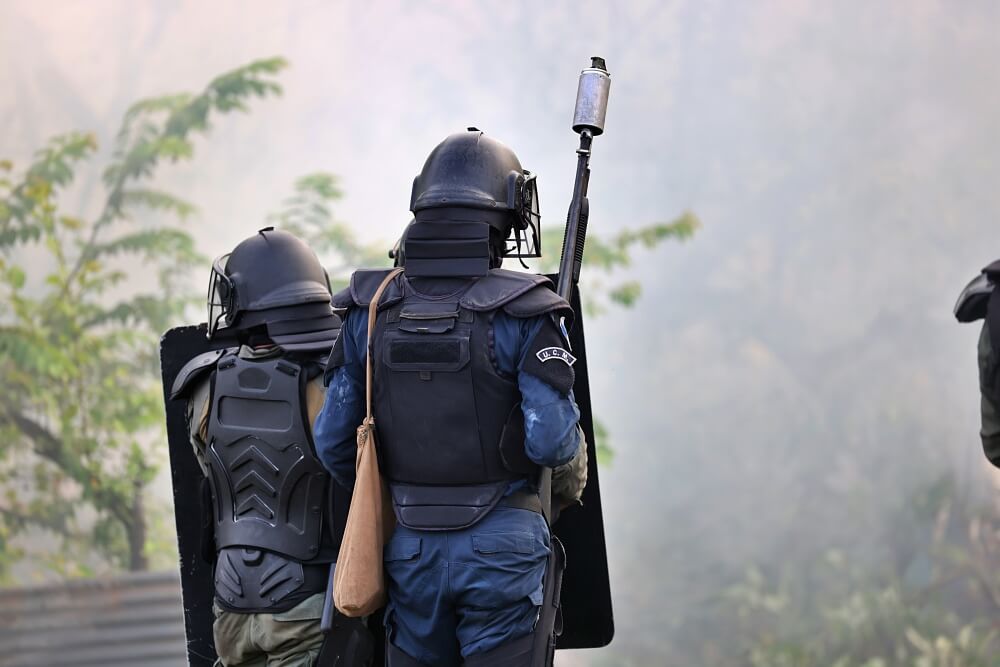
A wave of protests across Panama has led to the widespread use of chemical agents, and growing calls for international oversight.
The catalyst is Law 462, a recent reform to the country’s Social Security Fund. The government says the law is necessary to fix a system under financial strain. But many Panamanians see it as a threat to healthcare access and economic security—especially for workers, students, and Indigenous communities.
Protesters have been organizing for weeks with teachers, unions, students, and Indigenous peoples forming a broad coalition. They argue Law 462 reflects a deeper pattern of cuts to public services and the erosion of democratic rights.
Instead of meeting these concerns with dialogue, the state has escalated its response.
Police Use Force Against Protesters
Police have employed aggressive tactics to disperse the protesters, using rubber bullets, tear gas and other chemical agents. According to The Movement for the Defense of the Territories and Ecosystem of Bocas del Toro (MODETAB) tear gas has even been dropped from helicopters onto local communities and schools in the regions of Tolé and San Lorenzo (Chiriquí), and Arimae (Darién).
Dozens have also been arrested, including students and faculty at the University of Panama, which has long served as a center for political expression. Additionally, eyewitnesses have reported military-style operations in several provinces, with helicopters circling over Ngäbe-Buglé territory and heavily armed units entering Indigenous lands without community consent.
In Arimae, an Indigenous town in Darién, local leaders say they were followed, harassed, and threatened for organizing protests.
Panama’s Indigenous nations, especially the Ngäbe-Buglé, have played a key role in this movement. Their opposition is rooted in a long history of struggles over land, water, and cultural rights. They say the recent repression reflects ongoing state neglect and violence.
MODETEAB issued a public statement condemning the government’s aggressive response, stating,
“These actions violate the rights and individual guarantees enshrined in the Panamanian Constitution, as well as international human rights commitments that Panama has signed.
“We call for solidarity from citizens and regional and international organizations to bring visibility to and denounce the abuses committed by the Panamanian government against its own people.
We also make an urgent appeal to the Panamanian government to immediately cease the atrocities and abuses committed by the National Police and the National Border Service (SENAFRONT).”
So far, President Mulino’s government has stood by its actions.