Skip to content

Indigenous Communities From Southern Mexico Refuse To Bow To ICE

Above photo: Dancers from Las Azucenas de Maria perform Jarabes from Oaxaca’s central valleys on the stage in the plaza. David Bacon.

Increasingly targeted in immigration raids, Mixteco and Triqui communities hold festivals of resistance.

In many agricultural fields of the West Coast of the United States, you’re more likely to hear Mixtec or Triqui languages spoken than Spanish. Both are common among the Indigenous people of southern Mexico, some of whom now pick grapes for Napa and Sonoma County’s prestige wineries, or apples in century-old orchards. Without their labor, rural economies in California would collapse.

Yet Mixteco and Triqui migrants are being increasingly targeted in immigration raids terrorizing California’s rural communities. In farmworker families, mothers and fathers now give their children phone numbers to call if parents are abducted on the way to or from work. It can be an act of bravery simply to walk to the store, or to drive a car at night.

That made it an act of resistance when Triquis and Mixtecos in the Sonoma County town of Healdsburg came out in late July to celebrate the unique culture they’ve brought with them over the course of their 2,000-mile journey from Oaxaca and Guerrero. They call their festival the Guelaguetza — a celebration featuring a fabulous display of dancers in elaborate masks and tall headdresses, performing to music from home. Indigenous towns in Mexico often have their own dance; the Guelaguetza brings them together in all their vivid variety.

The main Guelaguetza is held in Oaxaca itself, but over the last four decades, the number of Mixtecos, Triquis, Chatinos, and other Indigenous peoples in the U.S. has grown so large that there are now several Guelaguetzas held each year north of the border. Indigenous communities organize dance troupes partly to show off their culture, and partly to give young people growing up in the U.S. a chance to learn the language and dances, and to imagine a home they may have never seen.

When Healdsburg’s Triquis decided to do a Guelaguetza, it would be, as one organizer told Truthout, a Guelaguetza de Resistencia, or a Resistance Guelaguetza. The act of simply dancing in public on a Sunday in the town plaza was a way of saying, “Aqui Estamos, y no nos vamos” — “We’re here, and we’re not leaving.” And even Healdsburg’s mayor and one of its council members attended, offering their welcome.

The late Mixteco community leader Rufino Dominguez-Santos explained that dances and language are not just a way to celebrate identity, but are an essential glue that keeps communities together, helping them survive in a hostile environment. “Beyond organizing and teaching our rights,” he told Truthout back in 2006, “we try to save our language. Even though 500 years have passed since the Spanish conquest, we still speak it. We are preserving our way of dancing, and rescuing our lost beliefs — that nature is something sacred for us, just as it was for our ancestors.”

In these photographs, Healdsburg’s Indigenous community activists showcase their deep roots. In spite of fear and racism, the culture of their hometowns in Mexico have been reproduced and they now celebrate thousands of miles further north in California.
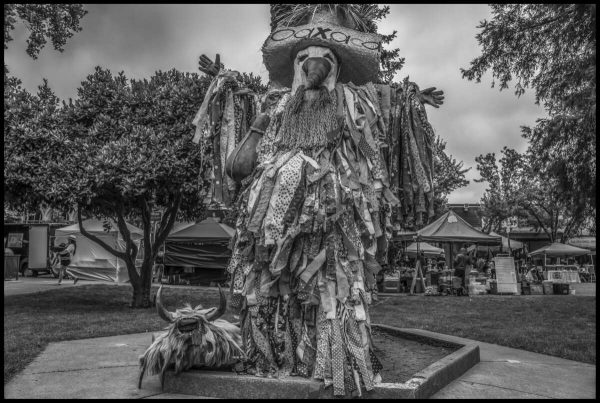
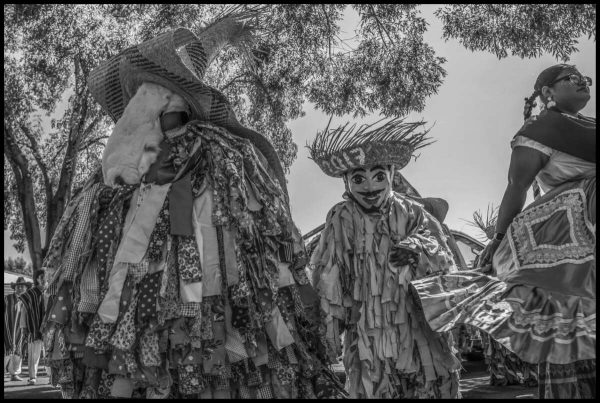
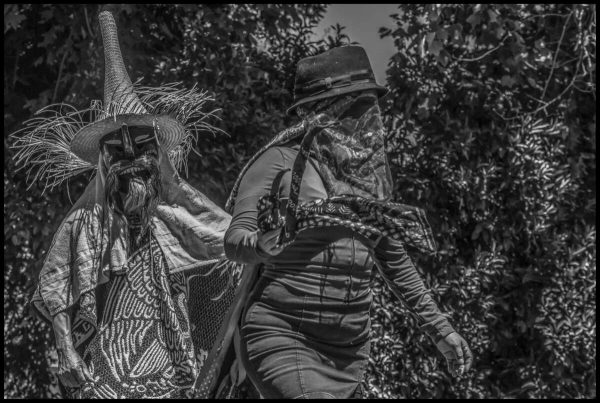
The Tiliche — which means “the old one,” but also refers to the rags or castoffs it is made from — is a figure in dances from the town of Putla de Guerrero. The costume is put on display to invite people to the Guelaguetza in Healdsburg, California.
David Bacon
Musicians from Half Moon Bay, California, gather for the Guelaguetza.
David Bacon
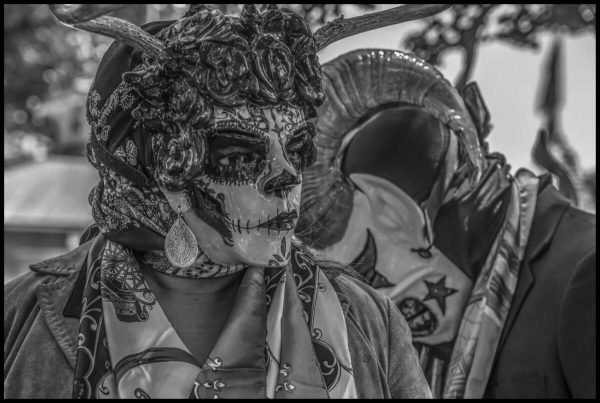
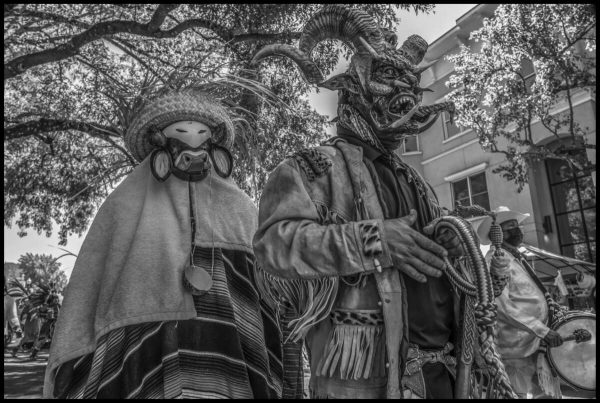
A member of the Grupo Diablos Mixtecos de Oaxaca wears a devil’s mask. Members of the informal network perform and share ideas at each other’s events, bringing more women into the dance, as well as new styles of masks.
David Bacon
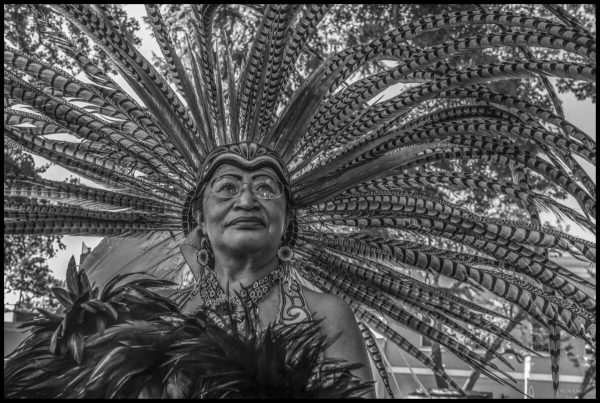
An older member of Grupo Calpully XochilYauhtli (Casa Flor Santa Maria) wears her feather headdress. David Bacon
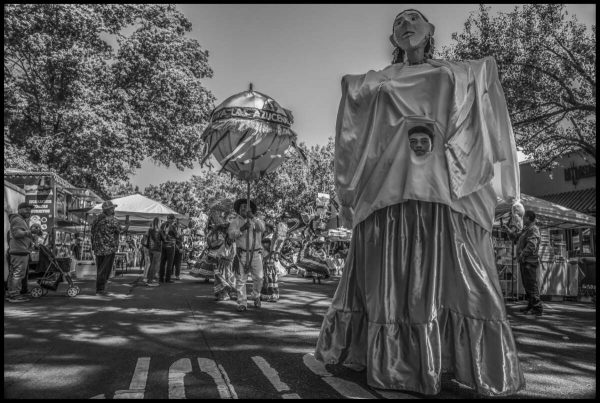
A procession of dancers, the Calenda, sets out around Healdsburg Plaza, led by the gigantes — giant processional figures — and a globe, a custom of the towns in Oaxaca’s central valleys. David Bacon
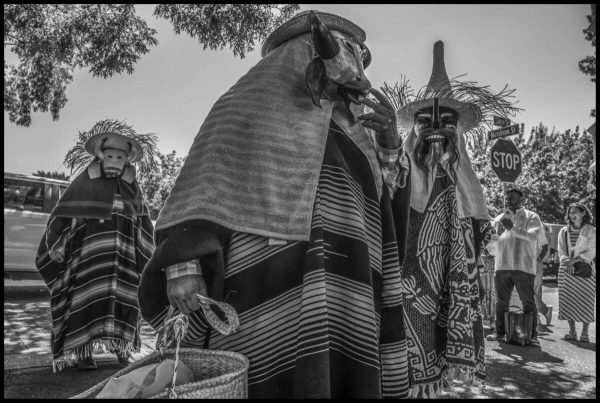
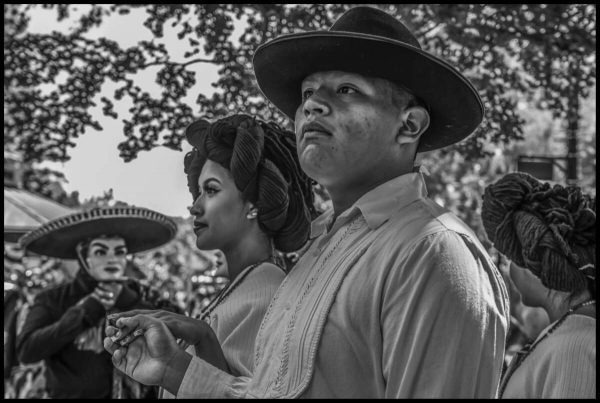
Two performers of Sonoma County’s Comite Pochtlan, a local group of cultural activists, wear costumes of the Viejos de Putla Villa de Guerrero. David Bacon
Members of Sonoma County’s Comite Pochtlan wear costumes to perform the Comparsa of the Viejos de Putla Villa de Guerrero. David Bacon
Dancers and musicians join the parade in the Calenda. David Bacon
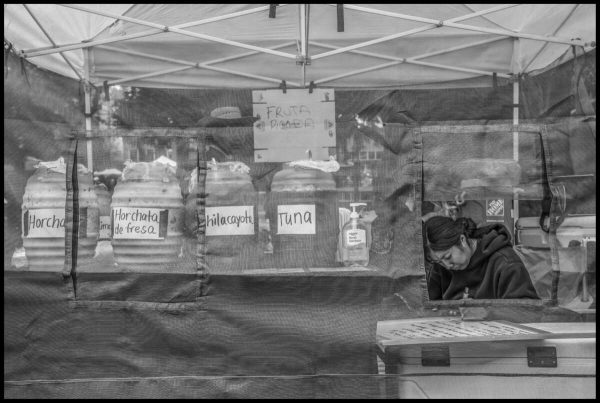
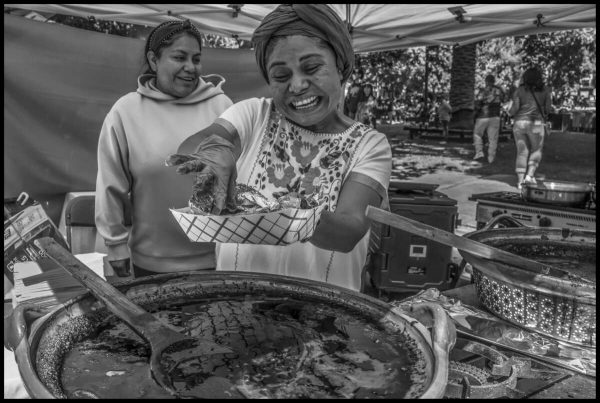
Food stands line the plaza. This one advertises aguas, or drinks made from rice (horchata, and horchata with strawberries), cactus fruit (tuna), Oaxacan squash (chilacayote), and other fruits and vegetables. David Bacon
This food stand sells Oaxacan mole that can be made from chocolate, sesame seeds, chiles, and other ingredients. David Bacon
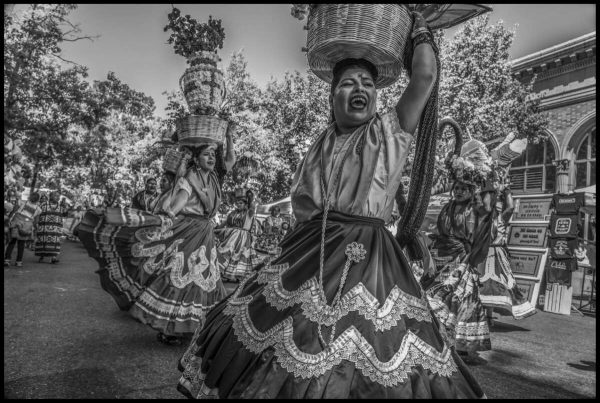
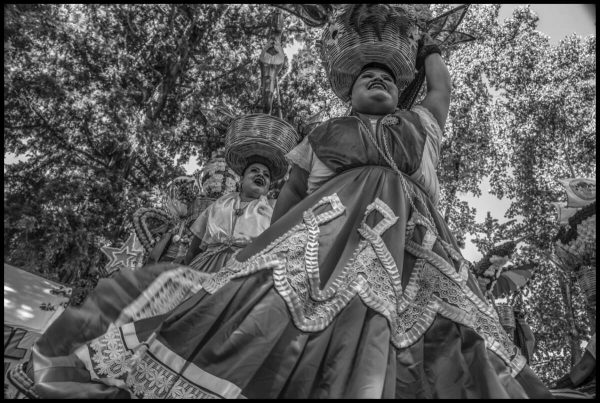
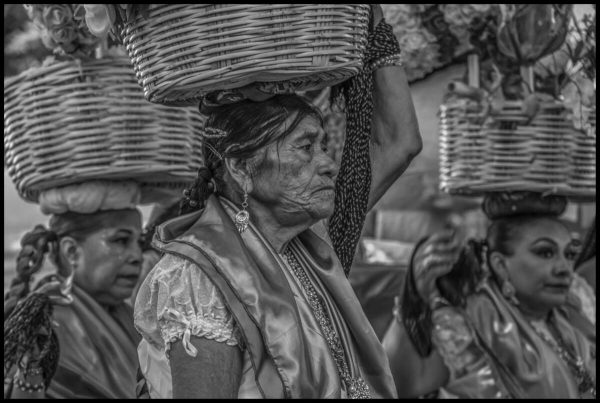
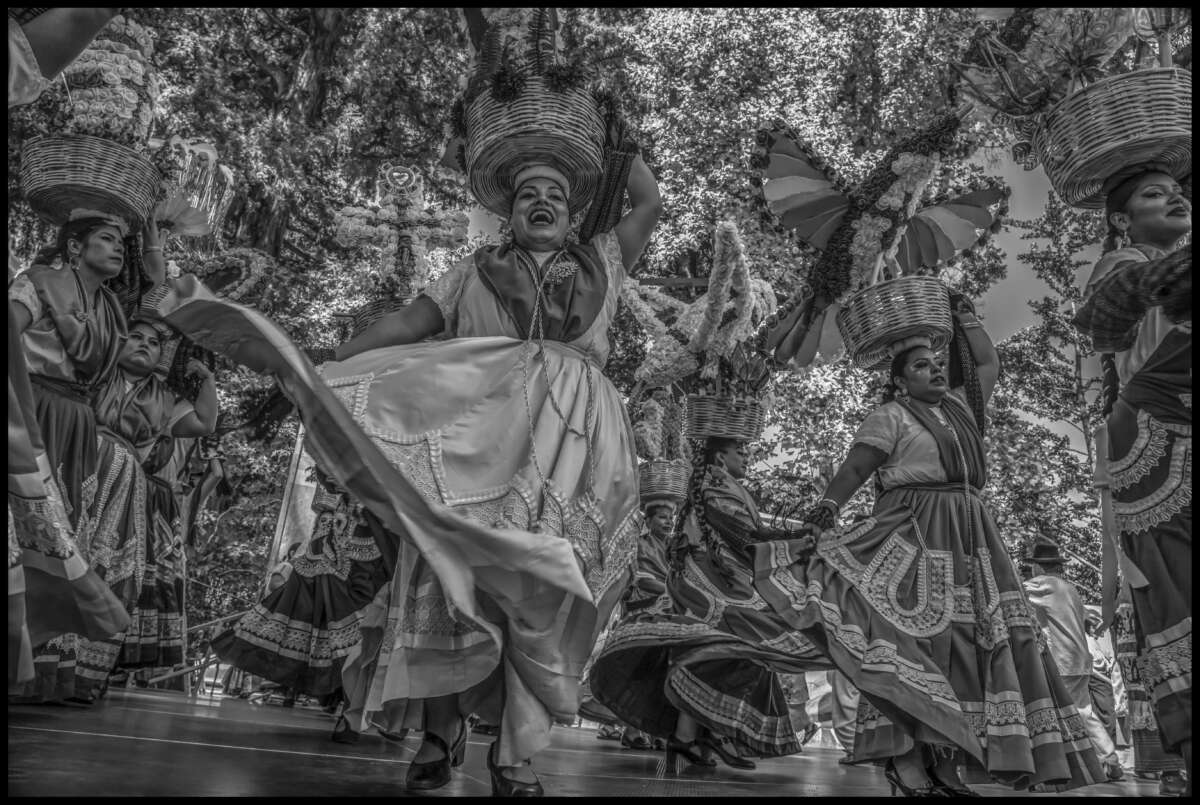
Adorned in the elaborate headdresses and flowing skirts of the chinas Oaxaqueñas, dancers from Las Azucenas de Maria, a group from the San Joaquin Valley, perform a dance from the chinas barrio of the city of Oaxaca de Juarez. David Bacon
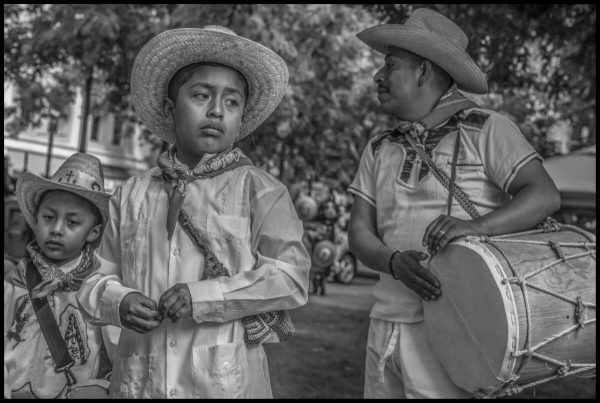
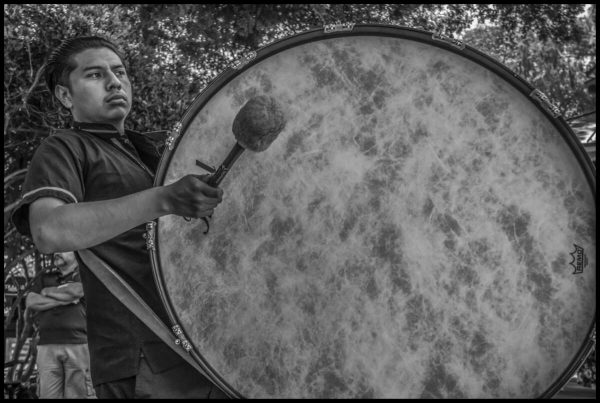
A musician carries his huge bass drum, keeping time for the dancers in the Calenda. David Bacon
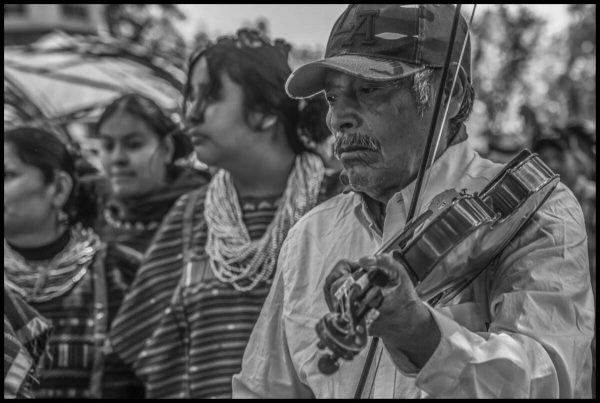
A violinist plays the music that accompanies the Triqui women dancers behind him. David Bacon
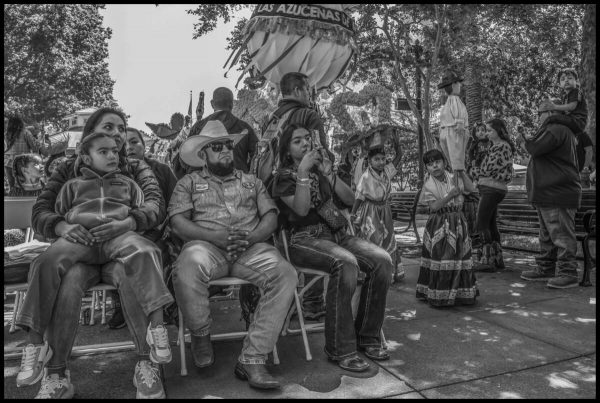
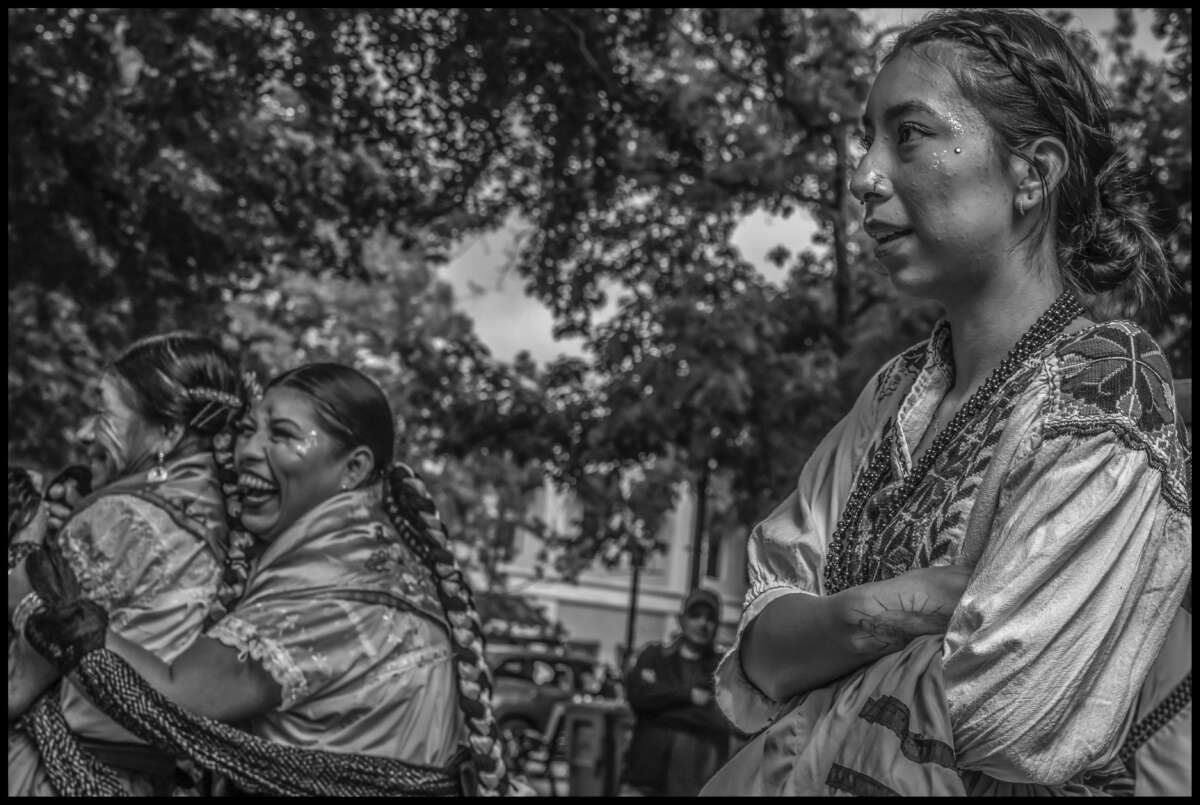
A family in the plaza watches the Calenda, alongside two young performers of Las Azucenas de Maria. David Bacon
Dancers from the Grupo Folklorico Huaxyacac gather in the Calenda. David Bacon
Dancers from Las Azucenas de Maria perform. David Bacon
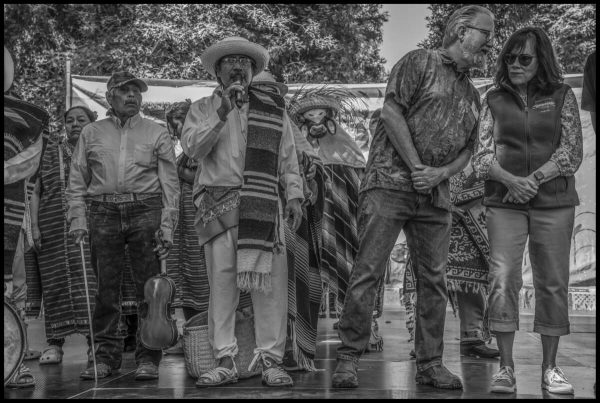
Before performances begin on stage, people from different Indigenous communities give a welcome in their own languages, while Healdsburg Mayor Evelyn Mitchell (right) talks with Vice Mayor Chris Herrod (center). David Bacon
Members of Las Azucenas de Maria stand in the Calenda. David Bacon
Members of the Comite Pochtlan from Sonoma County perform a humorous dance on stage. David Bacon
Members of Las Azucenas de Maria watch the processions. David Bacon
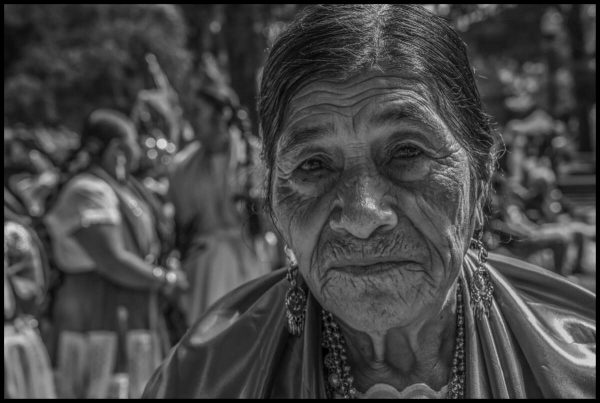
This member of Las Azucenas de Maria is the oldest dancer taking part in the festivities, according to the troupe. David Bacon
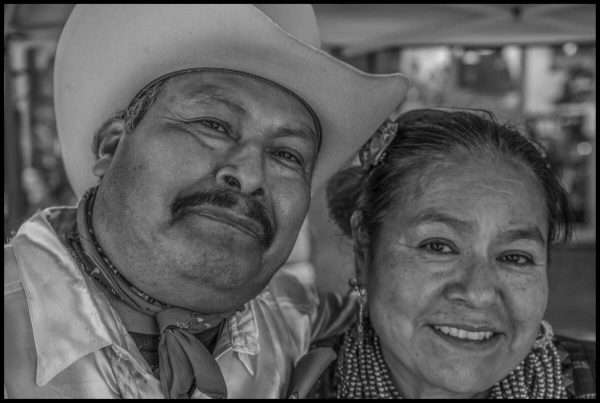
Fausto Guzman and his wife are leaders in the Triqui community in northern California. David Bacon
assetto corsa mods

Urgent End Of Year Fundraising Campaign

Online donations are back! Keep independent media alive. 

Due to the attacks on our fiscal sponsor, we were unable to raise funds online for nearly two years.  As the bills pile up, your help is needed now to cover the monthly costs of operating Popular Resistance.

Urgent End Of Year Fundraising Campaign

Online donations are back! 

Keep independent media alive. 

Due to the attacks on our fiscal sponsor, we were unable to raise funds online for nearly two years.  As the bills pile up, your help is needed now to cover the monthly costs of operating Popular Resistance.

Sign Up To Our Daily Digest

Independent media outlets are being suppressed and dropped by corporations like Google, Facebook and Twitter. Sign up for our daily email digest before it’s too late so you don’t miss the latest movement news.