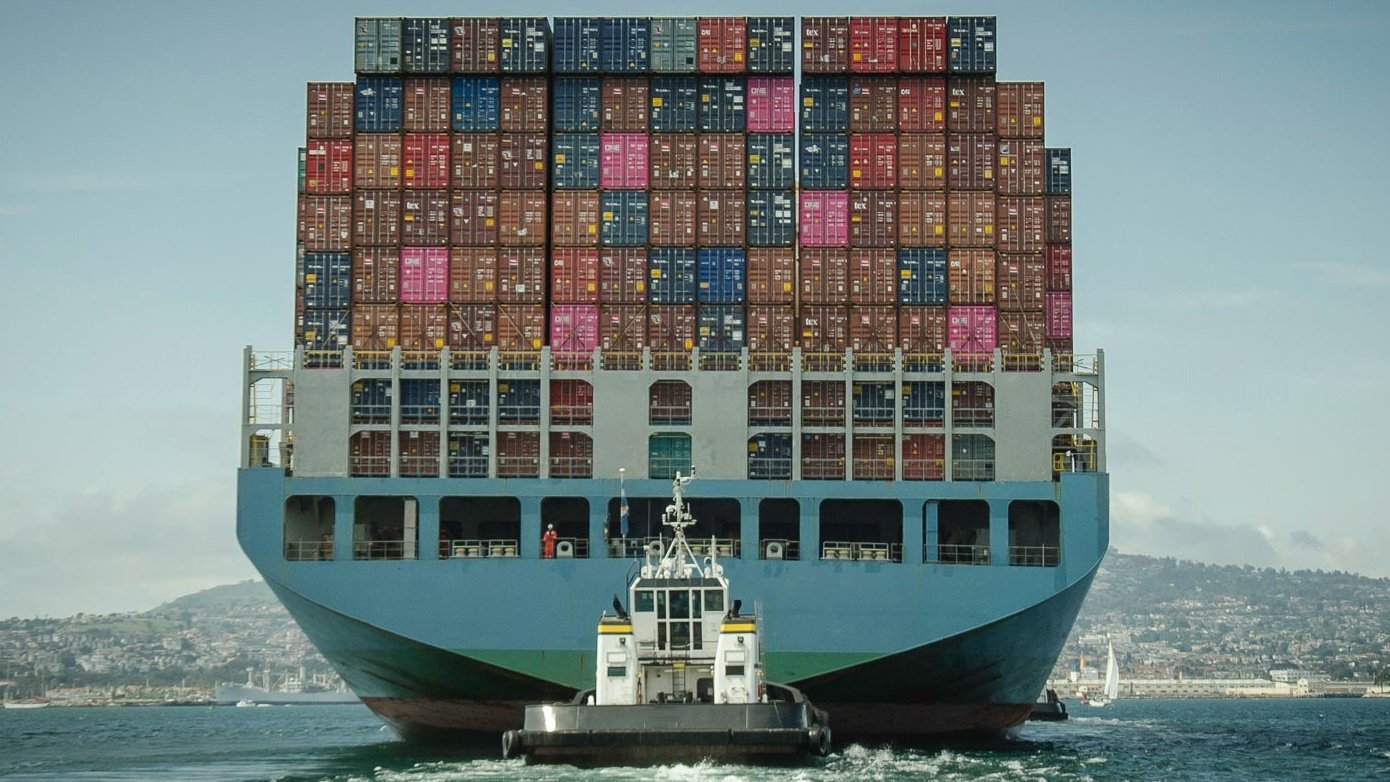
Above photo: Jim Allen/FreightWaves.
Over blockade of arms transfers to Israel.
Fines could potentially reach millions of dollars due to Spain’s continued refusal to grant port access for Israel-bound shipments.
The US Federal Maritime Commission (FMC) announced on 22 December that it is weighing sanctions against Spanish-linked shipping after Madrid blocked vessels carrying weapons bound for the Israel during its genocide in Gaza last year.
The dispute began in November 2024 and has since escalated into a formal maritime standoff involving regulators, ports, and commercial operators on both sides of the Atlantic, according to notices issued by the FMC and Israeli media reports.
Israeli Channel 14 said Washington argues that Spain’s decision “harms maritime trade.” Yet, Spanish authorities maintain they will not allow ports or airspace to facilitate arms deliveries linked to Israel’s genocide of Palestinians in the Gaza Strip.
The issue centers on Spain’s refusal to grant port access and airspace clearance to ships and aircraft transporting arms or military fuel intended for Israel, including vessels carrying what the FMC described as “cargo” bound for Israel.
The dispute began in November 2024 and has since escalated into a formal maritime standoff involving regulators, ports, and commercial operators on both sides of the Atlantic, according to notices issued by the FMC and Israeli media reports.
Israeli Channel 14 said Washington argues that Spain’s decision “harms maritime trade.” Yet, Spanish authorities maintain they will not allow ports or airspace to facilitate arms deliveries linked to Israel’s genocide of Palestinians in the Gaza Strip.
The issue centers on Spain’s refusal to grant port access and airspace clearance to ships and aircraft transporting arms or military fuel intended for Israel, including vessels carrying what the FMC described as “cargo” bound for Israel.
The FMC investigation was launched after two US container ships enrolled in the Maritime Security Program and a Danish-flagged cargo vessel were denied docking access in Spain, followed by the refusal of entry to three US-flagged ships at APM terminals in Algeciras in November 2024, based on information from “multiple sources,” according to the commission.
One year later, the FMC said Spain had formalized a “multi-faceted policy” banning ships and aircraft carrying weapons for Israel, as well as fuel tankers intended for use by the Israeli military, a move the commission said creates “unfavorable conditions” for US foreign commerce.
In response, the FMC is now examining countermeasures, stating that “remedies the commission can implement to adjust or meet unfavorable conditions to shipping in the foreign trade of the United States include adopting regulations restricting voyages to or from US ports, imposing per voyage fees, limiting amounts or types of cargo, or taking ‘any other action the commission finds necessary and appropriate to adjust or meet any condition unfavorable to shipping the foreign trade of the United States’.”
The commission added that it “may also request the secretary of the Department of Homeland Security to refuse entry or clearance to vessels, collect fees imposed by the commission, or detain a vessel about to depart from a US port,” while opening a 60-day public consultation period to assess the scope, rationale, and commercial impact of Spain’s port denials.
The dispute unfolds amid widening diplomatic tension, as Spain has suspended arms trade with Israel, pressed for a Europe-wide ban, joined international legal actions over Israeli conduct in Gaza, and, on 8 October 2025, had its parliament vote to lock the embargo into law, leaving Madrid among Tel Aviv’s most vocal critics in Europe while facing growing pressure from Washington to reverse course.