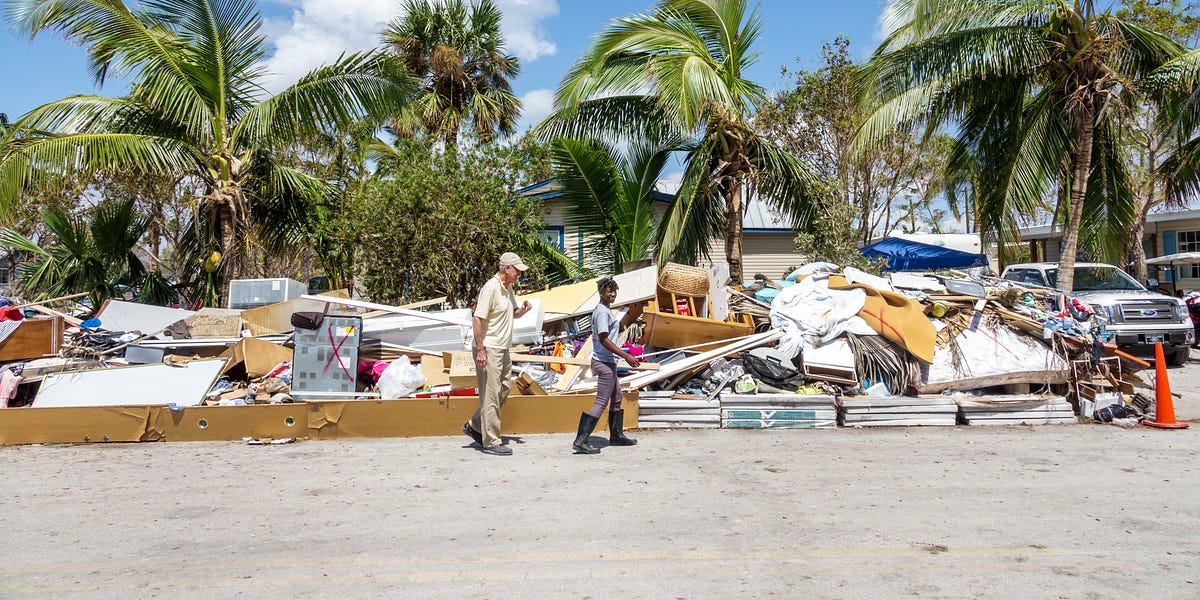
Above photo: It’s windy sometimes. Getty.
Picking up nickels in front of the climate steamroller.
The future is impossible to predict in its particulars. But if you understand the nature of a problem, and the nature of the economic incentive structure relating to the problem, and the nature of the political system and the personalities of the decision-makers surrounding the problem, it is very possible to make medium-term predictions about the general nature of what is going to happen with high confidence.
Climate change. Big problem. It is hard to say to what extent humanity as a whole, as embodied by all the governing structures of the world, will rally itself to respond wisely to the problem, and how much damage to humanity’s well-being will occur in the meantime. Anyone who makes strong, specific claims about these things is overconfident.
There is a narrower aspect of the problem, however, that I feel very comfortable making predictions about. I have written a number of times about the way that the climate change crisis in America will manifest itself as an insurance crisis, which will then cause an economic crisis and a political crisis. Increasing climate risks will cause home insurance prices to rapidly rise towards unaffordability; homeowners in risky areas unable to afford the (actual) price of home insurance will clamor for relief; policymakers unwilling to confront the underlying problem (climate change) will react with a series of increasingly desperate maneuvers to delay and paper over the issue; increasingly pricey disasters will cause state and local politicians to run to the federal government for bailouts; in time, this will lead to a political confrontation between those who are receiving aid, and those in safer areas who are paying for it. The end of this process will be a retreat from areas that have become untenable to live in due to climate change. Instead of carrying out this necessity in a managed and rational way, our political system and economic system, absent some deep changes, will cause it to unfold in a cutthroat, childish, maximally destructive way, with millions of Americans frantically trying to step on the heads of everyone underneath them to jump into the metaphorical lifeboats, which will be controlled by capitalists looking to extract maximum profits from the spreading crisis.
With this basic narrative in mind, it is interesting to watch for new data points that confirm that we are still following this suicidal path just as expected. (This is not just nihilism. We could start making more intelligent decisions about this issue at any time! And yet!) This week brought a fascinating data point in the form of this Wall Street Journal story about Demotech, a small company with one main purpose: to bestow solid financial ratings on insurance companies that should not, in fact, be getting solid financial ratings. The WSJ’s analysis found that the company gives 98% of the insurers that it rates a healthy “A” rating—”But Demotech’s rosy outlook doesn’t always pan out. Insurers it rated were 30 times as likely to become insolvent as those graded by its main rivals.”
Here we see the precise manifestation of our current flawed set of political and economic incentives. Climate risk rises. Nothing is done to address the underlying problem. Insurance companies raise prices as the risk increases. Homeowners cry for relief. Politicians create state-run insurance companies “of last resort” to absorb all the people who can’t find private insurance after the respectable companies flee. This makes everyone nervous—there is no way that the state governments that run these paper insurance entities could actually pay out every policyholder in the event of a devastating storm. Politicians want the private insurers to come back and take all these homeowners off the state’s books, but that will never happen if the private insurance companies charge prices high enough to actually compensate them for the risk.
What to do, given the fact that saying “We should address climate change” is not rewarded in our political system, while abject cowardice and dishonesty is? Simple: get a bunch of fly-by-night private insurers to write affordable policies for people. You can, in fact, get people to start insurance companies if you make it profitable for them to do so by not requiring them to be financially strong enough to actually pay out all of their claims. But how? No respectable insurance ratings agency would give a solid grade to a company that wasn’t financially healthy enough to pay its claims. And if the insurance company does not receive its “A” rating, banks will not write mortgages on properties that that company covers, which is a necessity for the whole system to function.
Aha! Hence, Demotech. They fill a vital market niche: They provide a paper blessing for these hollow insurance companies, allowing the sweaty state governments to push exposed homeowners off their own books, which is all that the politicians really care about.
When the inevitable big disaster hits, these fly-by-night insurance companies will fold. All of the homeowners who bought policies from them will not be paid in full. The politicians will act shocked—shocked, sir. Demotech, cashing its own check, will chuckle and shrug. They already got paid. The insurance companies already got paid. The politicians have successfully avoided being blamed. Whew! Everybody wins. Except for the homeowners, who are financially devastated. Hehehehehe oh well.
Now play this tape forward a little bit. The homeowners will, reasonably, demand to be rescued. The individual states—which just enabled this entire scheme in order to avoid responsibility for paying these people—will obviously not be able to pay them. So the same politicians responsible for allowing this predictable disaster to happen will make Very Emotional Speeches about how their people deserve help and they are going to Fight Like Hell for them. These state politicians and members of Congress will lobby for federal relief money on a per-disaster basis. This ad hoc, disorganized, and unsustainable process will suit our current presidential administration perfectly, because it will allow the President to treat disaster relief as a personal favor to be doled out in exchange for getting favors in return. This will both cement Trump’s power further, and inflict upon blue states onerous right wing policy demands that must be acquiesced to in order to receive basic humanitarian disaster aid.
Fast forward a little further, and there is the looming and very real possibility of a national or global financial crisis precipitated by a rapid devaluation of hundreds of billions or trillions of dollars worth of real estate values. Basically: The insurance crisis, and the associated unwillingness of banks to write mortgages on homes that are effectively uninsurable, reaches a tipping point which causes there to be many more sellers of coastal and other exposed real estate than there are buyers; this causes rapid price drops; this results in both bankrupt homeowners and also in enormous financial losses for the banks holding the loans on all of that property; voila, financial crisis. The number of potential contributing factors to this process are beyond calculation, but the contours of it—and the fact that we are heading towards it—are easy to see. The scariest thing about this particular scenario, to me, is that the tipping point could be reached very fast, and it is impossible to predict what will precipitate it, and when. One big disaster could cause enough of a mental shift in enough homeowners to cause a stampede for the exits, the real estate equivalent of a bank run. Seen from this perspective, owning a home that is highly exposed to climate disaster risk is like holding a speculative asset that could blow up at any moment. Bitcoins and beach houses have more in common than you think.
Something to think about as you enjoy the sunshine this summer! The ability to comprehend this crisis and see it coming while feeling completely unable to stop it is a useful way to hammer home the perverse economic incentives of capitalism, and the equally perverse political incentives that our capitalism-captured electoral system creates. “Tackle the problem head on” is not at all what our leaders are incentivized to do. For businesses, there is no profit in it. For politicians, telling the truth to their constituents will get them defeated in the next primary by an opponent willing to say either “Climate change is a scam!” or “This is all the greedy insurance company’s fault!” or a similar lie. Regardless, either we will fix our system, or nature will fix us. There’s no opting out of this one.