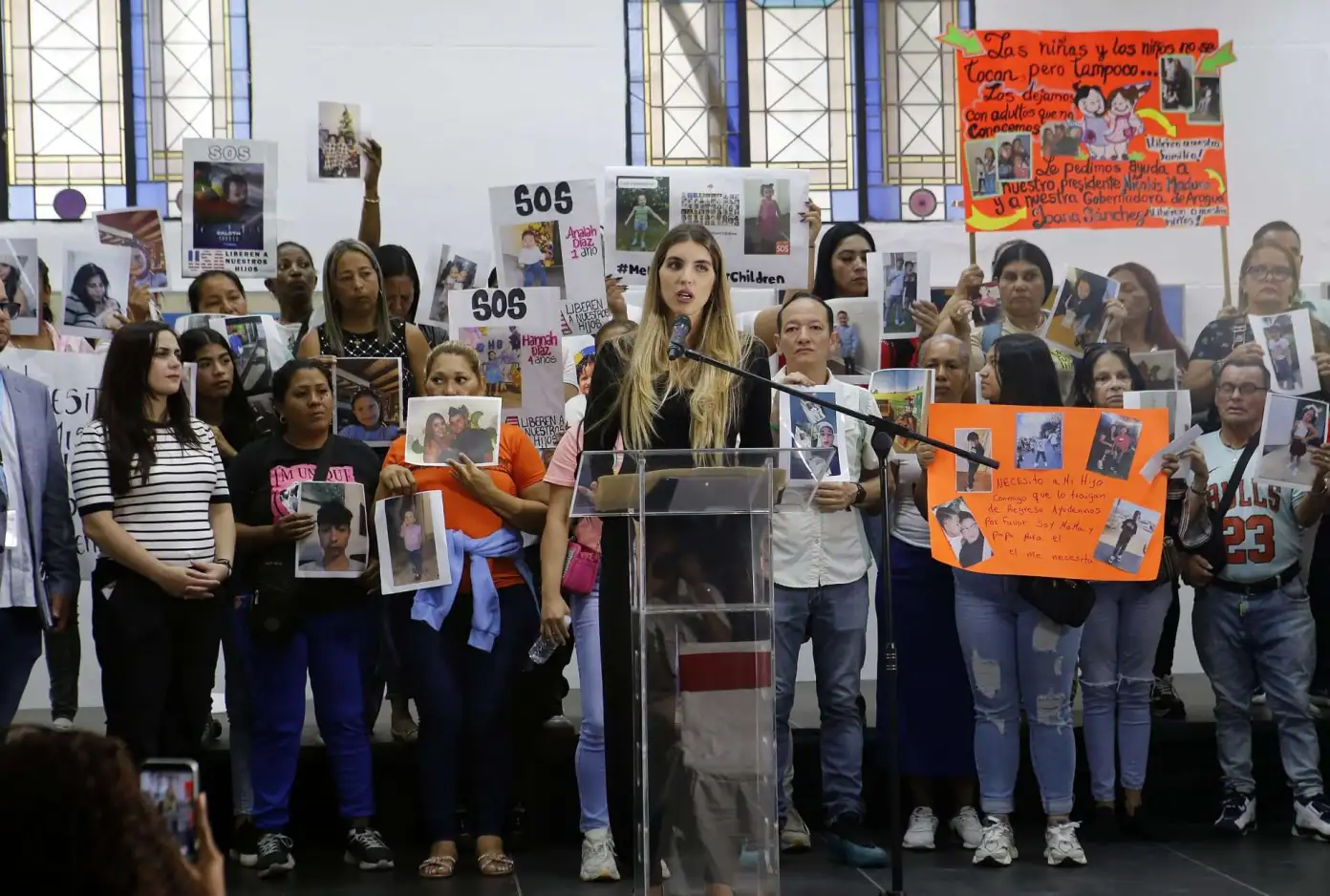
Above photo: María Isabel Batista. Ultimas Noticias.
One of the casualties of Washington’s get-tough immigration policy is the plight of children separated by U.S. authorities from their parents. The political party of “family values” has caused needless trauma for these migrant children and round the clock anxiety for parents desperately waiting to be reunited with their loved ones.
The Venezuelan government, which has a longstanding policy–vuelta a la patria–of assisting the repatriation of their citizens– has reported that at least 66 children have been illegally held in the United States since their parents were deported to Venezuela. At this writing the author has been unable to obtain information as to their circumstances or whereabouts.
The most well-known case of a Venezuelan child held in the U.S. after her mother was deported is that of a two-year-old girl, Maikelys Espinoza. After an international campaign brought her plight to light, the United States repatriated Maikelys to Caracas on May 14, 2025 returning her to her mother’s embrace. Today, families’ pleas for the return of their children recall her story and have stirred the sympathy of the Venezuelan public.
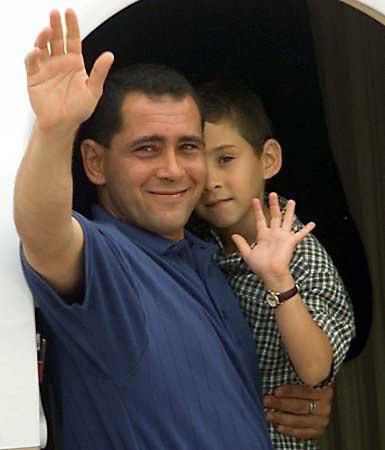
This situation recalls the case of Cuban citizen Elián González, who, as a child, was known as “the raft boy,” and found himself at the center of a major international incident in late 1999 and early 2000. He was found adrift on an inner tube after the boat carrying him, his mother, and other migrants en route from Cuba to the United States capsized. The child’s custody became the subject of a dispute between his father in Cuba (who was offered money by the U.S. to come and live here) and his relatives in Miami. The case caused an international uproar, filled with legal and media battles between Cuban and North American authorities. He was finally reunited with his father on June 28, 2000. Today Elián is a leading voice for resistance to more than a half a century of economic warfare waged by Washington against the Caribbean island.
The present case is also fraught with political complications. Given Washington’s antipathy toward the Bolivarian revolution, President Maduro’s administration has been under relentless attack since 2013, having to endure threats of direct military intervention, fanciful accusations of drug trafficking, and a previously unheard-of bounty of $50 million for the arrest of Venezuela’s president. Despite these threats, Caracas has remained steadfast in defending Venezuelan migrants and seeking the return of all of the children who are being held in the United States against the will of their families.
So far, 21 children have been repatriated to Venezuela. This is in addition to the 252 Venezuelan migrants who were deported by the United States to a maximum-security prison in El Salvador and released on July 18 after a humanitarian exchange. According to government official Camilla Fabri Saab, Deputy Minister of International Communication of the Venezuelan Foreign Ministry and leader of the campaign to bring the children home, more than 10,631 Venezuelan migrants have been repatriated so far this year.
Each day that these children are separated from their families robs them of parental love during their formative years. For both the minors and their families time is of the essence. Accordingly, Caracas persists in demanding that they be reunited with their families, calling demonstrations and orchestrating a broad media campaign across official outlets.
A group of parents has issued the following open letter addressed to the First Lady, Melania Trump
William Camacaro is a Senior Analyst for the Council on Hemispheric Affairs (COHA). He is a co-founder of the Venezuela solidarity network and holds a Master’s Degree of Fine Arts and a Master’s Degree in Latin American Literature from City University of New York. He has published in the Monthly Review, Counterpunch, COHA, the Afro-America Magazine, Ecology, Orinoco Tribune and other venues. He has organized delegations to Ecuador, Bolivia and Venezuela.