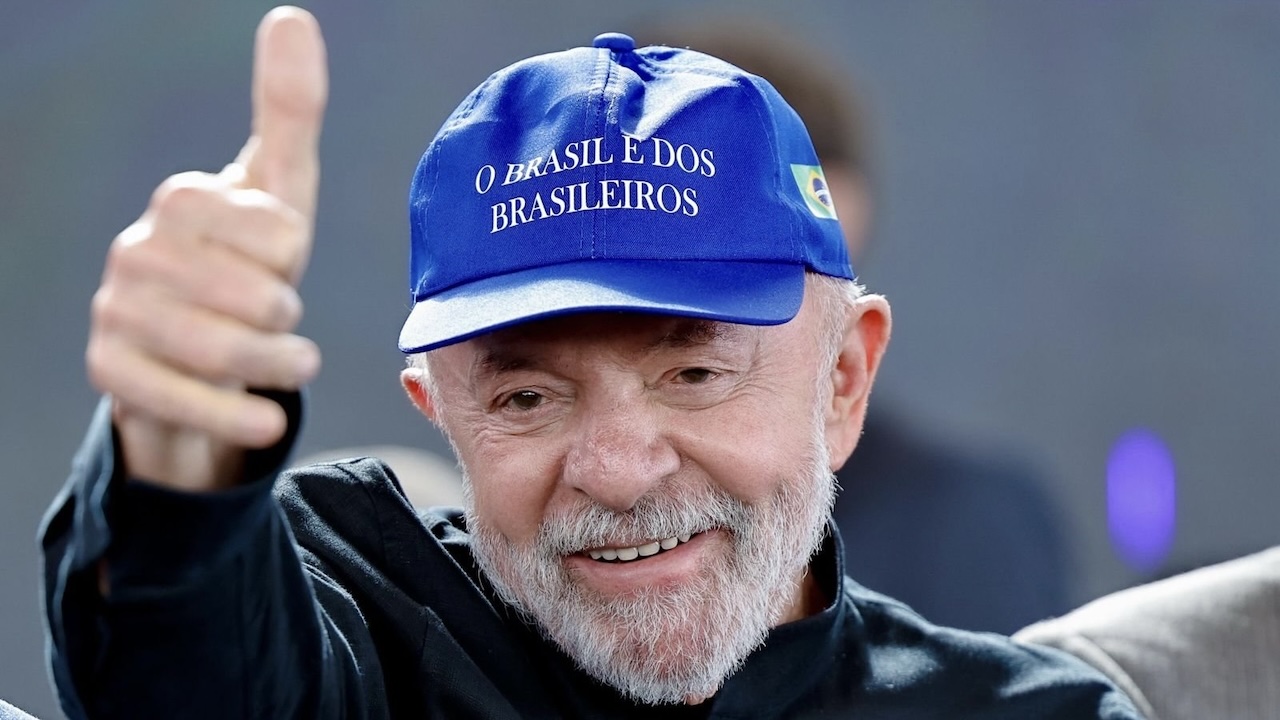
Above photo: LulaOficial/X.
The announcement came just as Trump’s 50% tariff on Brazilian goods went into effect.
Brazil seeks to open up a case in the WTO.
On Wednesday, August 6, the Brazilian government filed a request for consultation with the World Trade Organization (WTO) against tariffs imposed by the United States on Brazilian products. The decision was made on the same day that the tariff announced by US President Donald Trump came into effect, raising taxes on a series of imports from Brazil to 50%.
In a statement, the Brazilian Foreign Ministry said that the request is the first step before opening a panel at the WTO – the organization’s judgment tool. The consultation questions the measures and says that the US “flagrantly violates central commitments made by that country at the WTO, such as the most-favored-nation principle and the tariff ceilings negotiated within that organization,” the document says.
The Brazilian Foreign Ministry reinforces the position of dialogue that the Brazilian government intends to maintain in the negotiations and says it hopes that the consultation will help resolve the issue. The two countries are expected to schedule meetings in the coming weeks as part of the process.
The consultation was backed by a resolution issued by the Brazilian government on August 5, allowing the Ministry of Foreign Affairs to use the mechanisms available through the WTO to challenge the US surcharges.
Tariffs
The tariffs took effect at midnight on August 6. Among the products included in the list, the 50% surcharge will affect natural stones, coffee, meat, fruit, clothing, and footwear. According to the Brazilian government, 36% of Brazilian exports to the US will be subject to the surcharge. The White House decision, however, left out 694 items, such as orange juice, airplanes, and cellulose, which represent a large part of Brazilian exports.
Trump had already announced a 10% tariff on Brazil in early April. More recently, he announced a 40% surcharge. The measure, which has an economic purpose, was justified by Trump as a political decision. In making the tariff official, the US president came out in defense of former President Jair Bolsonaro, who is currently on house arrest amid legal proceedings in the Federal Supreme Court for attempting a coup d’état, which reinforced the political nature of the measure.
“The order considers that the politically motivated persecution, intimidation, harassment, censorship, and prosecution by the Brazilian government against former Brazilian President Jair Bolsonaro and thousands of his supporters are serious human rights violations that have undermined the rule of law in Brazil,” says an excerpt from the official White House statement.
The document also names Minister Alexandre de Moraes, rapporteur of the case against Bolsonaro in the STF. The magistrate “has abused his judicial authority to threaten, attack, and intimidate thousands of his political opponents, protect corrupt allies, and suppress dissent,” says another excerpt.
Moraes was sanctioned under the Magnitsky Act, which allows Washington to impose sanctions on foreign citizens accused of large-scale corruption or serious human rights violations. Among the sanctions provided for are the freezing of assets in the United States and financial restrictions, as well as a ban on transactions with US companies and citizens. Moraes has no assets or investments in the United States.
Brazilian response
The Lula administration responded in July and signed a decree regulating the so-called Reciprocity Law. The instrument will allow the country to adopt measures in response to the tariff. The goal is to protect the domestic market and restore balance in trade relations considered disadvantageous or hostile to Brazil.
The legislation allows the government to disregard the World Trade Organization principle of “most favored nation”, which ensures equal trade treatment among all members of the organization.
Finance Minister Fernando Haddad said last week that there are “dramatic cases” of the impact of tariffs in Brazil. For this reason, according to him, the government continues to try to negotiate with the US for a total reversal of the measure announced by Trump and is discussing, internally, measures to contain the impact of tariffs. Emergency loans, tax breaks, and even government purchases of products that should be exported are under discussion. According to Haddad, the plan should be presented to the Planalto Palace on Wednesday.
This article was translated from an article originally published in Portuguese on Brasil de Fato.