Feckless Or Genius?
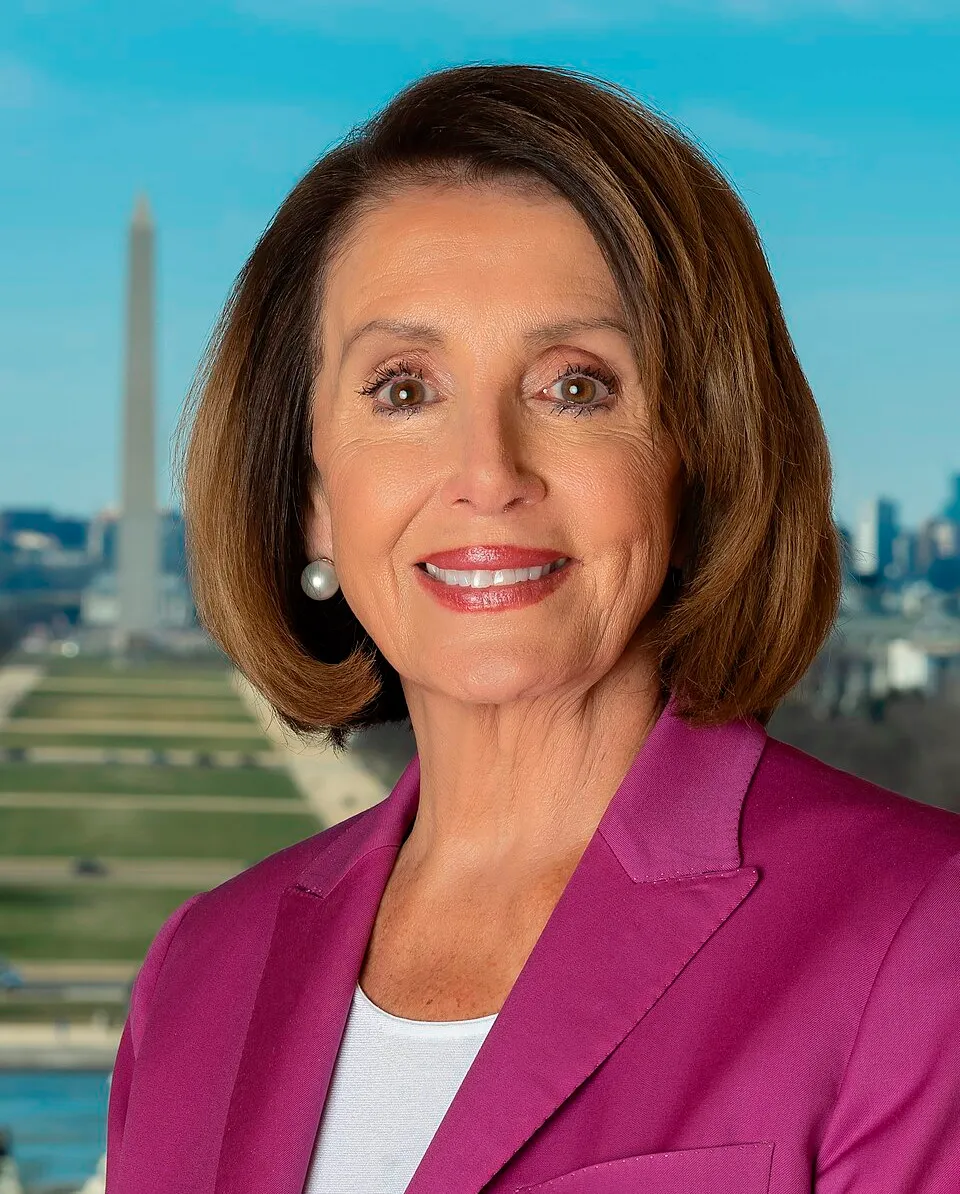
With her legacy on prominent display, Nancy Pelosi’s retirement announcement couldn’t have been better timed. When better to bid farewell to a historic party leader than during a bruising fight over a corner of the U.S. health care mess, where winning won’t improve a single person’s health care but will perpetuate trillions of dollars in subsidies for corporations?
There’s not much to say about the content of the reported deal to end the government shutdown that Healing and Stealing hasn’t already said. Several million people may no longer be able to buy coverage, which a huge portion of them won’t use anyway, because the enhanced subsidies don’t cover the extreme cost sharing that plagues ACA plans. Cutting the subsidies is cruel, and Congress should extend them, but it’s a fight to preserve an awful status quo.
The deal has provoked fury in progressive circles at the Democrats’ supposed weakness and lack of fight. There are already rumblings that the defection of 8 Democratic Senators to cut the deal could cost Senator Chuck Schumer (D-NY) his position as Senate Democratic Leader.
Nausea is an appropriate reaction, but not because the Democrats are feckless. By the standards of the party’s congressional leaders and the consultants who run elections, they’re winning. Indeed, the shutdown battle is giving everyone in Washington what they want.
The Republicans get to look tough by fighting and winning against wasteful, fraudulent spending on poor or dusky people, even though a significant number of Trump voters are subsidy eligible. Mostly it’s just a swipe at Obamacare, and hating Obama still plays well with at least a big slice of their base voters.
The national Democrats will get their up or down vote on the expanded subsidies and run as health care champions against Republican meanies in the 2026 elections, perhaps with a purging of some older leaders like Schumer. They’ll probably lose the promised December Senate vote on the subsidies, but that just ups the electoral ante. The vote is a win-win for cynical politicians.
Politically, the enhanced subsidies are working exactly as designed. By passing them with a sunset, the Biden Administration and a Democratic Congress set the entire policy up as a perpetual-motion defensive election issue. They thought it would help Biden — oops, Harris — win. Now, because preserving the subsidies polls well, they can run on them in the midterm congressional elections.
Given Trump’s general unpopularity, the energy he stimulates among grassroots Democrats, the narrow margin of the partisan split in the House of Representatives and the historical tendency of the party out of presidential power to make gains, it may in fact be part of a short-term winning strategy.
That’s why the subsidies are expiring in the first place. Never mind that making them temporary added another layer of confusion and insecurity to our already bewildering health care nightmare. Never mind that the ACA plans covered by the enhanced subsidies have brutal cost sharing. Never mind that, had Congress made them permanent in the first place, the champions of alleged incremental reform could be fighting for the next increment instead of defending the last one.
Temporary subsidies gave national Democrats a hook to do what they do best — blame Republicans for ugly social conditions without having to do anything about those conditions.
Or at least not do anything that anybody with any money doesn’t like.
That’s what makes this the perfect moment for Speaker Pelosi’s retirement announcement. I’ve covered major health care reforms as a journalist and been tangentially involved in federal health care lobbying on behalf of hospitality workers for some time. I learned that one of the keys to deciphering Washington, DC, health care politics is understanding what we at Healing and Stealing call Pelosi’s Iron Law of Democratic Health Care Policy, the unwritten rule that guides all the party’s federal health care work:
Congress Shall Make No Law Respecting Expansion of Health Care Access that Does Not Subsidize the Private Health Insurance Industry. All Else Shall Be Performance Art.
Certainly since the Clinton reform debacle in the 1990s, this has been the governing principle for the national Democratic Party (same for the GOP, of course. See private Medicare drug insurance).
Pelosi enforced this law ruthlessly. During the ACA debates, Democratic leaders first deemed the untested, largely undefined and unworkable “public option” too threatening to private insurers, then they even squashed a modest expansion of Medicare eligibility. Lawmakers may express shock and outrage at industry misbehavior to their hearts’ content, but when it comes time to count votes, the outcome has to pour money into health insurance industry coffers or at least not seriously threaten the flow.
Understanding Pelosi’s Law makes health care politics much clearer. The rule explains the gap between the fact that nearly half of the House Democratic Caucus are nominal cosponsors of Medicare for All, yet when their party was in the White House, the leaders of the Progressive Caucus couldn’t even rouse themselves to oppose Medicare Advantage, despite the program’s 50-year failure to pay for itself.
They did send a not very strongly worded letter to Biden, though, asking the Administration to spend years studying whether or not AI-fueled claims denials are more abusive than old school death-by-fax, as if private Medicare insurers haven’t been slaughtering people age 65 and older and those with disabilities for decades.
Pelosi’s Law is helpful in deciphering ACA enhanced subsidy theater. Whether they win or lose next month’s vote and despite some legislators’ frustration with Schumer, the party will head into the midterm elections exactly where the national leadership wants it to be: champions of health care and opponents of GOP cruelty, without any need to challenge the corporate interests at the heart of the U.S. system.
Far more importantly, their battle for allegedly affordable coverage plants the party firmly on the side of doling out trillions of dollars to the private health insurance industry. The ultimate purpose of Pelosi’s Law is to guide the party to a safe haven from a permanent loss of insurer contributions to the Republicans and attack ads like the Clinton-era Harry and Louise spots.
Viewed through the lens of Pelosi’s Law, the insurance industry’s current position offers a graduate seminar for corporations in winning the lobbying long game. Here’s what a win-win-win looks like for the biggest Washington winner:
- Lightning Strikes Next Month: On the off chance that Congress renews the enhanced subsidies in the promised up- or- down vote, the billions keep flowing into insurers’ corporate treasuries.
- Short-Term GOP Win: Assuming the GOP kills the subsidies, the industry will have a perfect excuse for their planned massive premium hikes which were on the way whether the subsidies remain in place or not.
- Take the Cash or Hit the Door in November: Instead of jacking up premiums like other companies, CVS/Aetna has abandoned the ACA exchanges altogether. If Democrats regain control of both houses of Congress next November – another long shot – the billions in subsidies may flow again. If not, ACA insurers will just boost premiums again next year, or stop selling on some or all of the exchanges. There’s no requirement for them to sell ACA plans – the whole system requires insurers to be able to make a profit, and if they don’t, they can just leave. There’s plenty of money to be made jacking up premiums for employer-sponsored insurance at near-record rates and denying payment for millions of Medicare patients and their doctors.
It remains to be seen whether frustration with the shutdown deal will result in any amendments to, or even repeal of Pelosi’s law. Until there’s far more primary election pressure on incumbent Democrats, the most that can be expected even if a Democrat takes the White House in 2028 is more “gee, please study Medicare Advantage AI” from the ostensible left wing of the party or maybe, with luck, a few half-baked, sternly means-tested, insurance industry-subsidizing new Medicare benefits of the kind proposed at the last minute before the 2024 election by then-Vice President Kamala Harris.
We hope we’re wrong, but at Healing and Stealing, we’re betting that the former Speaker’s do-nothing legacy will remain intact for years. Unless the grassroots forces that are fed up with our current disaster get much stronger, the next 5 to 10 years will be likely be consumed with promises to “build on” the ACA, posturing at antitrust hearings, fantasy legislation to fix the market competition that has failed to control costs or cover everyone for decades, and, of course, meaningless restrictions on private equity. Some of these initiatives may even attract a little Republican support.
Under Pelosi’s Law, whenever public anger at spending twice as much money per person and getting much less and often poorer quality medical care than people in other countries boils over, politicians dig up various horror stories and act shocked. After months of finger wagging…
…they pour a few trillion dollars into the corporate coffers of the ghouls who are one of the primary causes of the horror, whether actively through vicious private bureaucracy or through the insurance industry’s epic inability to deliver decent health care and manage costs. At best, we get toothless regulations, which have the ultimate effect of legitimizing the dubious proposition that private health insurance can deliver something of value if we just get the next few tweaks right. Either way, the insurance industry wins while the public spends even more for even less.
Enjoy retirement, Madame Speaker.