Skip to content

Food and Agriculture

Is the Monsanto Protest the Next Salt March?

When a people is faced with a destructive system that has been insidiously putting its tendrils down in many sectors of society, steadily taking over its institutions, it can seem all but impossible to dislodge that evil; but it always seems that a system like that will have some vulnerability, some leverage point that an aroused people can ferret out and be rid of the evil. The question is, has the Monsanto Corporation become that leverage point by attacking which we could be on our way to the crumbling of the entire system of militarism, racism, greed, and violence that we loathe. Could 2 million person worldwide, May 25th’s march against Monsanto be our Salt March?

Two Million Join Worldwide Monsanto Protests

The Food and Drug Administration does not require genetically modified foods to carry a label, but organic food companies and some consumer groups have intensified their push for labels, arguing that the modified seeds are floating from field to field and contaminating traditional crops. The groups have been bolstered by a growing network of consumers who are wary of processed and modified foods. The U.S. Senate this week overwhelmingly rejected a bill that would allow states to require labeling of genetically modified foods.

Global March Challenges Monsanto’s Dominance: Timeline

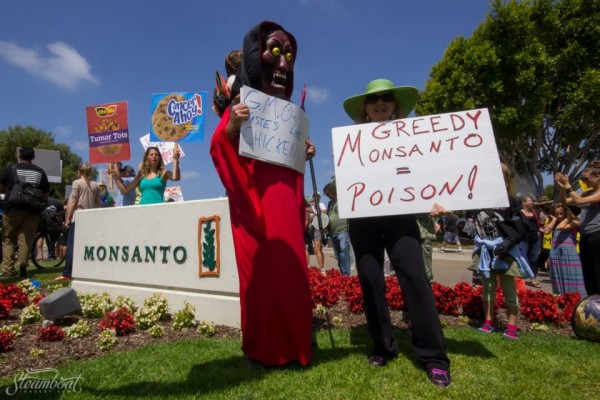
Local organizer of the “March Against Monsanto”, Tami Monroe Canal, told The Santiago Times that she started the movement to protect her two little daughters. “As a parent I just can’t stand by and not do anything to protect my children as well as their friends and the generation they are a part of,” she said. “I just really worry about my kids’ future. Their health, their longevity, their fertility.” Monsanto first began its operations in Chile in 2005 by purchasing Seminis Vegetable Seeds, a company that sold some 3,500 seed varieties to more than 150 countries. Currently Monsanto owns seed production and packaging plants in Melipilla, Viluco and Paine and experimental plants in Arica, Santa Julia, Rancagua and Temuco.

March Against Monsanto: Photos from Around the World

May 25, 2013 was an international day of protest against Monsanto because of their practices of pushing genetically modified seeds and pesticides that have not been proven to be safe onto the market and their influence over governments. Actions around the world were organized by local groups and people and unified on the Occupy Monsanto website. The movement against Monsanto and genetically modified foods is growing. This day of protest was much larger than the last international day of protest in September. Two million people in 52 countries and 436 cities marched. This video of photos from many of the cities was produced by Ann Day and set to Braves (remix) from a Tribe Called Red.

Growing Global Challenge to Monsanto’s Monopolistic Greed

When President Obama appointed a Monsanto lobbyist, Michael Taylor, as the "food czar" (officially the deputy commissioner for foods) - avoiding the Senate confirmation process, which would have brought public attention to the appointment - it was one more example of how corrupted both parties have become by corporate influence. A global grassroots movement is building to challenge Monsanto as more people realize that we are in a struggle for our survival. May 25 is a global day of action against Monsanto taking place in hundreds of cities and 41 countries. Monsanto must be stopped before its unfettered greed destroys our health and environment. We urge you to join the effort to stop Monsanto.

March Against Monsanto: Model for Grassroots Action

The ‘master document‘ that holds all of the rallies actually links to the Facebook event pages for each individual city and town, and creates a massive network of anti-Monsanto activism that can now be turned into a rally that I think is much different than your average protests. Not only has there been quite a degree on this movement since it’s grassroots and gaining support from the ground level, but I think it specifically opens up the doorway to similar movements that will take everything powerful about the March Against Monsanto and condense it into another campaign. Ultimately, it comes down to an open source formula that can be used to highlight and combat key issues.

Over 100 Occupy the Farm Protesters Return to UC-Owned Gill Tract

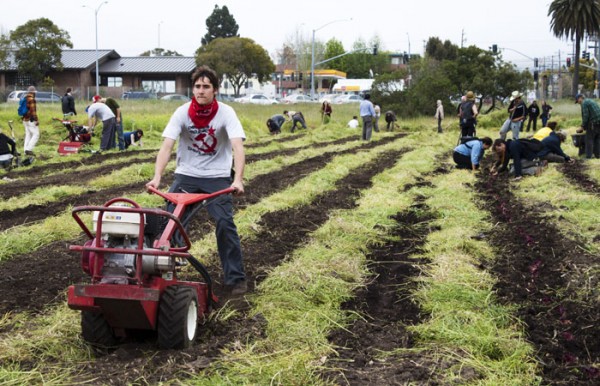
Chanting "Whose farm? Our farm!" some 150 people marched from Albany City Hall to a weed-strewn plot of University of California-owned land where they yanked out 3-foot-tall weeds and planted squash and tomato seedlings. The plot is adjacent to the land many of the same protesters occupied for three weeks in April and May last year before police removed them. Protesters want the Gill Tract to become an urban farm, while the university said it uses the land for agricultural research. A development is planned for an area adjacent to the land which has not been agriculturally zoned in decades, university officials have said.
assetto corsa mods

Urgent End Of Year Fundraising Campaign

Online donations are back! Keep independent media alive. 

Due to the attacks on our fiscal sponsor, we were unable to raise funds online for nearly two years.  As the bills pile up, your help is needed now to cover the monthly costs of operating Popular Resistance.

Urgent End Of Year Fundraising Campaign

Online donations are back! 

Keep independent media alive. 

Due to the attacks on our fiscal sponsor, we were unable to raise funds online for nearly two years.  As the bills pile up, your help is needed now to cover the monthly costs of operating Popular Resistance.

Sign Up To Our Daily Digest

Independent media outlets are being suppressed and dropped by corporations like Google, Facebook and Twitter. Sign up for our daily email digest before it’s too late so you don’t miss the latest movement news.