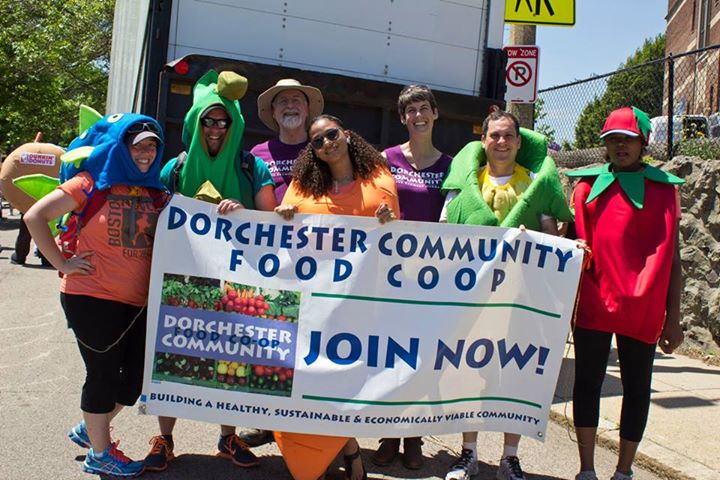
Last year was the United Nations’ Year of the Co-op. The number of worker-owned and consumer-owned cooperatives is increasing in the US. Co-ops can create businesses that support the local economy and community and create more democratic institutions. They are a foundation of a more participatory democratic society. Here are resources on everything from why co-ops are important to how to start one or transform an existing business. More is available at the Neighboring Food Cooperative Association website: www.nfca.coop.
Starting a Co-op In Your Community
Recently, there has been an upswing in communities across New England–and the world–organizing and opening co-ops to meet their needs.
Interested in starting a food co-op or another type of co-op in your community? The presentations below share valuable experiences about how to start a co-op in your community, including direct experience from start-up organizations who are in the process of organizing or have recently opened a food co-op in their community.
- Start a Worker Co-op or Convert an Existing Business, NOFA Summer Conference, 2013.
- Project Management for Start-Ups, CCMA June 7, 2013
- Dorchester Community Food Co-op: Building a Multi-Stakeholder Co-op , NFCA Annual Meeting, 2013
- How We Started Our Co-op, Monadnock Food Co-op
- Help Make the Vision a Reality, Assabet Village Food Co-op
Start a Worker Co-op or Convert an Existing Business, NOFA SC, 8.8.13 from NFCACoops
Erbin Crowell, Executive Director of the Neighboring Food Co-op Association & Adam Trott, Staff Developer for the Valley Alliance of Worker Co-ops share the basics of the co-operative model, its relevance to local economies, and the process for business development. This presentation focuses on worker co-ops in the food system, multi-stakeholder models, which include producers and consumers, and shares guidance for people exploring a co-operative business start-up or conversion.
LEARN MORE! SHARE MORE!
Want to know more about co-ops?
Visit www.GO.coop to learn more about the variety of co-ops in the United States.
Start a Study Group in your community using a book on co-ops:
- Humanizing the Economy: Co-operatives in the Age of Capital, by John Restakis, is an excellent overview of the history and relevance of the co-operative movement to contemporary challenges.
- The Cooperative Solution, by E.G. Nadeau, is a short, readable book on how co-ops offer a solution to our current economic, social and environmental crises.
- The Co-operative Revolution: A Graphic Novel, published by the New Internationalist co-operative, this book “illustrates the history and enduring appeal of this robust business model.”
- EcoMind: Changing the Way We Think, to Create the World We Want, by Frances Moore Lappé, challenges the way we see the world and includes co-ops as a solution.
- Local Dollars, Local Sense, by Michael Schuman, includes a chapter on the “Hidden Power of Co-operatives.”
Take a Course on co-ops. Opportunities in our region include:
- Introduction to the Co-operative Movement, an online course at the University of Connecticut, includes and overvies of the international co-operative movement and its relevance to contemporary issues and opportunities in the economy.
- Master of Management: Co-operatives & Credit Unions, is an comprehensive online degree program at St Mary’s University. The program includes a two-year certificiate as well as a three-year degree.
- Creating a Cooperative Food Economy (AGR 114), at Greenfield Community College (GCC) in Greenfield, MA, explores co-operatives in the local food economy. The course is part of the “Farm and Food Systems” program at GCC.
- The Economics of Co-operative Enterprises, at the University of Massachusetts, Amherst, is part of a wider effort by the UMASS Co-operative Enterprise Collaborative (UMACEC), to create a certificate program in co-operative enterprise. The NFCA is a member of the UMACEC.