Above photo: AFP.
Israel’s defense minister said last week that he has instructed the Israeli military to prepare an ‘enforcement plan’ against Iran.
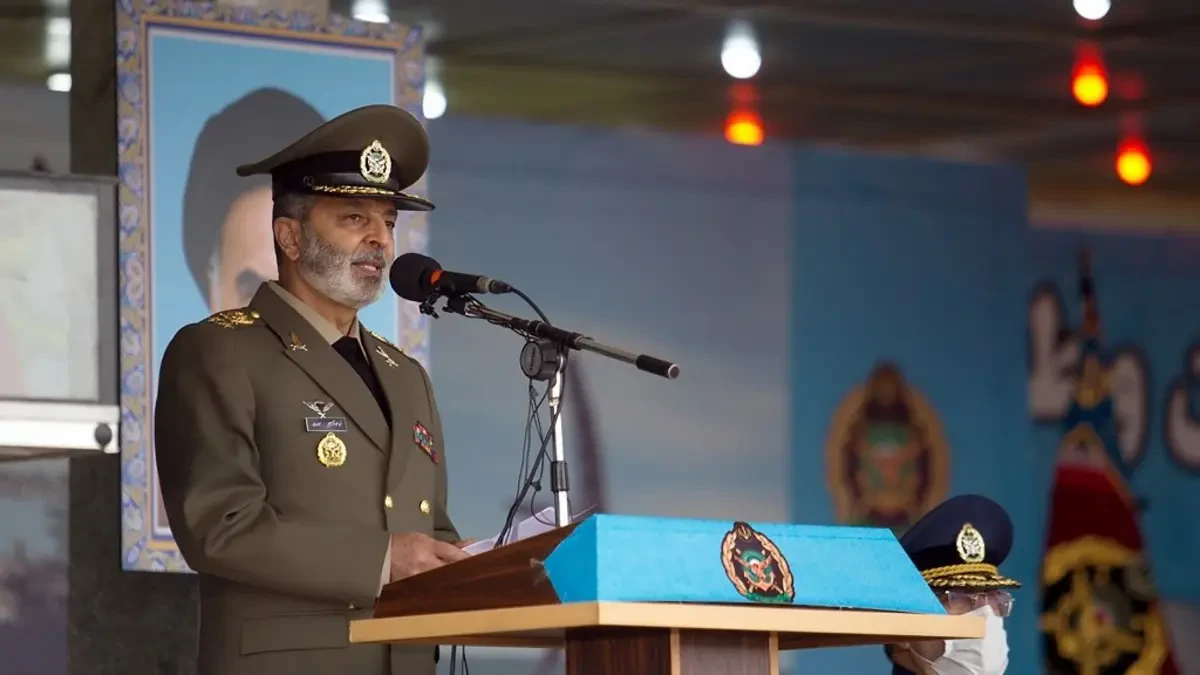
The Chief of Staff of the Iranian Armed Forces, Major General Abdolrahim Mousavi, expressed on 29 June his “doubt” that Israel will adhere to the ceasefire with Iran, indicating Tehran’s preparedness to respond to any violation.
The comments came during a phone call with Saudi Arabia’s Defense Minister Khalid bin Salman.
“We have serious doubts about the continuation of the ceasefire and are prepared to respond to any aggression,” Mousavi was quoted as telling the Saudi war chief.
“Israel and the United States have proven their lack of commitment to any international rules and norms,” he went on to say. “We did not initiate the war, but we responded to the aggressor with all our might and are prepared to deliver a decisive response in the event of repeated attacks.”
Mousavi said that the US-Israeli war against Iran took place “despite the restraint shown by Tehran during negotiations with Washington.”
The Saudi defense minister said in a post on X that he discussed bilateral defense relations with the Iranian chief of staff.
The minister visited Iran in April 2025 and met with Iranian Supreme Leader Ali Khamenei. During the visit, Khamenei warned that “enemies” with “hostile motives” were seeking to disrupt the rapprochement between Saudi Arabia and Iran, which happened in March 2023 and ended years of bitter and strained relations between the two countries.
Bin Salman’s phone call with Mousavi on Sunday came as Israel has been renewing threats against Iran following a 12-day war which ended on 24 June after a Qatari-mediated ceasefire was announced by US President Donald Trump.
Israeli Defense Minister Israel Katz announced on 27 June that he has instructed the Israeli army to prepare a military plan targeting Iran’s nuclear and missile programs, as well as its regional alliances.
In a post on X, Katz said the “enforcement plan” would focus on “maintaining Israel’s air superiority, preventing nuclear advancement and missile production, and responding to Iran for supporting terror activity against Israel.”
Israel failed to destroy Iran’s missile firing capabilities during the war, as it said it had set out to do. Israeli and US strikes on nuclear sites managed to damage and temporarily set back Iran’s nuclear program, but failed to completely dismantle it – as suggested by a leaked US intelligence report and confirmed by head of the International Atomic Energy Agency (IAEA) Rafael Grossi, who said on Sunday that US-Israeli strikes caused severe but “not total” damage to Iran’s nuclear facilities.
Iranian ballistic missiles caused significant destruction across Israel during the 12-days of fighting between Iran and Israel.
Hebrew media has recently admitted that many Israeli military sites sustained damage due to Iranian strikes.
Channel 13 noted on Friday that there “were a lot of Iranian missile hits on IDF bases, in strategic sites that we still don’t report about,” adding that the lack of reporting [due to heavy censorship] has “created a situation where people don’t realize how precise the Iranians were and how much damage they caused in many places.”
Israel’s Channel 13:
“There were a lot of Iranian missile hits on IDF bases, in strategic sites that we still don’t report about. It created a situation where people don’t realize how precise the Iranians were and how much damage they caused in many places.” pic.twitter.com/jomp9JgwN1
— The Cradle (@TheCradleMedia) June 27, 2025