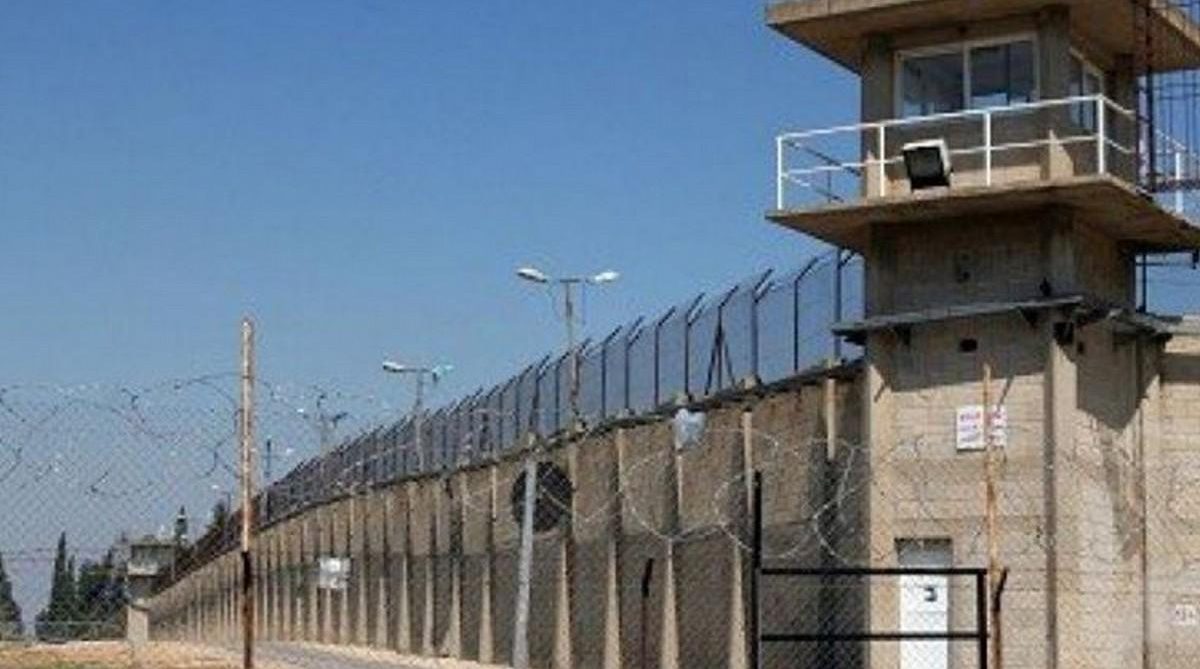
Above Photo: Israel’s Ramleh Prison [File photo]
Middle East Montior reports that Israeli Public Security Minister, Gilad Erdan, announced a series of escalatory measures that could be described as a declaration of war against prisoners. The harsher prison conditions for Palestinian prisoners will not differentiate between old or young, those who are imprisoned for a month or 30 years, or those affiliated with Fatah, Hamas, or any other organisation. He decided to cancel the divided sections for Fatah and Hamas, or what he called it the autonomy enjoyed by the prisoners. These measures will cost Israel millions of dollars and manpower, e.g., stopping the prisoners from showering inside their rooms and preventing them from cooking inside these rooms requires new and very expensive infrastructure. And, they are likely to lead to protests inside and outside of Israeli prisons.
Depriving Palestinian political prisoners in Israeli jails of their basic rights is a “moral duty”, according to Israeli Public Security Minister Gilad Erdan. News reports have confirmed that the Israeli cabinet has approved plans to “worsen conditions”, after Erdan set up a committee specifically tasked with devising “harsher” conditions for Palestinian prisoners involved in resistance activities.
Rationing water, eliminating cooking rights and visits to Palestinian prisoners, as well as halting the process of separating prisoners pertaining to different Palestinian political factions will be implemented in the coming weeks.
To put it briefly, Israel is aiming to enact the same violations that Palestinians experience outside prison. The only difference is the absence of community support for Palestinian prisoners.
According to Erdan: “We must make conditions worse [for prisoners] to fulfil our moral duty to terror victims and their families.”
Indeed Israel does have a moral obligation towards its settler population – dismantling the settler colonial state would eliminate the need for Palestinian anti-colonial resistance which is a right under international law. Instead of facing its responsibilities for creating a colonial entity on stolen territory and replacing the indigenous population with an assortment of complicit settlers, it has instead renewed its efforts to criminalise Palestinian resistance and invent premises upon which it seeks to extend its violation of Palestinian rights.
Meanwhile, Palestinian prisoners in Israeli jails are already in a precarious situation. Revered as the epitomes of Palestinian resistance, yet their remembrance outside family circles often occurs at times when Israel announces additional oppressive measures. Not to mention the fact that some prisoners, or their fates, attract more publicity than others when it comes to raising awareness.
Erdan’s measures shift this focus which, in part, can be attributed to Israel and its singling out of individual prisoners to make the case for its alleged security concerns. Till now, the visibility of some Palestinian political prisoners has eclipsed the fate of the rest. Unfortunately, even well-intentioned activism has become ensnared in this façade. But the Palestinian struggle is a collective endeavour.
Differentiating between prisoners in terms of visibility has fractured Palestinian unity even further. As Israel moves to implement additional violations against all Palestinian political prisoners, the focus should be on supporting the Palestinian collective struggle.
Ironically, Erdan is also provoking a sense of unity among Palestinians. As the fine line between Israel’s human rights violations outside and behind bars blurs further, the distinction between Palestinian prisoners and the Palestinian people undergoes the same process. Israel is bringing the theft of water – this time by depriving prisoners of a basic right – to a space which is inhabited by Palestinians dedicated to resistance.
The response to these violations, therefore, cannot be limited to the usual perfunctory statements about Israel respecting and applying international law. Israel acts with impunity and the international community has already sealed the deal with tacit approval. Such violations call for a strategy which goes beyond a retaliatory response. The only way to do this is for Palestinian institutions to step down from their pedestals and acknowledge the people’s political power. For all intents and purposes, international law must come secondary to Palestinian demands.