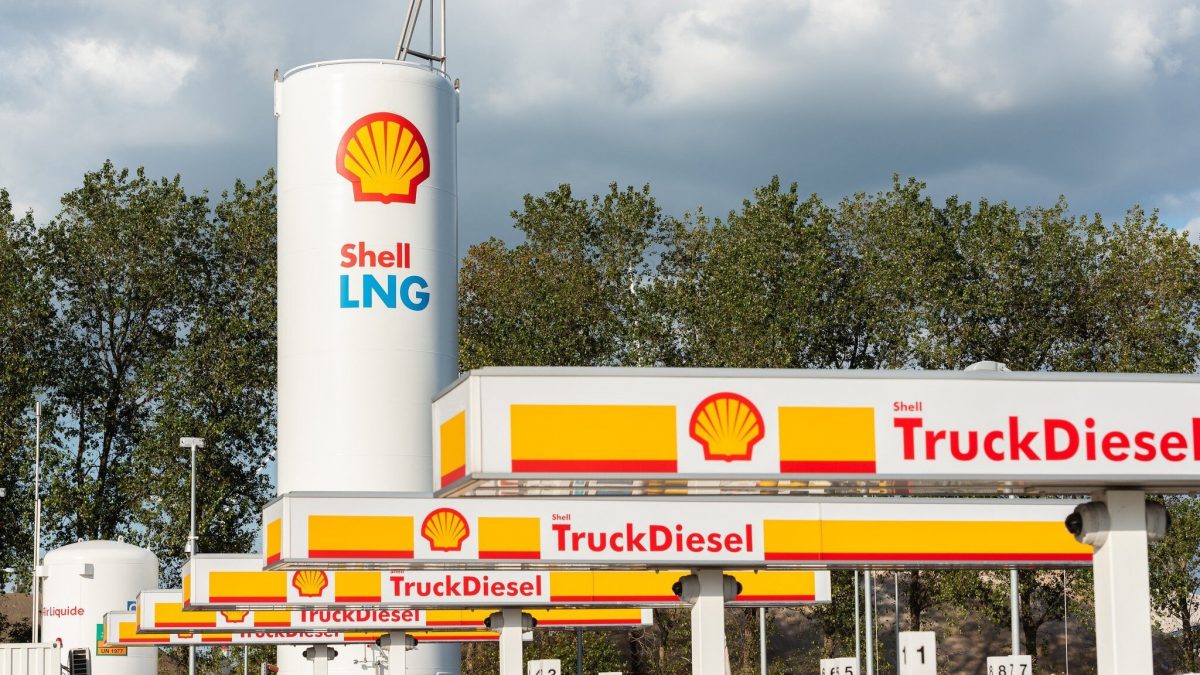
Above photo: Jonathona Raa/Nur photo via Getty Images.
US and international energy firms are set to profit from exploiting Venezuela’s oil reserves.
Which are considered the largest in the world.
British energy giant Shell could earn billions of dollars in profits from new Venezuelan gas projects following US President Donald Trump’s abduction of Venezuela’s President Nicolas Maduro, the Telegraph reported on 5 January.
Shell plans to exploit the massive Dragon natural gas field lying between Venezuela and the maritime border of Trinidad and Tobago.
The project to develop the field, which holds an estimated 120 billion cubic meters of gas, is expected to generate $500 million in annual revenue for up to three decades, potentially yielding billions in profit.
Shell and National Gas Company of Trinidad and Tobago (NGC) received rights to develop the field and potential export routes after signing a production-sharing contract with Venezuela’s government in late 2023.
However, the project stalled due to US sanctions on Venezuela imposed by Washington in an effort to depose President Maduro.
But after US special forces units raided Caracas and abducted Maduro on Friday, Trump called on oil companies to invest in the country to boost oil and gas production and improve infrastructure.
Trump stated he will give preference to US oil and gas firms to exploit Venezuela’s oil reserves, considered the largest in the world.
However, foreign firms such as Shell are expected to be able to invest in Venezuela, in particular through partnerships with US oil companies.
“The big winners are going to be the US majors, Chevron in particular, because it is already active in Venezuela,” stated Ashley Kelty of investment bank Panmure Liberum.
“The European majors will get locked out of the best stuff but will get invited in afterwards because American companies will want joint ventures to spread the risk – and companies like Shell and BP will be first choice.”
Another British oil firm, BP, may also regain a foothold in Venezuela.
BP won a license from the Venezuelan government to exploit the Manakin-Cocuina field in 2024. However, Trump revoked the license exempting the project from US sanctions last year. The oil firm is now lobbying to have it reinstated.
Chevron, the US oil major, is uniquely positioned to profit, as it was the only foreign firm allowed to operate in Venezuela before Maduro’s abduction.
Pro-Israel billionaire Paul Singer is also expected to reap a significant windfall from the operation. In November, a US court awarded his firm, Elliott Management, control of the assets of CITGO, the US subsidiary of Venezuela’s state oil firm, PDVSA.
With Maduro gone, Singer can begin importing Venezuelan crude and converting it to fuel at CITGO’s refineries along the US Gulf Coast in Louisiana and Texas.
Singer is a major donor to President Trump and the Israeli army.
US involvement in exploiting Venezuela’s oil resources is expected to give Washington significant leverage over global oil prices, making it easier to manipulate prices for its own interests and gains, according to Jin Lei, a professor at the China University of Petroleum.
“The US could potentially restrict production or employ other measures to coordinate with domestic oil sales in the US, thereby influencing international oil prices,” Jin said.