Skip to content

Bioregions

Bioregioning As The Response To ‘Gaia On The Move’

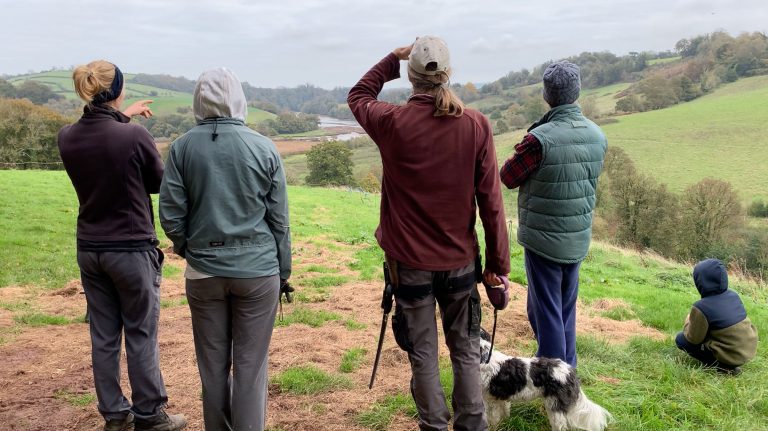
Isabel Carlisle is a leading figure in bioregional education and action who has a great term for describing the planetary eco- mayhem now underway -- “Gaia on the move.” As climate change intensifies and humankind disrupts ecosystems, Gaia is causing ice caps and glaciers to melt and the atmospheric jet stream to skitter and shift course. The Amazonian forest becoming a net emitter rather than absorber of atmospheric carbon  As these system-changes disrupt local ecosystems, through coastal flooding for example, Carlisle sees cues for how to move forward. The disruptions “reveal where the fragility is,” said Carlisle, and that’s where to focus attention.
Bioregioning Is Our Future

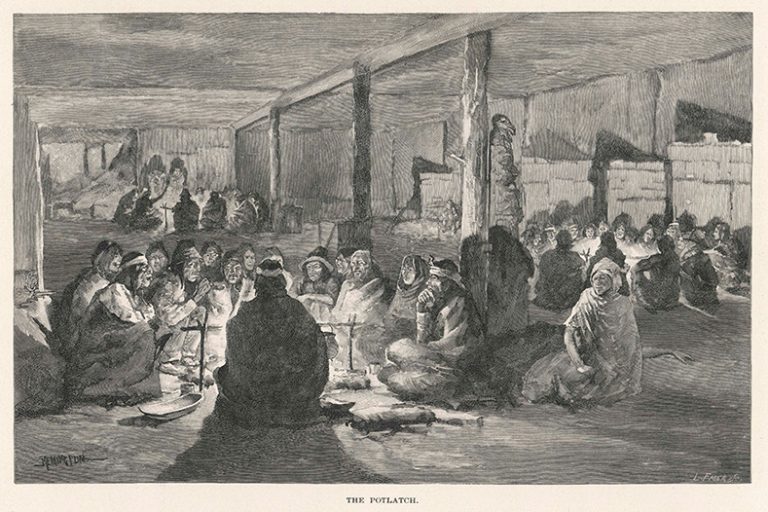
Lately I’ve been reading Andrew Schelling’s Tracks Along the Left Coast, a biography of linguist, anthropologist, and anarchist Jaime de Angulo (1887-1950). De Angulo was a character worth knowing about. His affluent Spanish parents gave him a civilized upbringing in fashionable Paris; nevertheless, he had a wild streak. So, before he turned 20, de Angulo hightailed it to San Francisco, arriving just in time for the Great Quake of 1906. During the next few years, he earned a medical degree, then worked as a cowboy trekking the California coast. The Native Americans he met fascinated and impressed him. As a way of documenting and preserving their way of life, which he regarded as perfectly adapted to the endlessly varied, stunningly beautiful landscape around him, de Angulo (often collaborating with his linguist wife, Lucy Shepard Freeland) learned and described 25 of the roughly 100 Native languages then spoken in California.

To Confront Oligarchy, Build Power At The Community Level

A consistent theme through my life has been to understand our world, to assemble a comprehensive picture the best I can, respecting the world’s boggling complexity and the limits of any one mind to grasp it all. What has long been clear to me is that our world is on a systematically wrong way path. Three trends are in the foreground – the proliferation of weapons of mass destruction, ecological overshoot and increasing economic disparity. Together they shape what many have called the polycrisis. From the 1962 Cuban Missile Crisis with its nuclear war close call, which happened around my 10th birthday, the insanity of piling up weapons of mass destruction has recurrently come to the foreground.

Cascadia And The Global Resurgence Of Bioregional Activism

One of the most encouraging recent developments has been the resurgence of bioregional thinking. About four decades ago, in the late 1970s and 1980s, there was a huge public appetite for re-imagining the economy, eco-stewardship, and lifestyles around natural bioregions, but it gradually waned with the advance of neoliberal ideology. Now bioregionalism is emerging again, with much more force and sophistication. A great deal of vanguard leadership, then and now, has come from activists, academics, and social innovators in the Pacific Northwest. They are often associated with the term Cascadia, which is the name they've adopted for the bioregion stretching from British Columbia and southeast Alaska to Washington State, Oregon, Idaho, and Northern California.

How Working For Place-Based Solutions Can Change The World

In a world of onrushing crises, where the level of change required to meet them boggles the mind, even as too many trends are moving in the wrong direction, questions of “What will be enough?” and “Can it come soon enough?” surge to the foreground. There must be a place to begin grappling with the complex questions of societal transformation. A place to grab hold and gain enough leverage to begin making fundamental changes. That place is the communities and bioregions where we live. We must begin to build the future in place. Clearly we are over the line ecologically, as the planetary boundaries study I recently covered underscores.

Nation-States Are Destroying The World

It is becoming increasingly obvious that we need to think about the problems of the climate crisis and borders together. Environmental breakdown displaces millions of people every year, while states respond by militarizing their borders, causing further suffering and death. It is no accident that climate breakdown and state borders are linked. Historically, the nation-state was born out of a logic that also saw nature – and colonized peoples – as things to be conquered and dominated. Now, from the war-torn border regions of South Asia to the Amazon rainforest, people are questioning whether sustainability can ever be achieved through the framework of nation-states. They are turning to other ways of organizing society based on Indigenous worldviews and practices that respect all humans and the rest of nature.
assetto corsa mods

Urgent End Of Year Fundraising Campaign

Online donations are back! Keep independent media alive. 

Due to the attacks on our fiscal sponsor, we were unable to raise funds online for nearly two years.  As the bills pile up, your help is needed now to cover the monthly costs of operating Popular Resistance.

Urgent End Of Year Fundraising Campaign

Online donations are back! 

Keep independent media alive. 

Due to the attacks on our fiscal sponsor, we were unable to raise funds online for nearly two years.  As the bills pile up, your help is needed now to cover the monthly costs of operating Popular Resistance.

Sign Up To Our Daily Digest

Independent media outlets are being suppressed and dropped by corporations like Google, Facebook and Twitter. Sign up for our daily email digest before it’s too late so you don’t miss the latest movement news.