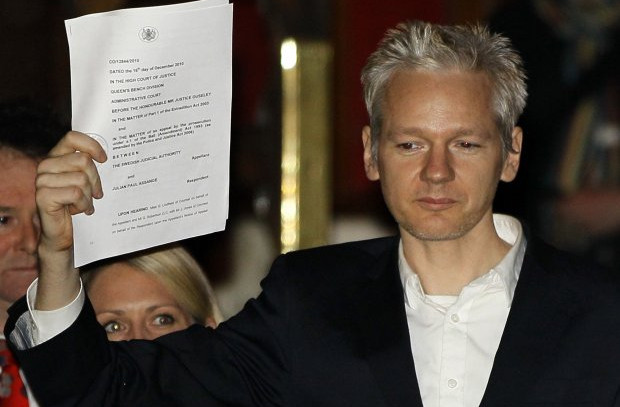
Above Photo: Abayomi Azikiwe/ Flickr
Google is blocking our site. Please use the social media sharing buttons (upper left) to share this on your social media and help us break through.
Seven years since the issue of an European Arrest Warrant against Julian Assange, and five since Ecuador granted him political asylum, a freedom of information case in the UK is shedding light on what was happening behind the scenes during that period.
Assange has spent more than five years isolated in the Ecuadorian Embassy in London, in what a UN Advisory Group ruled was arbitrary detention that contravened international law.
Ecuador recognised the political persecution of Assange and granted him the status of political refugee, judging his life to be at grave risk. Despite the UN group’s determination, British police maintain their threat to arrest Assange if he leaves the embassy.
Following years of debate over where Assange should be interviewed, Swedish prosecutors finally questioned the detained publisher in the Ecuadorian Embassy at the end of 2016, after which Sweden ultimately dropped its investigation.
Italian journalist Stefania Maurizi, who has worked on WikiLeaks releases as a media partner since 2009, has made a series of FOI requests in the different countries involved in the Assange case. In 2015 she managed to get 44 pages released on from Sweden’s prosecutorial authority. Her challenge in the UK, which was initially met with a “neither confirm nor deny” response from the Crown Prosecution Service, has now reached tribunal level, where it is being heard in front of a panel of three judges. If successful, what is at stake is the publication of communications between the CPS and Swedish prosecutors, the government of Ecuador and – potentially – the United States.
Pre-hearing press coverage focused on the CPS’ deletion of key emails from the account of a now-retired CPS lawyer, Paul Close, whose name could not be published for the duration of the proceedings. A short extract of the emails disclosed by CPS shortly before the case shows the CPS lawyer advising Swedish prosecutor Marianne Ny not to interview Julian Assange in London, a decision that led to years of deadlock. Many of the documents released by the CPS in advance of the hearing have been subjected to significant redaction.
In her statement to the court, Stefania Maurizi said that she found it remarkable that, in 780 pages disclosed by the CPS so far, not one unredacted line addresses Assange’s fear of extradition to the United States, not least given he was later granted asylum by the government of Ecuador on this basis. “Something went wrong in this case,” she said, “I don’t know what.”
For the CPS, extradition lawyer Mohammed Cheema countered that disclosing the information would endanger the UK’s diplomatic relations and could have a “very significant” chilling effect on extradition procedures with particular, unspecified, countries. Much of the CPS evidence was given in closed session, in the presence of the judges, the CPS’ lawyers and the lawyer for the Information Commissioner’s Office.
Estelle Dehon and Jennifer Robinson from Doughty Street Chambers were representing Stefania Maurizi in the two-day hearing, which concluded on Tuesday 14 November. A date for the ruling has yet to be given.