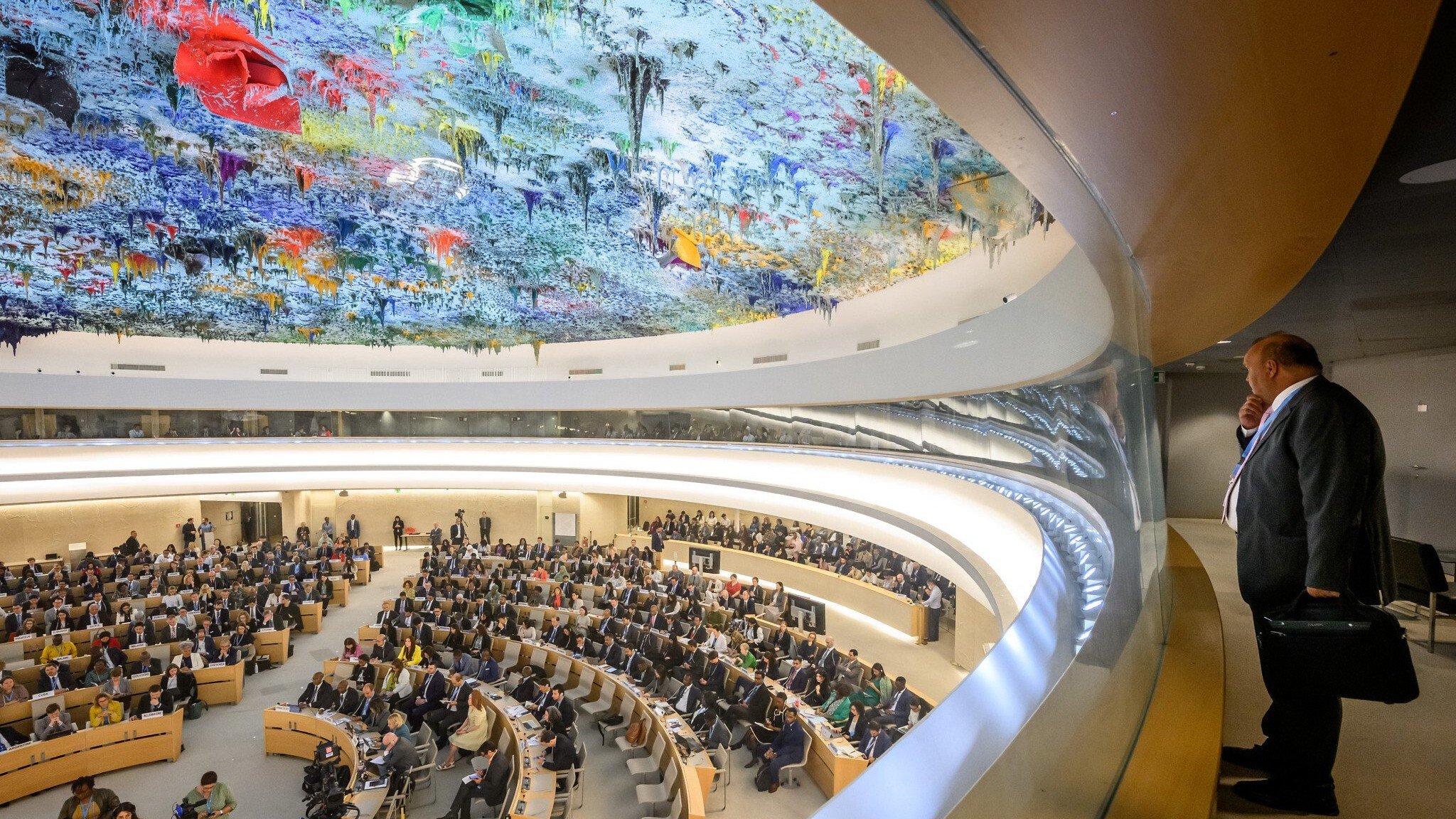
Above photo: Fabrice Coffrini / AFP.
The US and Israel are the only nations to have refused to attend the UN review of their human rights records.
The US confirmed on 7 November that it will not participate in the upcoming review of its human rights performance before the UN Human Rights Council.
The US mission in Geneva confirmed this week that the US’s seat will remain empty during the Universal Periodic Review of its rights record, which is scheduled to take place on Friday afternoon.
All 193 UN member states are required to undergo the standard review of their rights record every four to five years. Each country then receives recommendations from other member states on compliance.
The US will become only the second country to boycott the UN review.
In 2013, Israel also refused to attend the review of its human rights record.
The review would likely focus on weapons provided by the US to Israel to carry out its genocide of Palestinians in Gaza over the past two years.
The Quincy Institute reports that the US has provided at least $21.7 billion in military aid to Israel since the start of the genocide. Additional tens of billions of dollars in arms sales agreements have been committed for weapons and services that will be paid for in the years to come.
Israeli forces have killed more than 71,000 Palestinians in Gaza since the war began, according to the Gaza Ministry of Health. However, several studies have indicated that the total death toll is likely much higher, as tens of thousands are believed to be buried under rubble or have died from war-related causes like starvation and disease.
“Given the scale of current and future spending, it is clear the Israeli Defense Forces (IDF) could not have done the damage they have done in Gaza or escalated their military activities throughout the region without US financing, weapons, and political support,” the institute added.
Ezra Zeya, director of Human Rights First, called the decision to boycott the UN rights review as “disappointing and a bad sign that undermines a process that has contributed to progress on human rights around the world, including in the United States.”
Phil Lynch, director of the International Service for Human Rights, warned that “the US withdrawal not only seriously undermines the universal character of the process, but also the principle that international human rights law is inalienable and applies equally to all.”