Skip to content

Edward Snowden

NBC News Shows Why Viewers Can’t Trust Them

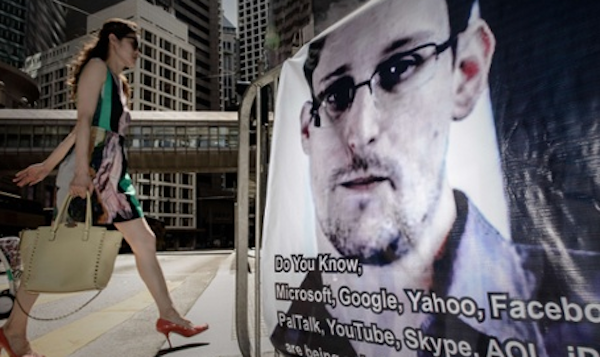
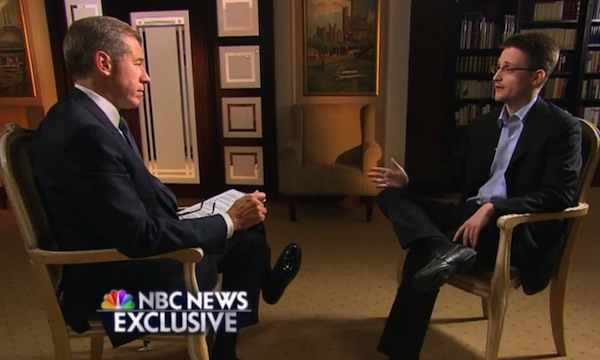
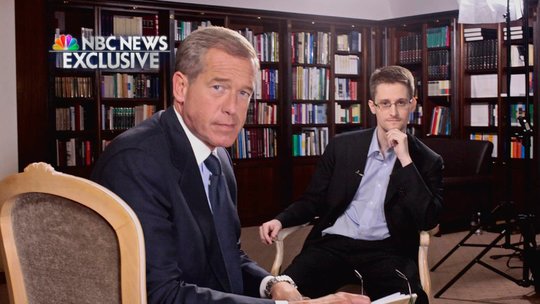
You may have heard that NBC News was able to snag an exclusive interview with NSA whistleblower Edward Snowden. They turned it into a one-hour primetime special on May 28. But before that aired, that night's NBC Nightly News–likely seen by more people–delivered a lengthy segment making the case against Snowden–almost as if the network needed to establish that it certainly wasn't taking his side. "Members of the Obama administration have launched a frontal attack on Edward Snowden," anchor Brian Williams began. The report gave ample room for that attack, and it was clear from the start that this was the point of the segment. Here's how Williams described Snowden: Many regard him as treasonous and a traitor who should pay dearly for what he's done, and many fear he has done grave damage to the United States. Some of our viewers have let us know they are outraged that we have interviewed him at all. So he's a treasonous traitor, or someone who damaged the country. Or perhaps just someone you shouldn't interview. Take your pick!
Confirmed: Snowden Tried Official Channels At NSA

One major argument from critics of NSA whistleblower Edward Snowden has been that he did not go through “proper channels” in government before taking documents on top secret surveillance programs and providing them to journalists. But, during NBC News’ exclusive interview with Snowden, the network indicated that it was able to confirm Snowden had made at least one attempt to go through channels and the network is in the process of obtaining records showing other complaints were made to superiors. NBC Nightly News anchor Brian Williams asked Snowden, “When the president and others have made the point that you should have gone through channels, become a whistleblower and not pursued the route you did, what’s your response?” “I actually did go through channels and that is documented,” Snowden answered. “The NSA has records. They have copies of emails right now to their Office of General Counsel, to their oversight and compliance folks, from me raising concerns about the NSA’s interpretations of its legal authorities.”

Snowden Says He Was a Spy, Not Just an Analyst

Edward J. Snowden says he was not merely a “low-level analyst” writing computer code for American spies, as President Obama and other administration officials have portrayed him. Instead, he says, he was a trained spy who worked under assumed names overseas for the Central Intelligence Agency and the National Security Agency. “They’re trying to use one position that I’ve had in a career here or there to distract from the totality of my experience,” he said, “which is that I’ve worked for the Central Intelligence Agency undercover overseas, I’ve worked for the National Security Agency undercover overseas and I’ve worked for the Defense Intelligence Agency as a lecturer at the Joint Counterintelligence Training Academy, where I developed sources and methods for keeping our information and people secure in the most hostile and dangerous environments around the world.”

The Obama Administration Lied To Courts To Protect NSA Spying

If you blinked this week, you might have missed the news: two Senators accused the Justice Department of lying about NSA warrantless surveillance to the US supreme court last year, and those falsehoods all but ensured that mass spying on Americans would continue. But hardly anyone seems to care – least of all those who lied and who should have already come forward with the truth. Here's what happened: just before Edward Snowden became a household name, the ACLU argued before the supreme court that the Fisa Amendments Act – one of the two main laws used by the NSA to conduct mass surveillance – was unconstitutional. In a sharply divided opinion, the supreme court ruled, 5-4, that the case should be dismissed because the plaintiffs didn't have "standing" – in other words, that the ACLU couldn't prove with near-certainty that their clients, which included journalists and human rights advocates, were targets of surveillance, so they couldn't challenge the law. As the New York Times noted this week, the court relied on two claims by the Justice Department to support their ruling: 1) that the NSA would only get the content of Americans' communications without a warrant when they are targeting a foreigner abroad for surveillance, and 2) that the Justice Department would notify criminal defendants who have been spied on under the Fisa Amendments Act, so there exists some way to challenge the law in court. It turns out that neither of those statements were true – but it took Snowden's historic whistleblowing to prove it.

Greenwald: Biggest Leaks Are Yet To Come

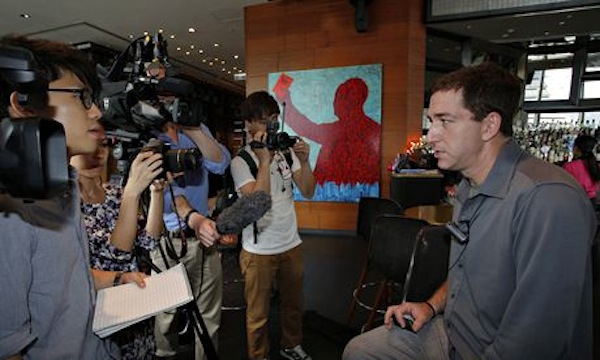
Greenwald also said in his interview that despite all that has been published about the depth and scope of the NSA program, there is still much to be revealed. "There's among the biggest stories that are left to be reported," he said. That apparently includes one particular story that has yet to be published because, Greenwald said, it is a "very complicated story to report." "I do think it will help to shape how this story is remembered for many years to come, because it answers some central questions about how surveillance is conducted that still aren't answered," he said, without providing further details. Greenwald has never been shy about criticizing what he deems the complacency of U.S. media and politicians after they learned of the privacy violations involved in collecting information from the phone records and emails of Americans and foreigners.

New Snowden Documents Reveal Depth Of Infiltration

We have known for some time now that NSA exploits social networks for surveillance purposes. What kinds of information can be obtained from Online Social Networks (OCNs)? LOTS. Communications, photographs, videos, location and travel information, day to day activities… basically everything about everyone. Is your Facebook locked down? Doesn’t matter. GCHQ & NSA collect your information anyway by exploiting“inherent weaknesses in Facebook’s security model.” The new slides cite Facebook as “a very rich source of information on targets” as it provides insight into personal details, life patterns and connections to associates. NSA slides demonstrate that online social networks (OSNs) are fully exploited for purposes of spying on everyone. Facebook is a huge network so it requires a CDN or a Content Delivery Network to deliver content faster. Your Facebook photos and videos are not hosted on Facebook servers, they are uploaded to Akamai (pronounced ACME) servers around the world. Without a CDN all Facebook content would reside only on one server so users who are far away from that server would take awhile to access and load content.

Glenn Greenwald’s New Book: No Place to Hide

Greenwald posits a fundamental American core value: Innocent until proven guilty. "The alternative to mass surveillance is not the complete elimination of surveillance. It is, instead, targeted surveillance, aimed only at those for whom there is substantial evidence to believe they are engaged in real wrongdoing," he writes. "I think it [Snowden affair] will be seen as the moment that the United States showed its true face to the world in terms of attacks on journalism and their desire to punish anyone who brings transparency." Judging from Greenwald's first-person account, Snowden radiated a calm and orderly logic that were essential parts of his psychological makeup. It was a combination that made him both the NSA's up-and-coming star and its ongoing nightmare.

Glenn Greenwald: The Day We Revealed Edward Snowden’s Identity

On Thursday 6 June 2013, our fifth day in Hong Kong, I went to Edward Snowden's hotel room and he immediately said he had news that was "a bit alarming". An internet-connected security device at the home he shared with his longtime girlfriend in Hawaii had detected that two people from the NSA – a human-resources person and an NSA "police officer" – had come to their house searching for him. Snowden was almost certain this meant that the NSA had identified him as the likely source of the leaks, but I was sceptical. "If they thought you did this, they'd send hordes of FBI agents with a search warrant and probably Swat teams, not a single NSA officer and a human-resources person." I figured this was just an automatic and routine inquiry, triggered when an NSA employee goes absent for a few weeks without explanation. But Snowden suggested that perhaps they were being purposely low-key to avoid drawing media attention or setting off an effort to suppress evidence. Whatever the news meant, it underscored the need for Laura Poitras – the film-maker who was collaborating with me on the story – and I to quickly prepare our article and video unveiling Snowden as the source of the disclosures. We were determined that the world would first hear about Snowden, his actions and his motives, from Snowden himself, not through a demonisation campaign spread by the US government while he was in hiding or in custody and unable to speak for himself.

Obama Directive Makes Mere Citing of Snowden Leaks Punishable Offense

In a new policy directive from the Obama administrative, national security and other government officials will no longer be allowed to publicly discuss or even reference news reporting that is based on "unauthorized leaks." President Obama once promised the American people that his administration would be the most transparent in history, but after years of fights with civil libertarians trying to obtain legal memos used to justify the president's overseas assassination program, an unprecedented pattern of prosecuting government whistleblowers, the targeting of journalists, and all the secrecy and obfuscation related to the NSA's mass surviellance programs made public by Edward Snowden, that claim is now met with near universal laughter, if not scorn, by critics. According to the New York Times: A new pre-publication review policy for the Office of Director of National Intelligence says the agency’s current and former employees and contractors may not cite news reports based on leaks in their speeches, opinion articles, books, term papers or other unofficial writings.

Edward Snowden Accepts Ridenhour Prize, Defends Whistle-Blowers

The NSA whistle-blower accepted the prize for “truth-telling” Wednesday afternoon and spoke via a Web stream. “A year ago there was no way I could have imagined being here, being honored in this room,” Snowden said in his opening remarks. “When I began this, I never expected to receive the level of support that I did from the public. Having seen what happened to the people that came before, specifically Thomas Drake, it was an intimidating thing. I’d realized that the highest likelihood, the most likely outcome of returning this information to public hands would be that I would spend the rest of my life in prison. I did it because I thought it was the right thing to do.” “Now, what’s important about this is I’m not the only one who felt this way,” Snowden continued. He went on to talk about former colleagues at the NSA and its contractors who had doubts about what they were doing but who refused to do anything about it because they feared their lives would be destroyed by the people they worked for. Snowden closed his remarks by saying that “cooperation and working together” is “the way forward.”

Snowden: Everyone Is Under Surveillance Now

The US intelligence whistleblower Edward Snowden has warned that entire populations, rather than just individuals, now live under constant surveillance. “It's no longer based on the traditional practice of targeted taps based on some individual suspicion of wrongdoing,” he said. “It covers phone calls, emails, texts, search history, what you buy, who your friends are, where you go, who you love.” Snowden made his comments in a short video that was played before a debate on the proposition that surveillance today is a euphemism for mass surveillance, in Toronto, Canada. The former US National Security Agency contractor is living in Russia, having been granted temporary asylum there in June 2013. Before the debates began, 33% of the audience voted in favour of the debate statement and 46% voted against. It closed with 59% of the audience siding with Greenwald and Ohanian.

Lavabit, Company That Defied NSA Surveillance, Loses Appeal

Company rejected demand that it unlock its encrypted system as government chased whistleblower Edward Snowden The encrypted email service Lavabit, which founder Ladar Levison chose to close down rather than give government agencies access to its customers private data, lost a federal appeal on Wednesday when the Fourth District Court upheld a lower ruling that that the company should be held in contempt for its refusal. Lavabit founder Ladar Levison refused to comply with the government's so-called 'pen/trap order'. The government was trying to gain access to an account they alleged was being used by NSA whistleblower Edward Snowden, but Levison rejected the broad scope of the request.

Snowden Explains: Why I Questioned Putin On Russian Surveillance

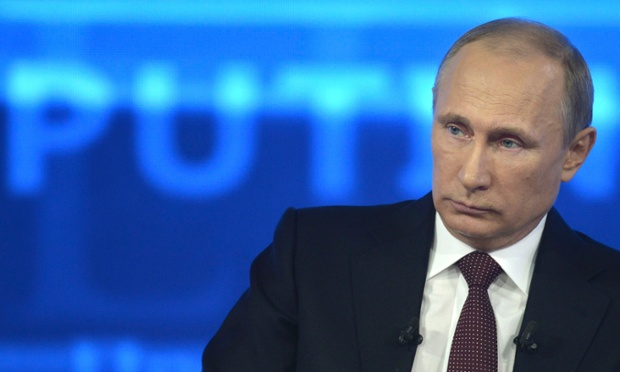
On Thursday, I questioned Russia's involvement in mass surveillance on live television. I asked Russia's president, Vladimir Putin, a question that cannot credibly be answered in the negative by any leader who runs a modern, intrusive surveillance program: "Does [your country] intercept, analyse or store millions of individuals' communications?" I went on to challenge whether, even if such a mass surveillance program were effective and technically legal, it could ever be morally justified. The question was intended to mirror the now infamous exchange in US Senate intelligence committee hearings between senator Ron Wyden and the director of national intelligence, James Clapper, about whether the NSA collected records on millions of Americans, and to invite either an important concession or a clear evasion. (See a side-by-side comparison of Wyden's question and mine here.) Clapper's lie – to the Senate and to the public – was a major motivating force behind my decision to go public, and a historic example of the importance of official accountability.

CBS: Another Corporate Media Outlet Aligns With The CIA

CBS News has hired former acting director of the CIA, Mike Morell, as their senior security correspondent. Morell has been a frequent guest on CBS’ Face the Nation, where he has disseminated CIA propaganda and misleading information, raising questions about CBS’ journalistic integrity. Morell also works for Beacon Global Strategies, a DC consulting firm which peddles its government connections to defense contractors, raising even more questions about his role at CBS. On December 23, 2013, Morell appeared on Face the Nation, where he promoted the government’s campaign to prosecute Edward Snowden. On this day Morell stated: “He violated the trust put in him by the United States government. He has committed a crime, in my view. You know a whistleblower doesn’t run. A whistleblower does not disclose information that has nothing to do with what he says his cause is which is the privacy and civil liberties of Americans.

Pulitzer: Publishing NSA Leaks Was A Public Service

The Guardian and The Washington Post won the Pulitzer Prize for Public Service on Monday for their coverage of the National Security Agency, reporting which followed last year's bombshell disclosures from former contractor Edward Snowden. The Pulitzer board's decision to honor NSA coverage, and specifically to single out the reporting as a public service, makes a strong statement about the importance of the worldwide surveillance revelations, especially given that Snowden has been charged under the Espionage Act for leaking the classified documents. The Pulitzer committee praised the Post's "authoritative and insightful reports" as helping "the public understand how the disclosures fit into the larger framework of national security."
assetto corsa mods

Urgent End Of Year Fundraising Campaign

Online donations are back! Keep independent media alive. 

Due to the attacks on our fiscal sponsor, we were unable to raise funds online for nearly two years.  As the bills pile up, your help is needed now to cover the monthly costs of operating Popular Resistance.

Urgent End Of Year Fundraising Campaign

Online donations are back! 

Keep independent media alive. 

Due to the attacks on our fiscal sponsor, we were unable to raise funds online for nearly two years.  As the bills pile up, your help is needed now to cover the monthly costs of operating Popular Resistance.

Sign Up To Our Daily Digest

Independent media outlets are being suppressed and dropped by corporations like Google, Facebook and Twitter. Sign up for our daily email digest before it’s too late so you don’t miss the latest movement news.