Skip to content

heat islands

Atlanta Embraces A Cheap, Effective Way To Beat Urban Heat

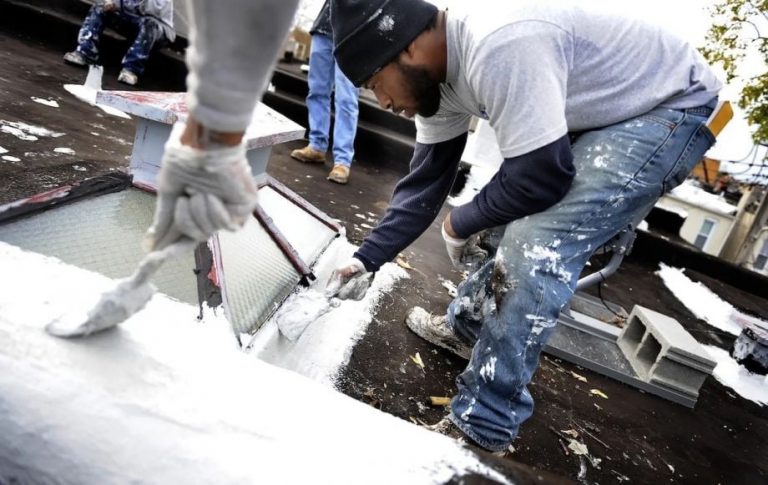
Walk outside into 100-degree heat wearing a black shirt, and you’ll feel a whole lot hotter than if you were wearing white. Now think about your roof: If it’s also dark, it’s soaking up more of the sun’s energy and radiating that heat indoors. If it were a lighter color, it’d be like your home was wearing a giant white shirt all the time. This is the idea behind the “cool roof.” Last month, Atlanta joined a growing number of American cities requiring that new roofs be more reflective. That significantly reduces temperatures not just in a building, but in the surrounding urban environment.

Rural ‘Buffer Ring’ Can Reduce Urban Heat Island Effect

Rural land cover surrounding a city has the potential to reduce the “urban heat island” (UHI) effect and cool the city centre by more than 0.5C, new research shows. While heatwaves around the world are becoming more frequent and intense because of human-caused warming, they are made even more severe in cities by the UHI effect, which traps heat in urban areas and keeps them warmer than their rural surroundings. The study, published in Nature Cities, analyses 20 years of data from 30 cities in China and finds that a ring of rural land around a city can bring the urban temperature down. A buffer ring that is at least half the city’s width can have the biggest cooling effect.

These Urban Food Forests Do Double Duty

Below the red-tile roofs of the Catalina Foothills, an affluent area on the north end of Tucson, Arizona, lies a blanket of desert green: spiky cacti, sword-shaped yucca leaves, and the spindly limbs of palo verde and mesquite trees. Head south into the city, and the vegetation thins. Trees are especially scarce on the south side of town, where shops and schools and housing complexes sprawl across a land encrusted in concrete. On hot summer days, you don’t just see but feel the difference. Tucson’s shadeless neighborhoods, which are predominantly low-income and Latino, soak up the heat.

Why Cities Are Opening Their Rivers And Lakes To Swimming

As recently as the 1940s, New Yorkers swam in floating pools in the Hudson and East Rivers. A safer alternative to swimming directly in the river, the municipal baths kept residents cool in hot summer months until they were closed over sanitation concerns. Now, as the city contends with life-threatening heat, can New Yorkers once again turn to the rivers to stay cool? The team behind +Pool, an initiative to bring a floating swimming pool to the East River, is betting on it. The organization’s proposed cross-shaped, Olympic-size pool would differ from its historic predecessors in one significant way: filtration.
assetto corsa mods

Urgent End Of Year Fundraising Campaign

Online donations are back! Keep independent media alive. 

Due to the attacks on our fiscal sponsor, we were unable to raise funds online for nearly two years.  As the bills pile up, your help is needed now to cover the monthly costs of operating Popular Resistance.

Urgent End Of Year Fundraising Campaign

Online donations are back! 

Keep independent media alive. 

Due to the attacks on our fiscal sponsor, we were unable to raise funds online for nearly two years.  As the bills pile up, your help is needed now to cover the monthly costs of operating Popular Resistance.

Sign Up To Our Daily Digest

Independent media outlets are being suppressed and dropped by corporations like Google, Facebook and Twitter. Sign up for our daily email digest before it’s too late so you don’t miss the latest movement news.