Skip to content

Land Conservation

How Traditional Knowledge Is Saving Forgotten Lands

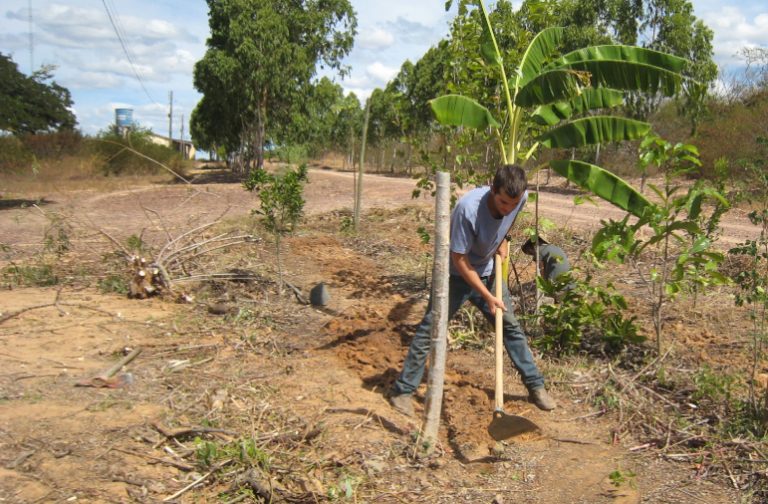
The Instituto Anjos do Sertão is a non-profit family organization based in Canto do Buriti, Brazil. Founded in December 2015 by a Brazilian family, it combines a holistic vision with educational programs in regenerative farming and a research center – all centered around a 5,500-hectare regenerative school farm. Its story begins in 2008 when the founders of Anjos do Sertão purchased the land in the Caatinga region – a unique and neglected biome in the Northeast Region of Brazil. Immediately they faced a critical lack of skilled local labor to work on the farm.

Landmark Agreement Boosts Native Ecosystems On Point Reyes

A historic agreement has just been struck to settle a decades-long land-use conflict over the future of cattle and wildlife on Point Reyes National Seashore. Under the deal, most of the beef and dairy ranches on Point Reyes National Seashore will depart, and former ranch lands will be managed as a Scenic Landscape Zone according to a new General Management Plan approved by the National Park Service. Tule elk will have the freedom to roam unmolested throughout Point Reyes National Seashore, opportunities for public recreation will improve, and the land will have the opportunity to return to native coastal grassland.

Guide To Preserving Sacred Land Near You

Anthropogenic climate change and biodiversity loss are the most pressing issues for our planet. Carbon dioxide emissions in the atmosphere continue to rise due to the burning of fossil fuels and land use change, with the latter occurring primarily in the form of animal agriculture and growing crops to feed livestock. Biodiversity loss is greatly enhanced by these climate changes, causing catastrophic threats to nature. Because these unprecedented climate changes make modeling future scenarios relatively impossible, region-by-region data is the only reliable tool, so conservation efforts must begin regionally.

Re-Farming And The Right To Plant

The word ‘rewilding’ has had its day and now needs to slip gracefully into retirement. That, at any rate, is the polite suggestion I’m going to make in this post, which is the last in my recent mini-series on ‘wrecked’ land and what to do about it. It’s not that, for the most part, I object to a lot of the practical activities that are done in the name of rewilding by conservationists, land managers, farmers, ecologists and so on.  In that sense, I agree with most of what Ian Carter says in this recent article, except for his concluding remarks endorsing the term. I got to thinking about this when I gave a Q&A talk recently and made a flippantly negative reference to the term while making the case for low-impact, peopled, agrarian landscapes.
assetto corsa mods

Urgent End Of Year Fundraising Campaign

Online donations are back! Keep independent media alive. 

Due to the attacks on our fiscal sponsor, we were unable to raise funds online for nearly two years.  As the bills pile up, your help is needed now to cover the monthly costs of operating Popular Resistance.

Urgent End Of Year Fundraising Campaign

Online donations are back! 

Keep independent media alive. 

Due to the attacks on our fiscal sponsor, we were unable to raise funds online for nearly two years.  As the bills pile up, your help is needed now to cover the monthly costs of operating Popular Resistance.

Sign Up To Our Daily Digest

Independent media outlets are being suppressed and dropped by corporations like Google, Facebook and Twitter. Sign up for our daily email digest before it’s too late so you don’t miss the latest movement news.