
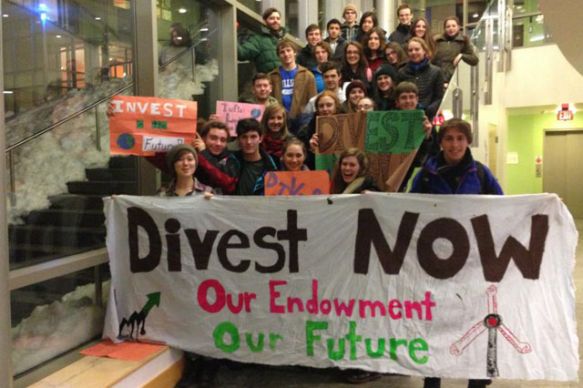
A Dispatch From 350’s Divestment Trenches
Unlike yesteryear's South African divestment campaign, when major governments worked to end its apartheid policies, almost all governments are largely controlled by the industry. Despite the Ukraine's political chaos, its leaders signed a pair of $10 billion, 50-year "shared" deals permitting Royal Dutch Shell and Chevron to frack for natural gas. In the United States, exploration and drilling permits are easy to get; short-handed regulators are hobbled by budgetary cuts and deliberate red-tape policies. Even horrific rail and pipeline mishaps take years to investigate and rarely generate changes or fines beyond $50,000 when appeals are settled - often decades after they've been initiated.
But that may be changing, thanks to the boiling rage of affected publics in Canada and the United States rising from the groundwork laid by 350 and allies in the environmental movement. Twenty-nine US senators just "held the Senate floor all night long to draw attention to the issue of carbon pollution and climate change," according to Oregon's Sen. Jeff Merkley. Another important ally is World Bank president Jim Yong Kim, who in January ordered the world's financiers at the World Economic Forum in Switzerland to take drastic financial action against CO2polluters


