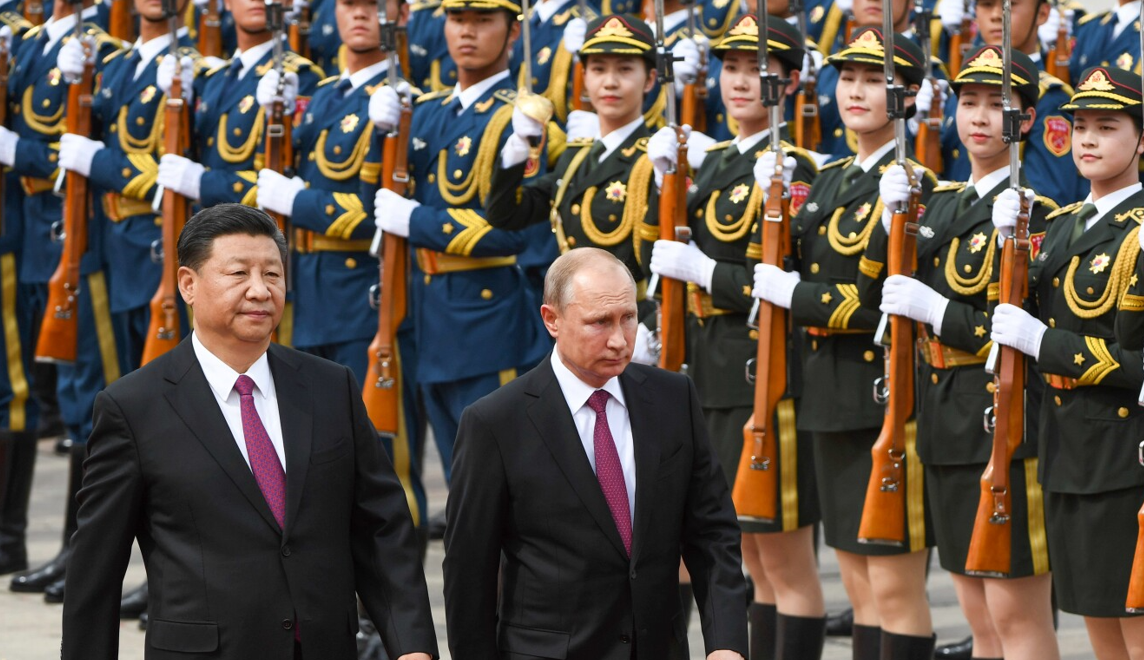
Above photo: Greg Baker/AFP/Getty Images.
The Ukraine war is quite clearly a war without any winners.
Among all the major stakeholders, China alone may emerge with some gains, although even this is uncertain.
Russia may make some territorial gains and at the same time ensure better protection for some of the Russian speaking people of eastern parts of Ukraine, but these limited gains are likely to be weighed down by the bigger losses as a large number of people of Ukraine who suffer heavily in the war down are likely to be much more hostile towards Russia in future. Threat perceptions regarding Russia are likely to increase in several nearby countries, as has already happened in the previously neutral ones like Sweden and Finland. Sympathy for Russia worldwide will reduce with the increasing distress of the people of Ukraine. This as well as the the high costs of war and sanctions will cause increasing problems and divisions within Russian society.
Of course it is the people of Ukraine who are suffering the most and are likely to suffer the most in the near future. Even if the war ends soon, it will leave behind a lot of floating weapons and militarization of society, including strengthening of narrow-minded, militaristic ideologies. Rebuilding the country, its infrastructure and the destroyed homes will be an enormous task even if generous help is assured.
The USA may succeed in further strengthening its leadership role among its allies but some of them may be more reluctant allies. At the same time US actions have brought China and Russia closer to each other than at any other recent time, although generally US diplomacy has aimed at exactly the opposite of this. The supremacy of the US dollar as world currency may be affected adversely as the need for finding alternative arrangements is increasingly felt by more countries and people. While criticism of Russia will increase the most, there is also likely to be higher although less louder criticism of the USA and the NATO, even within the USA, for their role in aggravating tensions in a volatile part of the world while ignoring more peaceful options.
Many countries of Europe will face the prospects of buying more expensive fuel from more distant places as investments made already in ensuring cheaper supplies from Russia cannot be utilized at least in the near future. They face the prospects of having to live with a more hostile and angry nuclear armed neighbor, not a reassuring prospect despite the availability of protective NATO cover.
Most of the poorer countries depending on food imports face increasing food shortages and hunger as a result of this war. Essential food items particularly wheat and wheat based products, some of the edible oils as well as fertilizers to produce food are likely to become more expensive and scarce.
Due to disruptions of trade and supply chains, many economic activities all over the world are likely to be adversely affected. The supply of several critical minerals and fuels in particular is likely to become more uncertain and expensive. These inflationary pressures are likely to spread in many parts of world.
The overall peace prospects of world are likely to be harmed drastically as the world gets even more divided into two big power blocks, both of which are excessively armed with nuclear weapons and other very destructive weapons. The perception of threat of a third world war and exchange of nuclear weapons has increased significantly since the Ukraine war started, and the kind of threats that have been voiced recently are almost unprecedented.
If peace is threatened in such serious ways and the world is so deeply divided, then chances of closer cooperation among all nations for resolving the most urgent problems like climate change ( together with other most serious and mutually related environmental problems ) are reduced greatly, almost shattered. This may eventually prove to be the worst impact of such divisive actions as the recent invasion and related complications. While there is compelling need for greatly reducing weapons, the trend now is in the opposite direction of aggravating the arms race, including the race for weapons of mass destruction.
The only major stakeholder that may be surer of gaining in a narrow sense is China, as it can escape the high costs of sanctions as well as war to a large extent while pursuing the strengthening of its economic as well as military might and political influence. China is also strengthened by much greater closeness to Russia, that too a Russia weakened by war and sanctions and hence more dependent on China. However even these gains to China are uncertain as in a situation of fast increasing tension and escalation the rising flames can engulf anyone in unexpected ways.
Hence there are no winners in this war and all efforts must be directed at ending the war as early as possible, followed by longer term measures of durable peace and stability in the region and greater goodwill among all contending parties.
Bharat Dogra is Honorary Convener, Campaign to Save Earth Now. His recent books include A Day in 2071, Planet in Peril and Protecting Earth for Children.