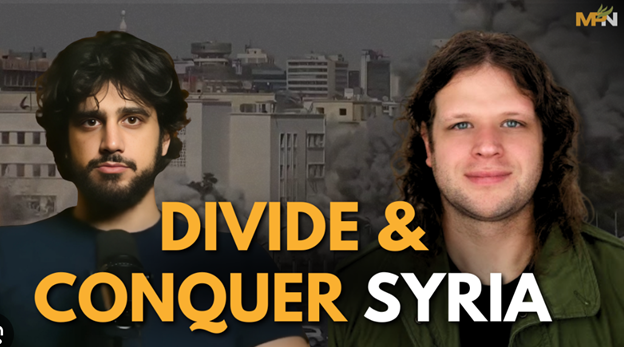
Southern Syria is once again in turmoil. Recent clashes in the city of Suwayda between Druze militias and Bedouin gangs triggered a swift military response from the Syrian government, and airstrikes by Israel on positions in Damascus.
In this episode of State of Play, I’m joined by Ahmad from Propaganda & Co. and MintPress journalist Robert Inlakesh to examine the wider forces behind the violence. Beneath the headlines lies a pattern: outside powers managing chaos to remake Syria in their image.
Israel claimed its strikes were defensive, aimed at protecting the Druze population. But according to U.S. intelligence, Syria had informed Israel of its tank movements ahead of time. There’s no evidence tying the government to attacks on civilians. Still, Israeli officials described the clashes as an “October 7-style” event—a narrative designed to stir fear and justify escalation.
As Ahmad explains, the rhetoric aligns with Israel’s decades-old “Doctrine of the Periphery,” a strategy first proposed by David Ben-Gurion. The idea was to build ties with non-Arab states and regional minorities to weaken Arab unity. That logic now underpins Israeli and U.S. policy in Syria: isolate, fragment, and control.
Meanwhile, Washington has enabled a quieter economic front. With help from Qatar and Turkey, Syria’s debts to the World Bank were paid off, allowing new IMF loans. The U.S. also approved billions in foreign investment from Gulf states and Turkey to rebuild Syria’s energy infrastructure. But these projects come with strings, binding Syria more tightly to a foreign-led economic order.
“This isn’t reconstruction,” Ahmad says. “It’s recolonization.”
Turkey is also expanding its influence, particularly in Lebanon’s northern port of Tripoli. It’s part of a broader regional push, dressed up as development.
But there’s growing resistance. As Inlakesh notes, Israel’s war on Gaza has hardened public opinion across the region. Images of destruction make normalization harder to sell. Arab regimes may sign deals, but populations are pushing back.
The crisis in Suwayda isn’t just local. It’s the latest example of how imperial powers utilize managed instability to redraw borders, block resistance, and maintain Syria’s weakness. Today’s tools—IMF loans and airstrikes—may differ from those of yesterday’s occupations, but the goal remains unchanged.
“Imperialism never left,” Ahmad says. “It just rebranded.”