Skip to content

Thomas Sankara

Agroecology Is A Form Of Resistance And Decolonization

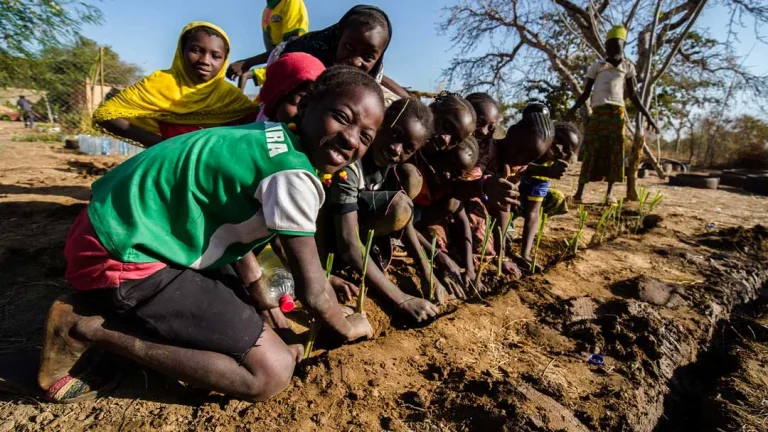
In Burkina Faso, agroecology flourishes as an act of resistance. In a country where more than 80% of the active population makes their living off agriculture, peasant movements and social organizations have defended the production of healthy food and food self-sufficiency as a path to liberation from the wounds left by French neocolonialism. Leading this effort is the Yelemani Association, founded in 2009 by Blandine Sankara, sister of revolutionary leader and former president Thomas Sankara, who governed the country from 1983 to 1987, when he was assassinated.
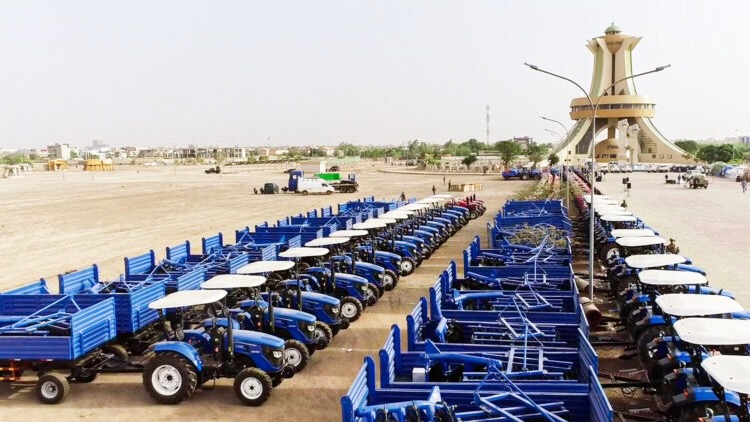
Burkina Faso Is Moving Towards Self-Sufficiency In Food Production

Dependence on foreign aid, political instability, chronic poverty, and the effects of climate change are among the obstacles preventing Burkina Faso from achieving its longed-for food sovereignty. Currently, about 80% of the population of the Sahelian nation is involved in agricultural activity, which accounts for a third of the GDP. Even so, the country still imports more than 200,000 tons of rice per year. In response to this challenge, President Ibrahim Traoré’s government launched the so-called Agricultural Offensive in 2023, which has been revolutionizing the rural environment and serving as a model for the continent.

Repoliticizing A Generation

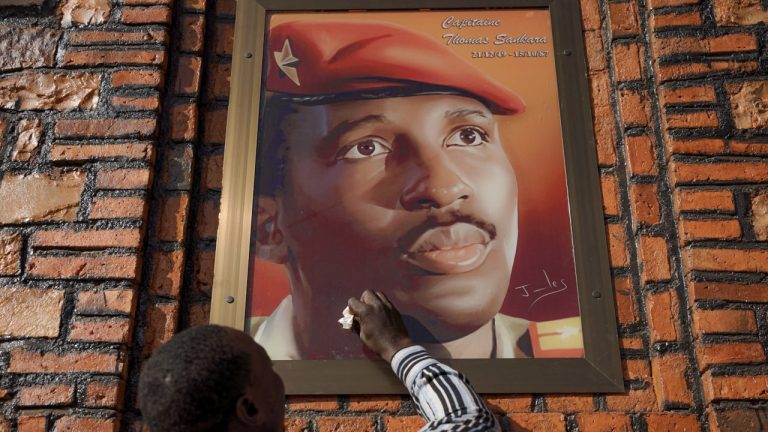
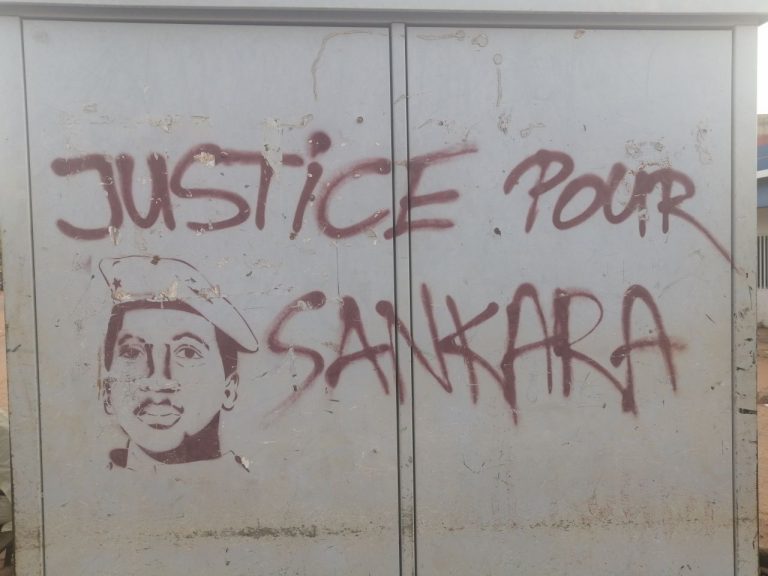
Yesterday marked the 38th anniversary of the assassination of Thomas Sankara, who, on October 15, 1987, was killed alongside twelve of his comrades during a coup led by Blaise Compaoré. Sankara’s brief but transformative presidency (1983–1987) reoriented Burkina Faso’s political economy toward self-reliance, gender equality, ecological stewardship, and non-alignment in global affairs. For more than three decades, Aziz Salmone Fall, a pan-African activist, political scientist, and coordinator of the International Campaign Justice for Sankara (ICJS), has worked with Sankara’s family, Burkinabè activists, and international allies to demand truth and accountability.

Thomas Sankara’s Legacy Is Alive In The Sahel

In the months after the 1987 coup in Burkina Faso that killed President Thomas Sankara, screen printers in the capital, Ouagadougou, began to churn out shirts with Sankara’s face on them. The image soon spread throughout the country. Blaise Compaoré, Sankara’s former minister of justice, went on to rule the country until 2014. He was suspected from the outset of orchestrating Sankara’s murder, but it would take the Burkinabé courts until 2021–2022 to find him guilty. By then, he had long fled to Côte d’Ivoire, where he remains a fugitive. Throughout his time in office, Compaoré claimed to be a follower of Sankara – a political legacy he could not afford to disavow.

Brother Of Pan-Africanist Leader Thomas Sankara Grateful For Traore

We’re standing in front of the Thomas Sankara Memorial, in Ouagadougou, Burkina Faso’s capital. Inaugurated on May 17 in the presence of various African heads of state and public figures, the site symbolizes a collective desire to preserve the legacy of the Burkinabé pan-Africanist leader Thomas Sankara and his 12 comrades who were assassinated in the 1987 coup d’état. The massacre, orchestrated by Sankara’s then-ally Blaise Compaoré – who became president and ruled until 2014 with support from France – interrupted a wave of transformative reforms meant to eliminate the scars of neocolonialism in the Sahel nation. In just four years, Sankara redistributed land to peasants and raised the literacy rate from 13% in 1983 to 73% in 1987. His radical transformation also extended to public health: 2.5 million children were vaccinated against meningitis, yellow fever, and measles.

Sankara’s Revolution Rises Again

August 4, marks 42 years since Thomas Sankara came to power in Burkina Faso, revitalizing the spirit of national liberation across Africa. His assassination in October 1987, though a setback, could not extinguish the struggle for Africa’s emancipation, for which he lived and ultimately died. His critique of foreign debt as “a skillfully managed reconquest of Africa,” delivered at the Organization of African Unity (OAU) Summit three months before his murder, still resonates today. Nearly four decades after these initial steps, in the southern Sahel, Mali, Niger, and Burkina Faso have established the Alliance of Sahel States (AES).

Venezuela Presents Anti-Blockade Policies To Burkina Faso Delegation

This Wednesday, Venezuelan vice minister for anti-blockade policy, William Castillo, made a presentation to the visiting delegation from Burkina Faso. Castillo’s presentation covered the impact on Venezuela’s economy of the illegal coercive measures—euphemistically referred to as “sanctions”—imposed by the US and its vassals and spoke about how Venezuela has overcome them. In a statement, Castillo wrote that both parties agreed that “the sanctions are part of an illegal and criminal foreign policy and of a model of neocolonialism that uses attacks on the economy as a spearhead for the geopolitical control of free nations.” Burkina Faso also faces sanctions imposed by the European Union.
assetto corsa mods

Urgent End Of Year Fundraising Campaign

Online donations are back! Keep independent media alive. 

Due to the attacks on our fiscal sponsor, we were unable to raise funds online for nearly two years.  As the bills pile up, your help is needed now to cover the monthly costs of operating Popular Resistance.

Urgent End Of Year Fundraising Campaign

Online donations are back! 

Keep independent media alive. 

Due to the attacks on our fiscal sponsor, we were unable to raise funds online for nearly two years.  As the bills pile up, your help is needed now to cover the monthly costs of operating Popular Resistance.

Sign Up To Our Daily Digest

Independent media outlets are being suppressed and dropped by corporations like Google, Facebook and Twitter. Sign up for our daily email digest before it’s too late so you don’t miss the latest movement news.