Skip to content

Privacy

Popular Resistance Newsletter – Fighting Tyranny Of National Security State

This week may be seen as a turning point in the fight back against NSA spying by creating new systems to overcome the surveillance state. There have been protests against the NSA’s spying program but they focus only on legislative solutions. While legislation is needed, many of the technological solutions lie within our own power and often merely require the government to get out of the way. President Obama’s independent commission is anything but independent. We are not going to get a “Church Committee” in the current Congress. The leadership of both parties and President Obama are too tied to the surveillance state – or, perhaps too afraid of it – to challenge it. The director of National Intelligence, James Clapper was not even reprimanded or forced to resign when he committed perjury before Congress about surveillance on Americans. Protests against the surveillance state continue to grow.

Aaron Swartz’ Legacy: SecureDrop Allows Anonymous Whistleblowing

Freedom of the Press Foundation has taken charge of the DeadDrop project, an open-source whistleblower submission system originally coded by the late transparency advocate Aaron Swartz. In the coming months, the Foundation will also provide on-site installation and technical support to news organizations that wish to run the system, which has been renamed “SecureDrop.” By installing SecureDrop, news organizations around the world can securely accept documents from whistleblowers, while better protecting their sources’ anonymity. Although it is important to note that no security system can ever be 100 percent impenetrable, Freedom of the Press Foundation believes that this system is the strongest ever made available to media outlets. Several major news agencies have already signed up for installations, and they will be announced in the coming weeks.

Stallman: How Much Surveillance Can Democracy Withstand?

The current level of general surveillance in society is incompatible with human rights. To recover our freedom and restore democracy, we must reduce surveillance to the point where it is possible for whistleblowers of all kinds to talk with journalists without being spotted. To do this reliably, we must reduce the surveillance capacity of the systems we use. Using free/libre software, as I’ve advocated for 30 years, is the first step in taking control of our digital lives. We can’t trust non-free software; the NSA uses and even creates security weaknesses in non-free software so as to invade our own computers and routers. Free software gives us control of our own computers, but that won’t protect our privacy once we set foot on the internet. Bipartisan legislation to “curtail the domestic surveillance powers” in the U.S. is being drawn up, but it relies on limiting the government’s use of our virtual dossiers. That won’t suffice to protect whistleblowers if “catching the whistleblower” is grounds for access sufficient to identify him or her. We need to go further.

VIDEO: Lee Camp, What You Don’t Know About NSA Spying Scandal

Are we living in a time of inverted totalitarianism? Pulitzer prize-winning author Chris Hedges tells me we are in this first episode of the Moment of Clarity Show - SEASON TWO!

Former Qwest CEO Says Refusal To Comply With NSA Spying Landed Him In jail

Former Qwest CEO Joseph Nacchio, who spent over four years in prison for insider trading, now says his conviction was based on his company’s refusal to cooperate with NSA requests to spy on its customers. Nacchio says he feels “vindicated” by ongoing revelations provided by former NSA contractor EdwardSnowden that the NSA does, in fact, access massive amounts of metadata and communique information of both foreigners and Americans. Nacchio told The Wall Street Journal that the NSA set up a meeting with him in February 2001 wherein he believed they would discuss potential government contracts. But he says the NSA instead asked him for permission to surveil Qwest customers. He says he refused to cooperate based on advice from his lawyers that such an action would be illegal, as the NSA would not go through the normal process of asking the Foreign Intelligence Surveillance Court for a subpoena.

ACLU Slams DOJ Over Unchecked Drone Program

FBI Director Robert Mueller admitted last June before a Senate judiciary committee hearing that the agency employs domestic drones for surveillance-use over U.S. soil, but the extent of this practice, as well as the extreme lack of regulations in the program, have not been known until now. According to the report, the agency's domestic drones are only subject to rules that apply to manned aircraft. However, “unlike manned aircraft," the report states, "UAS [unmanned aircraft systems] can be used in close proximity to a home and, with longer-lasting power systems, may be capable of flying for several hours or even days at a time, raising unique concerns about privacy and the collection of evidence.” No rules exist for these scenarios.

Documents Shed Light On Border Laptop Searches

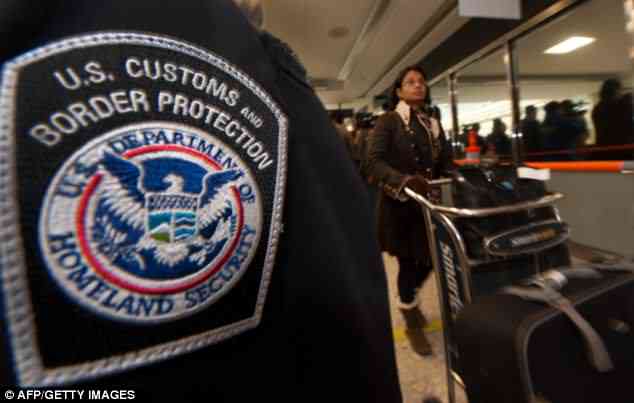
The documents expose the government’s process for searching electronic devices at the border—and it is not reassuring. Although the government reports searching thousands of electronic devices a year at the border, the details of how it conducts these searches have been largely kept secret so far. ICE’s policy states that electronic device searches should generally be completed within 30 days, but it took some seven months for the government to complete its search of House’s information and conclude that there was no evidence of wrongdoing data. During that period, House’s devices were imaged multiple times and shared with another government agency, the Army Criminal Investigation Division. Unfortunately, House’s case is not an isolated incident.

Criticism Escalates Against TPP, Negotiations Go Further Underground

Not only have they neglected to notify digital rights groups—including EFF, which is based in San Francisco—about the meeting, we could not even discover where it was taking place. Delegates from TPP countries are right now holding these secretive "inter-sessional" meetings here and in other undisclosed cities around the world. Trade reps for specific issue areas are hammering out "unresolved" issues that are holding up the conclusion of the agreement, and doing so by becoming even more secretive and evasive than ever. We only heard about a TPP meeting on intellectual property in Mexico City in September through the diplomatic rumor-mill, since the US Trade Rep is no longer bothering to announce the dates or locations of these closed-door side meetings.

Drug Agents Use Vast Phone Trove, Eclipsing NSA’s

For at least six years, law enforcement officials working on a counternarcotics program have had routine access, using subpoenas, to an enormous AT&T database that contains the records of decades of Americans’ phone calls — parallel to but covering a far longer time than the National Security Agency’s hotly disputed collection of phone call logs. The Hemisphere Project, a partnership between federal and local drug officials and AT&T that has not previously been reported, involves an extremely close association between the government and the telecommunications giant. The government pays AT&T to place its employees in drug-fighting units around the country. Those employees sit alongside Drug Enforcement Administration agents and local detectives and supply them with the phone data from as far back as 1987.

Green Scare Lite

Years later, through Freedom of Information Act (FOIA) requests (both mine and friends), I found out that the Federal Bureau of Investigation (FBI) had tracked my air travel, watched my home, listed me as an associate of a “criminal organization,” paid at least one fellow Houston activist to inform on us and most likely reported me to the Australian government while I traveled there resulting in my detention and forced removal from that country as a “national security threat.” Others in DSEF! had similar or worse experiences. I’d never been arrested or charged with any crime in that campaign, yet organizing bold and effective campaigns against wealthy corporations put me on the government’s blacklist.

Creating An Alternative Internet To Keep The NSA Out

They've got something much weirder and more interesting: a private, parallel internet. He and his fellow Athenians built it. They did so by linking up a set of rooftop wifi antennas to create a "mesh," a sort of bucket brigade that can pass along data and signals. It's actually faster than the Net we pay for: Data travels through the mesh at no less than 14 megabits a second, and up to 150 Mbs a second, about 30 times faster than the commercial pipeline I get at home. Bonicioli and the others can send messages, video chat, and trade huge files without ever appearing on the regular internet. And it's a pretty big group of people: Their Athens Wireless Metropolitan Network has more than 1,000 members, from Athens proper to nearby islands. Anyone can join for free by installing some equipment. "It's like a whole other web," Bonicioli told me recently. "It's our network, but it's also a playground."

Create a Surveillance Free Internet

Mass-scale surveillance like PRISM is disturbing, but is an unsurprising effect of how centralized the Web is today. For years, people have been trusting more and more of their data to remotely hosted systems. Users are also giving up control of their computing to Service as a Software Substitute (SaaSS), remotely-hosted programs that exchange data with users to do computing that they could do on their own machines. In both cases, there's no way to see what these servers are doing with your data, so you have to take the host's word for it that they are being responsible. But these companies submit to governments when they ask for your information, whether it's ostensibly to fight terrorism or to stop unauthorized copying.

Google: Don’t Expect Privacy When Sending Gmail

People sending email to any of Google's 425 million Gmail users have no "reasonable expectation" that their communications are confidential, the internet giant has said in a court filing. Consumer Watchdog, the advocacy group that uncovered the filing, called the revelation a "stunning admission." It comes as Google and its peers are under pressure to explain their role in the National Security Agency's (NSA) mass surveillance of US citizens and foreign nationals. "Google has finally admitted they don't respect privacy," said John Simpson, Consumer Watchdog's privacy project director. "People should take them at their word; if you care about your email correspondents' privacy, don't use Gmail."

CIA Destroyed Secret File It Kept On Noam Chomsky

For years, the Central Intelligence Agency denied it had a secret file on MIT professor and famed dissident Noam Chomsky. But a new government disclosure obtained by The Cable reveals for the first time that the agency did in fact gather records on the anti-war iconoclast during his heyday in the 1970s. The disclosure also reveals that Chomsky's entire CIA file was scrubbed from Langley's archives, raising questions as to when the file was destroyed and under what authority[...]It's worth noting that the destruction of records is a legally treacherous activity.

Overcoming The Global Order Of Oppression, Fear And Paranoia

Orwell’s nightmarish utopia 1984 became strangely real on September 11, 2001[...] In our global Orwellian totalitarian state, life appears almost pleasant at times. Obey, stay in line, and rewards can be expected from conformity. Rebellious behavior, on the other hand, is no longer tolerated. The US is a prison nation, and incarceration has become the school system of the oppressed. During the McCarthy era, communists or people suspected of “anti-American” activities were prosecuted in the US, but now anywhere in the world a person suspected of being a “terrorist” or “other extremist” can be blown to smithereens by a drone.
assetto corsa mods

Urgent End Of Year Fundraising Campaign

Online donations are back! Keep independent media alive. 

Due to the attacks on our fiscal sponsor, we were unable to raise funds online for nearly two years.  As the bills pile up, your help is needed now to cover the monthly costs of operating Popular Resistance.

Urgent End Of Year Fundraising Campaign

Online donations are back! 

Keep independent media alive. 

Due to the attacks on our fiscal sponsor, we were unable to raise funds online for nearly two years.  As the bills pile up, your help is needed now to cover the monthly costs of operating Popular Resistance.

Sign Up To Our Daily Digest

Independent media outlets are being suppressed and dropped by corporations like Google, Facebook and Twitter. Sign up for our daily email digest before it’s too late so you don’t miss the latest movement news.