Skip to content

Surveillance

Verizon’s Undeletable ‘Supercookies’ Track Users’ Web Activities

The profits made by Google and Facebook from trading users’ choices and habits to ad companies are prompting other communication giants such as Verizon, to collect data on their customers, mostly without their knowledge. Verizon Wireless has been actively implementing its new advertising program called Precision Market Insights (reportedly started in 2012), which tracks web activities of approximately 106 million Verizon customers when they are web surfing from portable devices, the Electronic Frontier Foundation reports. The tracker registers which sites people visit and how much time they spend there, and even what apps they use on their smartphones and how exactly. The most interesting is the way Verizon collects the valuable data – by forcibly installing “perma-cookies” that track people’s activities on the web on personal devices, reports Wired.

EFF: Patriot Act Warrants Intended For Terrorism Used More Broadly

The Patriot Act continues to wreak its havoc on civil liberties. Section 213 was included in the Patriot Act over the protests of privacy advocates and granted law enforcement the power to conduct a search while delaying notice to the suspect of the search. Known as a “sneak and peek” warrant, law enforcement was adamant Section 213 was needed to protect against terrorism. But the latest government report detailing the numbers of “sneak and peek” warrants reveals that out of a total of over 11,000 sneak and peek requests, only 51 were used for terrorism. Yet again, terrorism concerns appear to be trampling our civil liberties. Throughout the Patriot Act debate the Department of Justice urged Congress to pass Section 213 because it needed the sneak and peak power to help investigate and prosecute terrorism crimes “without tipping off terrorists.”

Verizon Launches Tech Blog, Bans Articles On Net Neutrality & Surveillance

Anyone writing for SugarString has to agree not to write about net neutrality or government surveillance, two of the biggest, most important tech topics these days. From our standpoint, I guess that takes away “competition” (though, amusingly, it does appear like at least one story on the site is a warmed over version of something that we wrote a week ago, but made more clickbaity with a “list”) on two of the main stories we cover, but it really does raise questions about why anyone would ever trust the site in the first place, when, from the very outset, Verizon has made it clear that its editorial control will be focused on staying away from any stories that Verizon doesn’t like.

FBI Searches Home Of Suspected Post-Snowden Intelligence Leaker

The FBI has searched the Northern Virginia home of a government contractor suspected of disclosing details of the U.S. government's terrorist watch list to The Intercept, according to Yahoo News. Yahoo’s Michael Isikoff reported Monday that the federal prosecutors have opened up a criminal investigation into disclosures from the suspected “second leaker,” a reference to the source not being former National Security Agency contractor Edward Snowden. In August, The Intercept’s Jeremy Scahill and Ryan Devereaux reported that nearly half of the 680,000 people on the U.S. database of terrorist suspects “are not connected to any known terrorist group.”

Postal Service Reports 50,000 Requests For Monitoring On Mail

WASHINGTON — In a rare public accounting of its mass surveillance program, the United States Postal Service reported that it approved nearly 50,000 requests last year from law enforcement agencies and its own internal inspection unit to secretly monitor the mail of Americans for use in criminal and national security investigations. The number of requests, contained in a little-noticed 2014 audit of the surveillance program by the Postal Service’s inspector general, shows that the surveillance program is more extensive than previously disclosed and that oversight protecting Americans from potential abuses is lax. The audit, along with interviews and documents obtained by The New York Times under the Freedom of Information Act, offers one of the first detailed looks at the scope of the program, which has played an important role in the nation’s vast surveillance effort since the terrorist attacks of Sept. 11, 2001.

How Whisper App Tracks ‘Anonymous’ Users

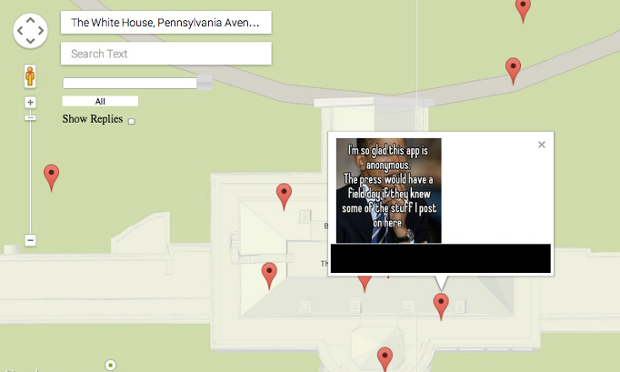
The company behind Whisper, the social media app that promises users anonymity and claims to be “the safest place on the internet”, is tracking the location of its users, including some who have specifically asked not to be followed. The practice of monitoring the whereabouts of Whisper users – including those who have expressly opted out of geolocation services – will alarm users, who are encouraged to disclose intimate details about their private and professional lives. Whisper is also sharing information with the US Department of Defense gleaned from smartphones it knows are used from military bases, and developing a version of its app to conform with Chinese censorship laws. The US version of the app, which enables users to publish short messages superimposed over photographs or other images, has attracted millions of users, and is proving especially popular among military personnel who are using the service to make confessions they would be unlikely to publish on Facebook or Twitter.

Obama Delaying So Republicans Can Hide Torture Report?

Continued White House foot-dragging on the declassification of a much-anticipated Senate torture report is raising concerns that the administration is holding out until Republicans take over the chamber and kill the report themselves. Senator Dianne Feinstein’s intelligence committee sent a 480-page executive summary of its extensive report on the CIA’s abuse of detainees to the White House for declassification more than six months ago. In August, the White House, working closely with the CIA, sent back redactions that Feinstein and other Senate Democrats said rendered the summary unintelligible and unsupported. Since then, the wrangling has continued behind closed doors, with projected release dates repeatedly falling by the wayside. The Huffington Post reported this week that White House Chief of Staff Denis McDonough, a close ally of CIA Director John Brennan, is personally leading the negotiations, suggesting keen interest in their progress — or lack thereof — on the part of Brennan and President Obama.

Poitras And Engelhardt On Snowden

Tom Engelhardt: Could you start by laying out briefly what you think we've learned from Edward Snowden about how our world really works? Laura Poitras: The most striking thing Snowden has revealed is the depth of what the NSA and the Five Eyes countries [Australia, Canada, New Zealand, Great Britain, and the U.S.] are doing, their hunger for all data, for total bulk dragnet surveillance where they try to collect all communications and do it all sorts of different ways. Their ethos is "collect it all." I worked on a story with Jim Risen of the New York Times about a document -- a four-year plan for signals intelligence -- in which they describe the era as being "the golden age of signals intelligence." For them, that’s what the Internet is: the basis for a golden age to spy on everyone. This focus on bulk, dragnet, suspicionless surveillance of the planet is certainly what’s most staggering.

EFF: Updated Know Your Rights Guide

If the police come knocking at your door, the constitution offers you some protection. But the constitution is just a piece of paper—if you don’t know how to assert your rights. And even if you do assert your rights…what happens next? That answer may seem complicated, but protecting yourself is simple if you know your rights. That’s why EFF has launched an updated Know Your Rights Guide that explains your legal rights when law enforcement try to search the data stored on your computer, cell phone or other electronic device. The guide clarifies when the police can search devices, describes what to do if police do (or don’t) have a warrant, and explains what happens if the police can’t get into a device because of encryption or other security measures. Our guide is up to date as of October 2014, and will always indicate when it was last updated.

DC Police Using ‘Stingray’ Cell Phone Tracking Tool

An inherent attribute of how this technology functions is that it sweeps in information about large numbers of innocent bystanders even when police are trying to track the location of a particular suspect. If the MPD is driving around DC with Stingray devices, it is likely capturing information about the locations and movements of members of Congress, cabinet members, federal law enforcement agents, and Homeland Security personnel, consular staff, and foreign dignitaries, and all of the other people who congregate in the District…. If cell phone calls of congressional staff, White House aides, or even members of Congress are being disconnected, dropped, or blocked by MPD Stingrays, that's a particularly sensitive and troublesome problem. Wessler said the Fourth Amendment rights of tens of thousands of DC residents are likely violated whenever DC police uses Stingray, which sends out a more powerful signal than a cell tower and forces all mobile devices to report back serial numbers and locations.

FBI Wants Access To Emails, Texts, Photos & Digital Data

FBI Director James Comey is calling for a change in the law that would give the government even greater access to private information like emails and smartphone photos, a controversial proposal certain to add new fuel to the simmering debate over privacy rights in the digital age. At issue is a 20-year-old statute that requires telecommunications companies to build their systems so that they can be tapped should the government present the companies with a court order to hand over information. But the law has never clearly applied to all technology and Internet companies -- particularly giants such as Apple and Google. Now Comey wants to change that and require the firms to put in place similar equipment that would ensure that the government can always obtain a criminal suspect's emails, text messages, photographs, and other information that is increasingly stored on smartphones.

UN Report: Mass Internet Surveillance

Mass surveillance of the internet by intelligence agencies is “corrosive of online privacy” and threatens to undermine international law, according to a report to the United Nations general assembly. The critical study by Ben Emmerson QC, the UN’s special rapporteur on counter-terrorism, released on Wednesday is a response to revelations by the whistleblower Edward Snowden about the extent of monitoring carried out by GCHQ in the UK and the National Security Agency (NSA) in the US. Emmerson’s study poses a direct challenge to the claims of both governments that their bulk surveillance programs, which the barrister finds endanger the privacy of “literally every internet user,” are proportionate to the terrorist threat and robustly constrained by law. To combat the danger, Emmerson endorses the ability of Internet users to mount legal challenges to bulk surveillance.

Snowden’s Closest Confidant Tells About Spilling NSA Secrets

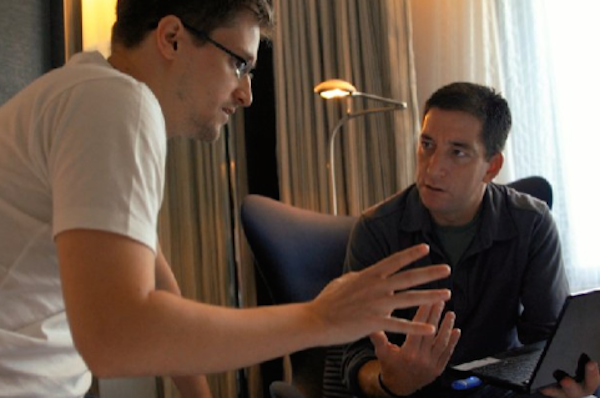
There's a prolonged scene in Laura Poitras' new documentary, Citizenfour, when Edward Snowden looks in his hotel room's mirror and tussles his hair in a nervous—and, ultimately fruitless—attempt to defeat bedhead. The shot is a revealing and humanizing moment for Snowden, the former National Security Agency contractor who became known the world over last summer after his leaks exposed the agency's vast phone and Internet surveillance programs. Despite his notoriety, such an intimate look at Snowden has been missing from the story of arguably the greatest heist and disclosure ever of U.S. government secrets—until now. In the conversation that follows, Poitras discusses her motivations for making the film, how she came to trust Snowden and why she has lost faith in elected leaders—even those who are the most vocal champions of surveillance reform.

The Virtual Interview: Edward Snowden

It’s not just here in the United States. Snowden’s revelations are still causing ruptures and generating headlines all around the world, including in Brazil, which has just said that it wants to question Snowden about revelations that the U.S. agency intercepted the communications of President Dilma Rousseff and her aides; in Germany, where the N.S.A. reportedly tapped Chancellor Angela Merkel’s cell phone; and in Australia, where the government was embarrassed by the revelation that it had been spying on the President of neighboring Indonesia. And there are almost certainly more stories to come. Alan Rusbridger, the editor of the Guardian, said that his paper has so far published only one per cent of the files that it received from Snowden.

New Website To Fight Surveillance

EFF is launching two projects that we hope will help you fight that privacy nihilism: against the skepticism of your friends and colleagues, and even your own wavering sense that you can do something. In Counter-Surveillance Success Stories, we've collected examples of individuals and small groups who have chosen to battle unlawful spying in their own countries—and have won. Even when successful, such meticulous and demanding activism can be slow and lonely work. What if you don't see a local group that fits your beliefs, and don't have resources or the know-how to start your own institution? Every action that challenges unlawful surveillance has an effect: and because it's a global problem, acts anywhere in the world make a difference.
assetto corsa mods

Urgent End Of Year Fundraising Campaign

Online donations are back! Keep independent media alive. 

Due to the attacks on our fiscal sponsor, we were unable to raise funds online for nearly two years.  As the bills pile up, your help is needed now to cover the monthly costs of operating Popular Resistance.

Urgent End Of Year Fundraising Campaign

Online donations are back! 

Keep independent media alive. 

Due to the attacks on our fiscal sponsor, we were unable to raise funds online for nearly two years.  As the bills pile up, your help is needed now to cover the monthly costs of operating Popular Resistance.

Sign Up To Our Daily Digest

Independent media outlets are being suppressed and dropped by corporations like Google, Facebook and Twitter. Sign up for our daily email digest before it’s too late so you don’t miss the latest movement news.