Fresh Doubts About Syria’s Sarin Guilt
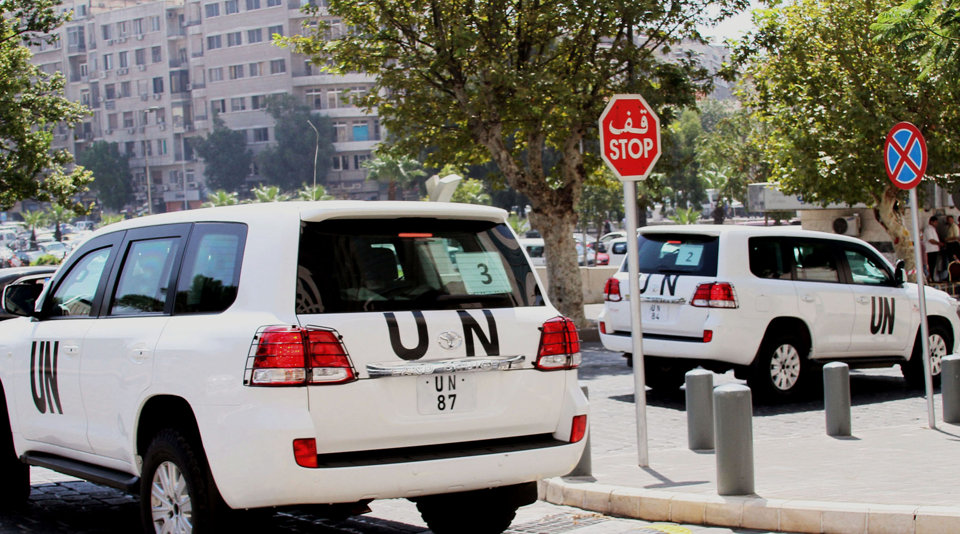
A United Nations analysis of samples taken from one of the two sites of the alleged Sarin attack outside Damascus, Syria, on Aug. 21 found zero chemical weapons agents, and one UN laboratory backed off its earlier claim to have found a residue that can result from degraded Sarin on the remnants of the missile, according to revisions in a new UN report.
This failure to find Sarin anywhere in Moadamiyah, a suburb south of Damascus, undercuts analyses by Human Rights Watch and the New York Times that relied on a vectoring of the two attack sites – the other in Zamalka/Ein Tarma to the east where Sarin was detected – to conclude that an elite unit of the Syrian military must have been responsible for the attacks that brought the United States close to war in Syria.
There were already problems with the analyses by HRW, which has long pushed for a U.S. military intervention in Syria, and the New York Times because of doubts about the flight paths of the missiles and their maximum range. UN inspectors only had a rough idea of the trajectories because the projectiles may have deflected off buildings as they crash-landed.
Also, if the two missiles had been fired from the elite military base of the 104th Brigade of the Republican Guard northwest of Damascus, they would have had to fly about nine kilometers though independent experts have suggested that the improvised missiles probably could go no more than three kilometers.