Skip to content

Tax the rich

How To Reach Persuadable Audiences On Taxes

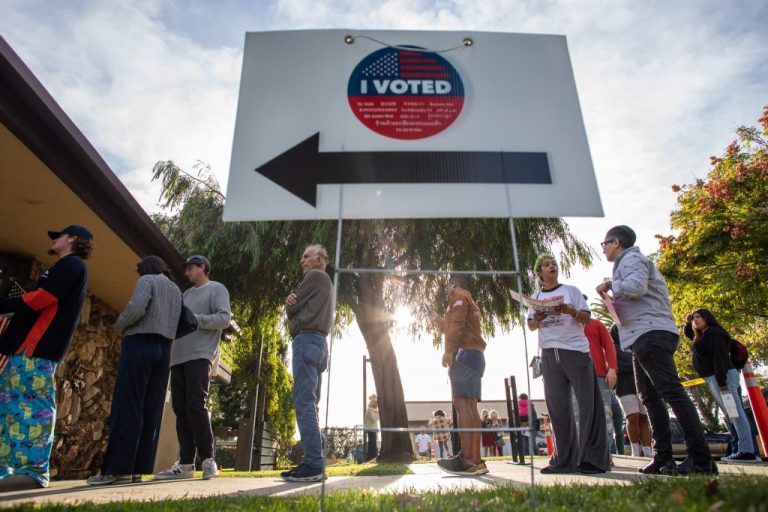
Polling has shown over and over that Americans support higher taxes on the wealthy. But when they actually get to the ballot box, they simply aren’t voting in ways that would make that happen. As advocates for an economy that would lift all people up and end extreme wealth concentration, this disconnect can feel incredibly frustrating. We at the Excessive Wealth Disorder Institute and Wonder for Good did some deep listening to better understand the disconnect between audiences’ support for change in the abstract and how they actually vote. Through in-depth, qualitative audience research and message testing, we identified strategies that consistently worked — and some that didn’t — in creating positive mindsets and support for reforming the tax code. Some of our findings may be surprising to advocates accustomed to messaging to base audiences.

Spain And Brazil Launch Initiative To Push Global Tax On The Ultra-Rich

On Tuesday, Spain and Brazil will launch a joint initiative to promote a global tax increase on the superrich, aiming to achieve a fairer redistribution of wealth. The initiative, to be presented at the fourth U.N. International Conference on Financing for Development in Seville, seeks to encourage a multilateral debate on the effective taxation of large fortunes and how it impacts social cohesion. The project aims to tackle the issue of extreme inequality and move toward a fairer redistribution of wealth “through a progressive and just tax system in which those who have more, pay more,” Spain’s Finance Ministry said.

Washington State Workers Take The Fight To The Governor

Hundreds of Washington state workers streamed into the capitol building in Olympia on April 9 demanding, “No cuts! No furloughs! Tax, tax the rich!” Our booming chants echoed through the rotunda, making it difficult for legislators to carry on their work. The governor’s office locked the doors on us, so we staged a sit-in in the hallway and marched throughout the capitol building. When the doors were finally opened, we crowded inside—but the only sign of Democratic Governor Bob Ferguson was a small photograph on the front counter. His chief of staff informed our union president, Mike Yestramski, that he would let Bob know we had stopped by.

A Practical Prescription For Taxing Our World’s Richest

Ever wonder why the divide between the world’s richest and everybody else keeps getting wider? Gabriel Zucman, one of the world’s finest young economists, has just produced a report that riffs on one key reason: Our super rich pay next to nothing in taxes. Just how close to nothing? This close: Over the past four decades, the world’s “ultra-high-net-worth individuals” have seen their fortunes increase, after taking inflation into account, an average 7.5 percent per year. How much annually have these rich paid in taxes? They’ve been paying, Zucman calculates, an effective tax rate “equivalent to 0.3% of their wealth.”

The Fight To Bring Chicago Home Isn’t Over

“Bring Chicago Home.” It was a rallying cry that grew in volume and urgency over more than six years and three mayoral administrations — a demand for a dedicated funding stream to house the city’s homeless residents, numbering over 68,000 according to the Chicago Coalition for the Homeless, including up to 20,000 students. The source of the funds would be an increased (but still modest) transfer tax on property sales over $1 million.  The campaign started in 2017 during the tenure of Mayor Rahm Emanuel, dubbed ​“Mayor 1%” for his record of investing in wealthy neighborhoods and downtown at the expense of the city’s diverse working class population.

U.S. Billionaire Wealth Is Up 88% Since The Pandemic

Four years ago, the United States entered the Covid-19 pandemic. Forbes published its 34th annual billionaire survey shortly after with data keyed to March 18, 2020. On that day, the United States had 614 billionaires who owned a combined wealth of $2.947 trillion. Four years later, on March 18, 2024, the country has 737 billionaires with a combined wealth of $5.529 trillion, an 87.6 percent increase of $2.58 trillion, according to Institute for Policy Studies calculations of Forbes Real Time Billionaire Data.

New Report On Extreme Wealth And Potential Wealth Tax Revenue

See our new report, researched and written by IPS, Oxfam, Patriotic Millionaires, and Fight Inequality Alliance.  This report is a complement to Oxfam’s recently released, “Survival of the Richest.” Our report includes country-by-country data on wealth inequality and the revenue possibilities of national wealth taxes. The global billionaire class is gathering this week in Davos, Switzerland to talk about the ongoing “polycrisis” – a term embraced by the World Economic Forum (WEF) to describe the convergence of ecological, political, pandemic and economic disruptions. The one acute crisis they won’t talk about is the extreme levels of concentration of wealth and power happening across the globe. Estimates from our report, Extreme Wealth, demonstrate that $1.7 trillion could have been raised in 2022 alone if a progressive wealth tax were imposed on the ultra-rich. This revenue could be used to tackle global inequality and set in motion a system of economic democracy.

A ‘Tax The Rich’ Climate Protest Shuts Down The East Hampton Airport

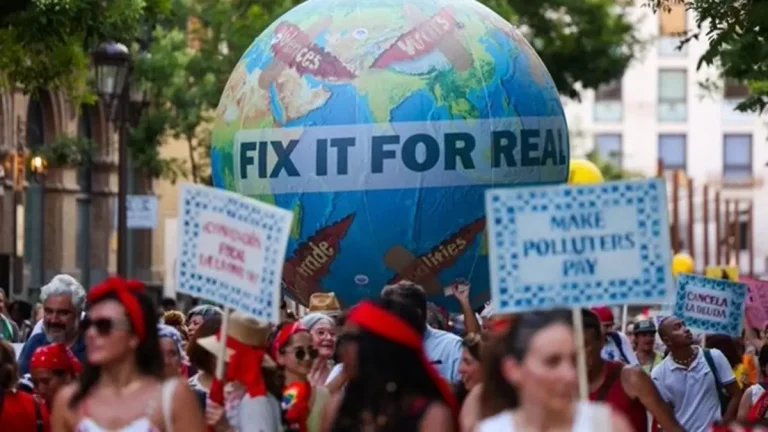
New York - East Hampton Town police arrested six people today (July 11) protesting higher taxes for the wealthy outside the East Hampton airport. The demonstration was organized by advocacy group New York Communities for Change, the latest in a series of Hamptons protests over the past few days. New York Communities for Change is focused on climate emissions caused by wealthy Hampton residents. Around 25 people gathered outside the airport this morning, holding signs that read “tax the rich” and “make billionaires pay.” In addition to linking arms in front of the entrance, one demonstrator stood atop a wooden tripod blocking traffic into the airport. The protest lasted for approximately an hour and a half, said Alice Hu, a climate campaigner for New York Communities for Change, in a phone interview.

Can We Ever Retire To Greater Equality?

Do you have a good pension? Do you have any pension at all? Back in 1975, most Americans who worked for established employers could say that they do indeed have a decent pension. Back then, what the experts call “defined-benefit” pension plans set the standard. If you worked for a company with one of these plans, you could look forward to receiving — for every month of your retired life — a pension check based on your salary and years of service. These defined-benefit plans gave employers the responsibility for funding their employee retirements. Employers contributed into retirement funds and used the investment returns these funds generated to keep pension checks flowing. If those returns came up short, employers had to fill the shortfall.

How To Fix America’s Roundabout System For Taxing Our Richest

Would you walk around the block to get to your next-door neighbor’s house? Of course not. Yet America’s system for taxing the ultra-rich, especially billionaires, works that same exact roundabout way. For most of us, different taxes function in different manners. Sales taxes, for example, impact our spending decisions. Income taxes affect everything from how much we save and how many hours we work to when we retire. Property taxes influence the choices we make for where we live. But these taxes don’t work that way for the ultra-rich. These deepest of pockets can essentially make decisions on spending, work, and retirement without regard

Taxes On The Rich: One-Sixth Of What They Used To Be

According to a new IPS briefing paper, the richest .01 percent of Americans, about 33,000 lucky souls today, now pay just one-sixth of what they used to pay in tax, when measured as a percentage of their total wealth. The top .01 percent in America is a phenomenally wealthy group. Even during America’s most egalitarian periods, the average member of the top .01% held over 200 times the wealth of the average American. Today, the wealth of the average top .01 percenter is nearly 1,000 times that of the average American and is closing in on one billion dollars. Hence, it doesn’t matter to the top .01 percent what type of tax they pay, be it income, sales, property or anything else. Taxes don’t influence their spending decisions or such mundane things as how many hours they work, when they retire, or whether their spouse must work.
assetto corsa mods

Urgent End Of Year Fundraising Campaign

Online donations are back! Keep independent media alive. 

Due to the attacks on our fiscal sponsor, we were unable to raise funds online for nearly two years.  As the bills pile up, your help is needed now to cover the monthly costs of operating Popular Resistance.

Urgent End Of Year Fundraising Campaign

Online donations are back! 

Keep independent media alive. 

Due to the attacks on our fiscal sponsor, we were unable to raise funds online for nearly two years.  As the bills pile up, your help is needed now to cover the monthly costs of operating Popular Resistance.

Sign Up To Our Daily Digest

Independent media outlets are being suppressed and dropped by corporations like Google, Facebook and Twitter. Sign up for our daily email digest before it’s too late so you don’t miss the latest movement news.