Skip to content

Monsanto

USDA Approves GMO Grass: No Tests Needed Just Sell It!

Uh oh. If you’ve been following the issue here at RGB, you’re aware of the fact that the US Department of Agriculture has been making life very easy for Monsanto, the big agriculture behemoth that controls a huge share of US (and global) seed production. They’ve approved a number of Monsanto’s genetically modified (GMO) crops already this year. But the latest development blows the doors off what has happened so far. The USDA slipped through an innocuous-looking press release about Kentucky bluegrass late Friday afternoon before the Fourth of July weekend. It’s GMO bluegrass, engineered to resist Monsanto’s nasty plant-killer, Roundup, so you can plant it on your lawn and then douse the whole joint with their chemical weedkiller. The USDA ruled that there was no danger, so they don’t need to do any tests. Just start selling. “It’s a blatant end-run around regulatory oversight,” said George Kimbrell, senior lawyer at the Center for Food Safety. Bye-bye, dandelions, hello birth defects. (See: It’s official: Monsanto’s Roundup herbicide causes birth defects.) But hey, lots of people would be willing to exchange their firstborn child for a truly pristine, weed-free lawn, right? Although the company’s main target is golf courses. (Henceforth pregnant women will be advised to abstain from cigarettes, alcohol, and golf…).

The Battle For Healthy Food Escalates

Defying repeated threats of a lawsuit from Monsanto and the Grocery Manufacturers Association (GMA), on May 8, Peter Shumlin, Governor of Vermont, signed a historic bill requiring food manufacturers to label genetically engineered (GE) foods, and to drop the practice of labeling GE foods as “natural” or “all natural.” On May 9, true to its word, the GMA confirmed that it will sue Vermont in federal court to overturn H. 112. Vermont is prepared to fight back. The state has already established a “food fight” legal defense fund. Legal analysts say Vermont will likely win. Vermont isn’t the only state up against the multi-billion dollar lobbying group. The GMA, whose 300-plus members include Monsanto and Dow, Coca-Cola and General Mills, is pushing a bill in Congress that would preempt all states from passing GMO labeling laws. It’s time for consumers in every state to band together to defeat the GMA’s full-on assault, not only on Vermont, not only on consumers’ right to know what’s in our food, but on states’ rights and on our basic freedoms to protect our health and our communities.

Millions To March Against Monsanto On May 24

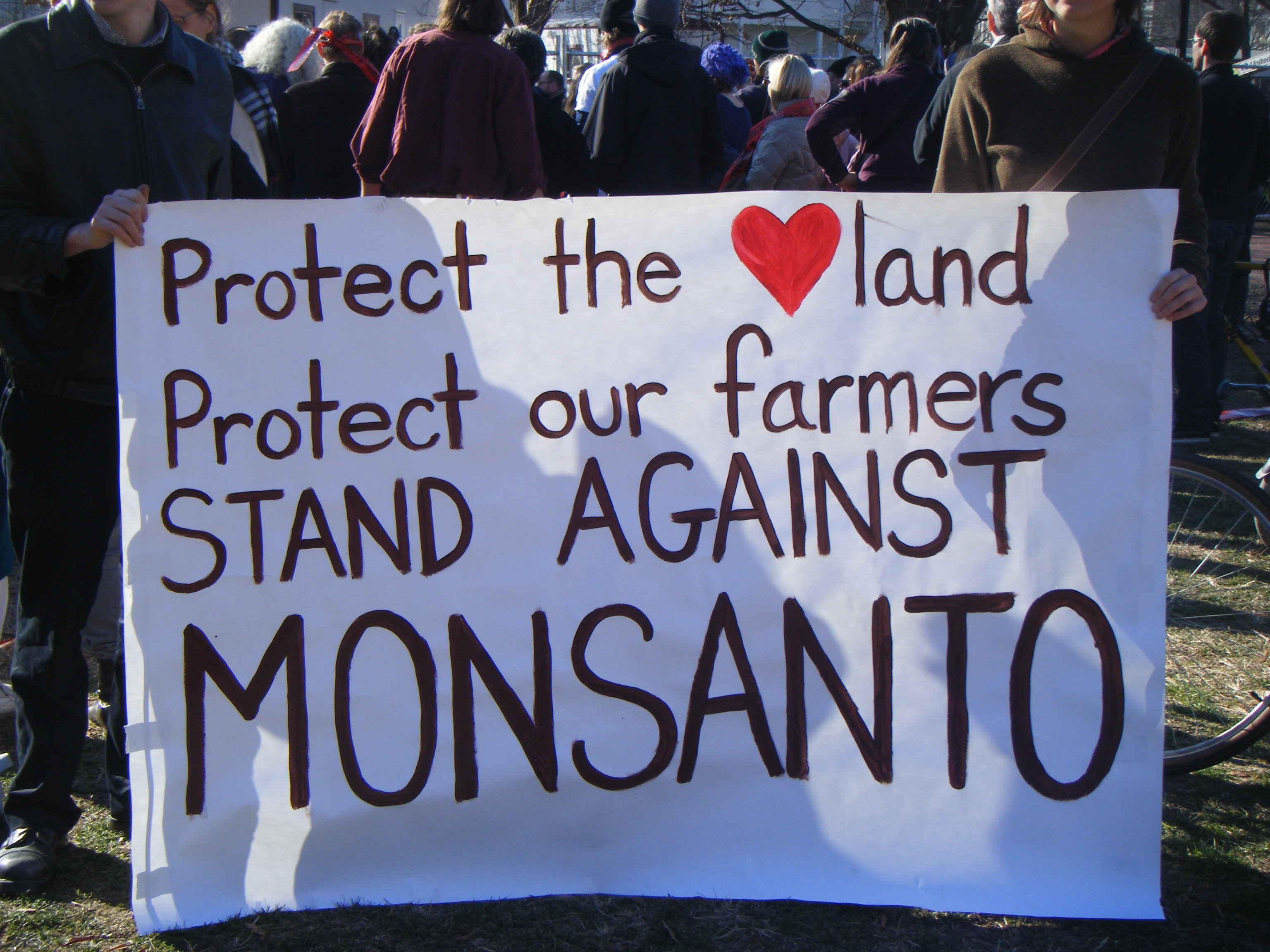
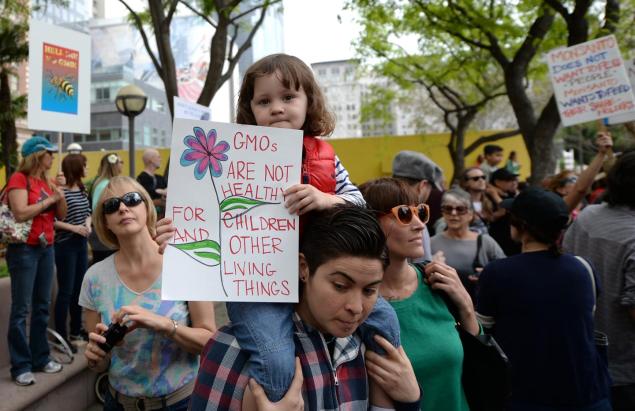
On May 24, millions of activists from around the world will once again March Against Monsanto, calling for the permanent boycott of Genetically Modified Organisms (GMOs) and other harmful agro-chemicals. Currently, marches will occur on six continents, in 52 countries,with events in over 400 cities. In the US, solidarity marches are slated to occur in 47 states. A comprehensive list of marches can be accessed at www.march-against-monsanto.com. Tami Monroe Canal, founder of March Against Monsanto (MAM), was inspired to start the movement to protect her two daughters. “Monsanto’s predatory business and corporate agricultural practices threatens their generation’s health, fertility and longevity. MAM supports a sustainable food production system. We must act now to stop GMOs and harmful pesticides.” GMOs are not adequately monitored to ensure public safety. Long term, independent, peer reviewed studies were not conducted before GMOs were introduced for human or animal consumption. In the USA, the revolving door between Monsanto employees, government positions, and regulatory authorities has led to key Monsanto figures occupying positions of power at the FDA and EPA. Monsanto has spent hundreds of millions of dollars to obstruct all labeling attempts; they also suppress any research containing results not in their favor.

MAM 2014: New Ordinance May Threaten First Amendment Rights At March Against Monsanto St. Louis

March Against Monsanto is gearing up for another worldwide protest against the agrochemical giant. Almost 300 protests are scheduled on May 24, 2014 from Alaska to New Zealand. You can view all the events scheduled here or check the live map for MAM 2014 protests in your area. A protest is scheduled for Monsanto’s world headquarters in Saint Louis, MO, the same location where protests were held in January 2014. Several protesters from the Fishy Fleet along with the Seralini rat were arrested then. Monsanto HQ is located in the municipality of Creve Coeur, MO. A new ordinance amending section 345.080 of the Code of Ordinances seems designed to limit protesters’ free speech. The ordinance which would make it illegal to stand on the medians in Creve Coeur, went through its first reading at the Creve Coeur City Council meeting on April 28, 2014. It will go through its second reading on Monday, May, 21, 2014. If the ordinance passes it will be illegal for MAM STL protesters to stand in the median during the May 24th protest at Monsanto headquarters. Without the ordinance, police still have the authority to make protesters leave the median if they deem it a safety issue.

Why The Fight Over GMO Foods Brings Us Together

The growing strength of this “Movement of Movements” provides hope in desperate times, that by aggressively framing issues, capitalizing on divisions among the elite, utilizing the power of social media, building broad coalitions, carrying out boycotts, mobilizing street protests, and engaging in direct democracy tactics that bypass corrupt federal government officials and politicians (by using county and state ballot initiatives), the global grassroots can begin to overcome the dictatorship of Monsanto and the Corporatocracy. The broader hope is that this embryonic Movement of Movements can rise to the occasion and continue to win over the hearts and minds of the majority, addressing, not only crucial issues of food and farming and public health, but also related life or death issues such as climate change, economic justice, and militarism.

Argentine Activists Win First Round Against Monsanto

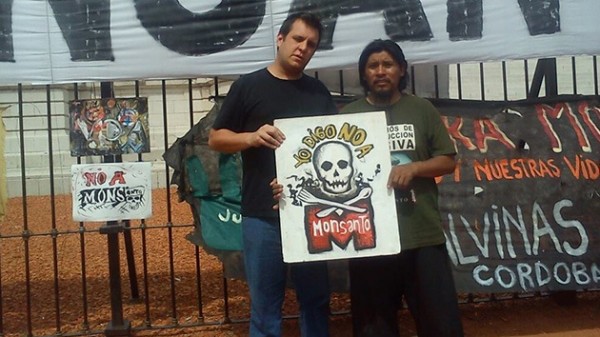
Residents of a town in Argentina have won the first victory in their fight against biotech giant Monsanto, but they are still at battle stations, aware that winning the war is still a long way off. For four months activists in Malvinas Argentinas, a town in the central province of Cordoba, have maintained a blockade of the construction site where the U.S. transnational company is building the world’s biggest maize seed treatment plant. In this previously peaceful town, protestors continue to camp in front of the construction site and to block access to it, even after a provincial court order this month put a halt to the works. The campaign against the plant, led by Asamblea Malvinas Lucha por la Vida (Malvinas Assembly Fighting for Life) and other social organisations, began Sept. 18 in this town 17 kilometres from the capital of Cordoba.

Thousands Protest GMOs In Ghana

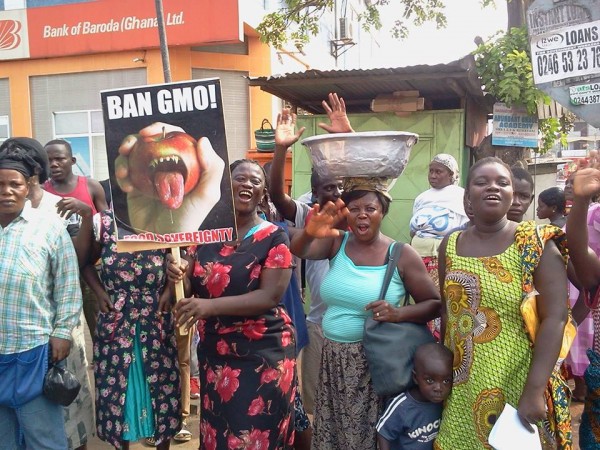
The Coalition For Farmers Rights And Advocacy Against GMOs (COFAM) a grass-roots movement of farmers, labour unions, religious, political and civil society organizations held a public demonstration against the introduction of Genetically Modified Foods and the Plant Breeders Bill on Tuesday January 28 through the principal streets of Accra. The demonstrators later paid a courtesy call on the Nuumo Sakumo, the Chief Priest of the Ga Mashie people. The leading organizations of the coalition including Food Sovereignty Ghana, Convention Peoples Party, Centre For Indigenous Knowledge (CIKOD), The General Agricultural Workers Union of TUC and Rastafarian Council) took advantage of the demonstration to launch the coalition at the Arts Centre. Attached are some photos of the demonstration.

Occupy Monsanto: 11 Arrested As GMO Labeling Resolution Fails

The arrests happened shortly after the shareholders failed to pass two resolutions that would have changed Monsanto's policies on its Genetically Modified Organism products. Protesters say people should be concerned they are buying genetically modified food that the organizers say is not safe for human consumption. "Basically GMOs are a big experiment on the American population. And we think many people are suffering food-related illnesses and they can't track it back to the source because the food is not labeled," said Adam Eidinger with Occupy Monsanto. "If GMOs are safe as Monsanto claims, then putting a label on them will only confirm how safe they are."

Occupy Monsanto Protesters Push Labeling At Annual Shareholder Meeting

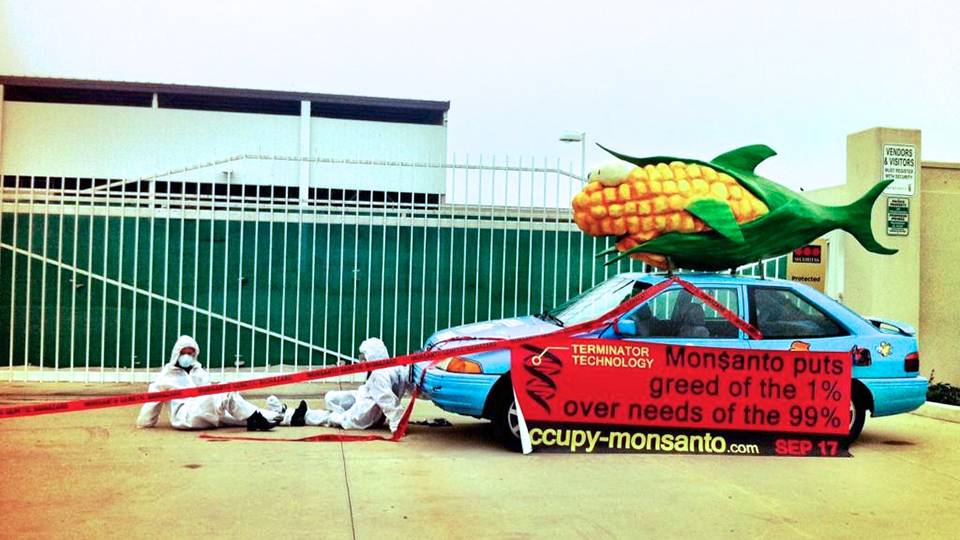
Protests occurred both inside and outside the Monsanto shareholder meeting in St. Louis on Tuesday as local activists, shareholders and citizens from across the country joined in 20-degree weather to demand the biotech giant label genetically-modified organisms, or GMOs. The activists arrived accompanied by five colorful “fishy cars” representing the fishy food that has been genetically modified and consumed by Americans now for decades. Protesters hoped to make a single powerful statement: Label it. For the first time ever, Monsanto shareholders convened to vote on a resolution to support GMO labeling – brought by shareholder and food safety activist Adam Eidinger of Occupy Monsanto, and presented by family farm advocate Dave Murphy of Food Democracy Now! “We’re just coming to their shareholder meeting as a response to what they’ve been doing around the country," said Cesar Maxit, designer and architect of the five fish art cars.

Supreme Court Denies Family Farmers Right To Self-Defense From Monsanto

The U.S. Supreme Court today issued a decision in the landmark federal lawsuit, Organic Seed Growers and Trade Association (OSGATA) et al v. Monsanto. Farmers were denied the right to argue their case in court and gain protection from potential abuse by the agrochemical and genetic engineering giant, Monsanto. Additionally, the high court decision dashes the hopes of family farmers who sought the opportunity to prove in court Monsanto’s genetically engineered seed patents are invalid. “While the Supreme Court’s decision to not give organic and other non-GMO farmers the right to seek preemptive protection from Monsanto’s patents at this time is disappointing, it should not be misinterpreted as meaning that Monsanto has the right to bring such suits,” said Daniel Ravicher, executive director of the Public Patent Foundation and lead counsel to the plaintiffs in OSGATA et al v. Monsanto. “Indeed, in light of the Court of Appeals decision, Monsanto may not sue any contaminated farmer for patent infringement if the level of contamination is less than one percent,” Ravicher explained.

Big Ag’s Big Lie: Factory farms, Your Health and the New Politics of Antibiotics

The new guidelines, known as Final Guidance 213, were officially released two weeks ago, just in time for Christmas. “Two-thirteen is an early holiday gift to industry,” says Avinash Kar, a health attorney at the Natural Resources Defense Council. “The FDA has essentially followed a voluntary approach for more than 35 years, but use of these drugs to raise animals has increased. There’s no reason why voluntary recommendations will make a difference now, especially when FDA’s policy covers only some of the many uses of antibiotics on animals that are not sick.”

2014 Could Be A Decisive Year For Food And Farming

2014 is shaping up to be a decisive year for the future of food and farming. Grassroots activists are gearing up for new legislative battles, including state GMO labeling laws and county bans on growing genetically engineered crops. Meanwhile the multinational food corporations last month raised the stakes in the ongoing David vs. Goliath battle by petitioning the U.S. Food & Drug Administration (FDA) to allow companies to continue to label or market products that contain genetically modified organisms (GMOs) as "natural." And all signs point to efforts by industry and the FDA to float either voluntary, or watered-down mandatory GMO labeling laws that would take away states’ rights to impose strict GMO labeling laws, and also exempt a large percentage of GMO ingredients from labeling.

Tougher Tactics Desperately Needed to Win War On GMO Food

When I spoke to some of the key organizers behind California's Right to Know Campaign, they said that their initial "polling showed" that voters do not respond well to "negative" ads. And that talking about health concerns like widely shared consumer worries that genetically modified food might increase the likelihood of cancer, allergies and other illnesses, was negative. Which was why they refused to allow onto the video section of the Yes on Prop 37 website a single one of the hundreds of 'person on the street' videos that our volunteer KnowGMO.org effort had collected in California. Most consumers told us that they wanted to label and avoid GM food because of health concerns.

Monsanto Hires PR Firm To Fool Public, Combat “Most Hated”

Monsanto is the agriculture world’s prince of darkness, spreading its demonic genetically modified seeds on fields all over the earth. Or at least that’s the case if you believe the likes of HBO talk-show host Bill Maher, the hazmat suit-wearing activists in Occupy Monsanto or any of a growing number of biotechnology haters. For years the St. Louis-based company has ignored such critics. But now the biotech giant is attempting a public relations makeover. In recent months the company has shaken up its senior public relations staff, upped its relationship with one of the nation’s largest public relations firms and helped launch a website designed to combat the fallacies surrounding genetically modified organisms. And, most importantly, it is recognizing biotechnology has a public image problem.

Monsanto Blockaders Brutally Attacked In Malvinas, Argentina

Monsanto protesters in Malvinas, Argentina got a rude awakening yesterday. November 28, 2013 was the 72nd day of the blockade against the brand new Monsanto plant under construction in Malvinas, set to be the largest GM seed plant in Latin America. Protesters have been camped on site since September 18th and despite attacks and death threats they remain unmoved. They have managed to block all five entrances to the plant site, bringing construction to a standstill. Brutal retaliation came early in the morning yesterday when two buses of approximately 60 people arrived in camp and attacked the protesters, most of whom were sleeping in tents at the time. They ripped tents, destroyed property, set fires in the campsite, threw bricks and stones and beat protesters with clubs. Some protesters also had their computers and phones stolen.
assetto corsa mods

Urgent End Of Year Fundraising Campaign

Online donations are back! Keep independent media alive. 

Due to the attacks on our fiscal sponsor, we were unable to raise funds online for nearly two years.  As the bills pile up, your help is needed now to cover the monthly costs of operating Popular Resistance.

Urgent End Of Year Fundraising Campaign

Online donations are back! 

Keep independent media alive. 

Due to the attacks on our fiscal sponsor, we were unable to raise funds online for nearly two years.  As the bills pile up, your help is needed now to cover the monthly costs of operating Popular Resistance.

Sign Up To Our Daily Digest

Independent media outlets are being suppressed and dropped by corporations like Google, Facebook and Twitter. Sign up for our daily email digest before it’s too late so you don’t miss the latest movement news.