Skip to content

Food and Agriculture

Groups Protest National Organic Meeting In San Antonio

Today, representatives of the Organic Consumers Association (OCA) and March Against Monsanto San Antonio (MAMSA) staged a protest at the National Organic Standards Board (NOSB) meeting in San Antonio, Texas. The groups disrupted the meeting in order to protest the USDA National Organic Program's (NOP) changes to the process for removing non-organic ingredients and materials from the NOP’s National List of substances allowed and prohibited in products certified as organic by the U.S. Department of Agriculture (USDA). The change, made without due process or input from the public, erodes organic standards and will result in the list of synthetic and non-organic ingredients and materials allowed in organic to grow increasingly, and irreversibly longer, the groups said.

Remunicipalisation: Putting Water Back Into Public Hands

Groundbreaking motion design documentary puzzle about cities reversing water privatization to regain public control. This video explores water ‘remunicipalisation’ in Buenos Aires and Paris, looking at the challenges and benefits of reclaiming public water. It calls on citizens worldwide to mobilize around this option. Do it! Remunicipalisation Works! Find more case studies on the transition from private to public water provision (Dar es Salaam, Tanzania; Hamilton, Canada; and a national-level experiment in Malaysia) in the book available for free download on the Municipal Services Project site. The Municipal Services Project (MSP) is a research project that explores alternatives to the privatization and commercialization of service provision in electricity, health, water and sanitation in Africa, Asia and Latin America. It is composed of academics, labour unions, non-governmental organizations, social movements and activists from around the globe.

Thousands March To Reject KXL Protect The Enviornment

Thousands of people joined the farmers, ranchers, and tribal leaders of the Cowboy and Indian Alliance for a ceremonial procession along the National Mall to protest the Keystone XL pipeline this afternoon. The procession was the largest event yet of the five-day “Reject and Protect” encampment. “Today, boots and moccasins showed President Obama an unlikely alliance has his back to reject Keystone XL to protect our land and water,” said Jane Kleeb, Executive Director of Bold Nebraska, one of the key organizers of Reject and Protect. Legendary musician Neil Young and actress Daryl Hannah were amongst the crowd of thousands who rallied on the National Mall and then marched past the Capitol building. “We need to end the age of fossil fuels and move on to something better,” Mr. Young told the crowd. The day’s procession included the presentation of a hand-painted tipi to the Smithsonian National Museum of the American Indian as a gift to President Obama.

Uranium Stockpiled At Mine Near Grand Canyon

Mining companies have recently cut back uranium production around the Grand Canyon National Park because the price has dropped 25 percent in the last year. But this week Energy Fuels announced it will keep mining at one site near the park and stockpile the ore to sell later. Northern Arizona has the highest-grade uranium deposits in the country. The ore is conveniently contained underground in what are called “breccia pipes.” While Energy Fuels waits for the market to recover, it plans to store uranium at the Pinenut Mine. That has Roger Clark of the Grand Canyon Trust worried. “The cumulative effects of uranium ore of contaminated water both on the surface and in the mine shaft potentially is polluting the aquifer beneath it,” Clark said. “All of those things are cumulative effects that were not anticipated by the original federal environmental review, which really needs to be redone.”

How A Small Town Defeated Toxic Corporate Dumping

We spend the rest of the hour looking at a fascinating story of a small town ravaged by industrial pollution, a town suffering from astronomical rates of childhood cancers scientifically linked to local air and water pollution, a town that ultimately came together, fought back and won one of the largest legal settlements in the annals of toxic dumping. That town is Toms River in New Jersey, and it’s the focus of a new book that has just won the Pulitzer Prize for General Non-Fiction. In Toms River: A Story of Science and Salvation, environmental reporter Dan Fagin recounts the 60-year saga of rampant pollution and inadequate oversight that makes Toms River a cautionary example for industrial towns, not just in the United States, but also in other countries like China. Two of the Toms River residents who share their ordeal in the book are Linda Gillick and her son Michael, whose fast-growing tumors decimated his body. This is Linda, followed by Michael, speaking to the show Earth Focus.

Defeat Of Ag-Gag Laws Victory In Fight Against Animal Cruelty

Across the country, lobbyists for the meat and dairy industries have been pressuring legislators to pass laws that punish whistleblowers who expose crimes on agricultural facilities. Kentucky, Tennessee and Colorado are the latest states to reject these “ag-gag” bills aimed at keeping the public in the dark about rampant animal abuse and food safety violations on factory farms. The push in the Bluegrass State is particularly disturbing, given the circumstances surrounding its introduction. Just a month previous to the ag gag bill’s introduction, an undercover investigation conducted by the Humane Society of the United States at a pig factory in Owensboro, Ky. Footage from that investigation showed breeding pigs locked in cages so small the animals couldn’t turn around – a gruesome irony considering the name of the business is Iron Maiden Hog Farm—bringing to mind the medieval torture device.

Safeguard Organic Standards: 10 Reasons Consumers Buy Organic

The Organic Consumers Association (OCA), in a series of action alerts over the past month, has criticized the gradual erosion of organic standards by vested corporate interests in the organic products industry. In order to understand these issues, let’s step back and look at the big picture. Why are organic food and production standards important anyway? The short answer is that organic food and farming, once you look closely at the practices and hazards of so-called “conventional” food and farming, are literally matters of life or death. Non-organic, chemical and GMO-intensive food (so-called “conventional” food) is the number one cause of deteriorating public health among adults and children, including obesity, diabetes, cancer, antibiotic resistant infections, and heart disease. By contrast, organic foods and products, especially raw fruits and vegetables, whole grains, healthy oils, and grass-fed meat and animal products, are safer, healthier and more sustainable than the chemical-intensive, genetically engineered, highly processed (laced with sugar, salt and unhealthy fats) junk foods that make up the bulk of the U.S. diet.

Building A Regional Food System

The Fifth Season Cooperative: Building Community Wealth and a Regional Food System We first learned about the innovative, multistakeholder Fifth Season Cooperative in Wisconson's 7 Rivers region from the community wealth builders at Gundersen Lutheran Health Systems, whom we interviewed for one of the case studies in our report Hospitals Building Healthier Communities: Embracing the Anchor Mission. The more we learned, the more excited we became...the cooperative has a uniquely innovative six-member class structure, and is transforming the shuttered NCR factory in Viroqua, WI into an engine of regional food security and local economic stability. Here's our infographic outlining how the cooperative works:

Regenerative Organic Agriculture And Climate Change

We are at perhaps the most critical moment in the history of our species, as man-made changes to the climate threaten humanity’s security on Earth. But there is a technology for massive planetary geo-engineering that is tried and tested and available for widespread dissemination right now. It costs little and is adaptable to local contexts the world over. It can be rolled out tomorrow providing multiple benefits beyond climate stabilization. The solution is farming. Simply put, we could sequester more than 100% of current annual CO2 emissions with a switch to widely available and inexpensive organic management practices, which we term “regenerative organic agriculture.” Regenerative organic agriculture for soil-carbon sequestration is tried and true: Humans have long farmed in that fashion, and there is nothing experimental about it. What is new is the scientific verification of regenerative agricultural practices. Excess carbon in the atmosphere is surely toxic to life, but we are, after all, carbon-based life forms, and returning stable carbon to the soil is a tonic that can support ecological abundance.

Plant Brigade To Bring Wall Street Down To Earth

“What would Wall Street look like as a garden?” reads the flyer from the Plant Brigade. “Bring a plant to cleanse the New York Stock Exchange for a historical photo. This is a participatory action. The more participants the bigger the garden.” This kick off to the Global Climate Convergence will reclaim Earth Day. The mass rally and march will be the largest NYC action in the Global Climate Convergence for People, Planet, and Peace over profit. The Convergence is a world-wide network linking events and actions from Earth Day, April 22, to May Day, May 1, uniting labor, environmental, and community groups in solidarity. The “System Change Not Climate Change; the Ecosocialist Coalition” FaceBook page describes how we are connecting the dots: “The capitalist system is in fundamental conflict with the climate system.

Bundy Ranch Protest Consistent With Corporate Power

Cliven Bundy is a thief, a man who has stolen $1 million from you and from me, from the United States government, which, at the end of the day, is us. You know, he has been through the courts, going all the way back to '96. He has refused to pay any of these fees that every other rancher in America must pay. And so, you know, it's nothing but highway robbery. You know, so I think that's the bottom line. Bundy we certainly did not know before this standoff developed, but he has clearly adopted some very radical ideas from the extreme right in this country. He's made statements that essentially endorse the idea of county supremacy--the county rules, the federal government has no legitimate role whatsoever. And, you know, this is a doctrine that began with the Posse Comitatus, violent anti-Semitic and racist groups that really roiled the Midwest in the late '70s and 1980s. The people who are joining him are, as you mentioned in the introduction, militiamen. They are coming from radical right-wing groups all over the country, bringing their weapons, bringing their camouflage fatigues, and bringing their hatred of the government.

How Do We Make The Right To Food A Reality

Middle-class Americans take it for granted that whatever hardships we face in life, we can always count on food appearing on the table. Supermarkets feature well-stocked shelves, restaurants bustle with business, and the choice of cuisines available to us would even dazzle Old World aristocrats. But the great majority of the world’s peoples don’t enjoy such blessings. For them, the task of feeding their families is a challenge they face anew each day. Chronic hunger and malnutrition afflict close to 850 million people; another billion subsist on substandard diets; and billions more spend a huge portion of their income, even as much as half, on their humble meals of rice, wheat or corn. The International Covenant on Economic, Social and Cultural Rights recognizes the right to food as integral to a satisfactory standard of living, affirming "the right of every individual, alone or in community with others, to have physical and economic access at all times to sufficient, adequate and culturally acceptable food that is produced and consumed sustainably, preserving access to food for future generations."

Which State Best Supports Its Locally Grown Foods?

The push for more people to buy and eat locally produced foods keeps growing, but which states are actually practicing what they preach? For the third consecutive year, Strolling of the Heifers answers that question with its 2014 Locavore Index. The rankings take the per-capita number of farmers markets, consumer-supported agriculture operations (CSAs) and food hubs into account, along with the percentage of school districts with active farm-to-school programs. Strolling of the Heifers couldn’t deny the evidence right in front of its Vermont headquarters, ranking its own state first for the third year in a row. Hawaii made an eight-spot jump from last year to enter the top five, while Maryland made the biggest improvement, moving from 29 to 14. Nebraska, South Dakota and Kentucky each took tumbles of at least 10 places in the past year.

Largest International Gathering Of Water Protection Advocates

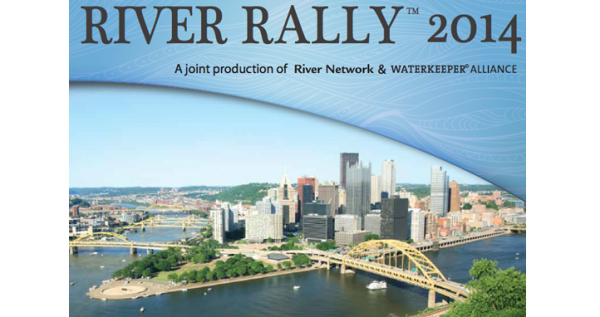
When two bodies of water come together in a confluence, each stream provides its unique characteristics to form a more powerful entity. Much as the Monongahela and Allegheny rivers combine to form the mighty Ohio River, the same can be said of River Rally 2014, when River Network and Waterkeeper Alliance join forces to convene the largest gathering ever of clean water advocates. From May 30-June 2, more than 700 national and international environmental leaders will join together in Pittsburgh, PA to share best practices for watershed restoration, stormwater management, water quality monitoring, water and energy conservation, green infrastructure, habitat restoration, safe drinking water and more. For the second time, River Network and Waterkeeper Alliance are joining forces to host River Rally. Participants will hail from more than 40 U.S. states as well as Bangladesh, Bolivia, Brazil, Canada, Chile, China, Colombia, Czech Republic, Ecuador, India, Iraq, Mexico, Peru, Senegal and the United Kingdom.

New Shock Doctrine: ‘Doing Business’ With The World Bank

In 2003 the World Bank published the first Doing Business Report, which ranks the world's countries based on the "ease of doing business" in them. For the most part, the fewer regulations a country has, the higher they score. The report has become the Bank's most influential publication, and the ranking system is recognised as a powerful tool for compelling countries to initiate regulatory reforms, driving a quarter of the 2,100 policy changes recorded since it was launched. Investors and CEOs use the rankings to decide where to move their money or headquarter their businesses for maximum profit. There's even a handy iPhone app that jet-setting capitalists can use to redirect their investments on the fly. A new minimum wage law was just passed in Haiti? Better move your sweatshop to Cambodia! Higher taxes on the rich in Sweden? Time to shift accounts to Kenya's new tax haven!
assetto corsa mods

Urgent End Of Year Fundraising Campaign

Online donations are back! Keep independent media alive. 

Due to the attacks on our fiscal sponsor, we were unable to raise funds online for nearly two years.  As the bills pile up, your help is needed now to cover the monthly costs of operating Popular Resistance.

Urgent End Of Year Fundraising Campaign

Online donations are back! 

Keep independent media alive. 

Due to the attacks on our fiscal sponsor, we were unable to raise funds online for nearly two years.  As the bills pile up, your help is needed now to cover the monthly costs of operating Popular Resistance.

Sign Up To Our Daily Digest

Independent media outlets are being suppressed and dropped by corporations like Google, Facebook and Twitter. Sign up for our daily email digest before it’s too late so you don’t miss the latest movement news.