Skip to content

South Africa

The Anniversary Of South Africa’s First Democratic Vote

On my wall in London is my favorite photograph from South Africa. Always thrilling to behold, it is Paul Weinberg's image of a lone woman standing between two armored vehicles, the infamous "hippos," as they rolled into Soweto. Her arms are raised, fists clenched, her thin body both beckoning and defiant of the enemy. It was May Day 1985; the last great uprising against apartheid had begun. Twelve years later, with my 30-year banning from South Africa lifted, there was a pinch-me moment as I flew into Jan Smuts and handed my passport to a black immigration officer. "Welcome to our country," she said. I quickly discovered that much of the spirit of resistance embodied in the courageous woman in Soweto had survived, together with a vibrant ubuntu that drew together African humanity, generosity and political ingenuity - for example, in the dignified resolve of those I watched form a human wall around the house of a widow threatened with disconnection of her electricity, and in people's rejection of demeaning "RDP houses" they called "kennels"; and in the pulsating mass demonstrations of social movements that are among the most sophisticated and dynamic in the world.

80,000 South African Platinum Miners Strike For A Living Wage

In the case of mineworkers, the migrant labor system of apartheid continues. They've been demanding an increase from around $400 a month for the starting wage to a starting wage of about USD 1,100. And the big platinum companies don't, obviously, want to give that kind of concession to some 70,000 workers now on strike. And the price of platinum's gone up because of the anticipated supply constraint, since South Africa supplies 80 percent of the world market. The share prices of the companies have gone up, but the South African economy is crashing. Our currency, along with, I suppose, the Argentine peso, really lead the fragile five economies. South Africa was once considered a rising BRIC, one of the Brazil-Russia-India-China-South Africa new bloc, the BRICS bloc.

Eyewitness To America Betraying Mandela’s South Africa

When I was offered the position of Executive Secretary to the BNC in 1995, I made it clear to the EPA—citing racist US foreign policy in other African countries—that I would not be a part of any diabolical scheme against the South African people. I was a supporter of the South African Freedom Charter and excited about helping the Mandela government implement environmental policies that would reverse decades of harmful and at times fatal policies towards the black majority. Soon after assuming my position I realized that something had gone terribly wrong. In a 1996 letter to my mentor, professor Noam Chomsky I wrote: "The Freedom Charter is not on the table. I’m heart broken to report that despite the blood sacrifice of so many activists, South Africa is entering a neo-colonial phase."

Mandela Violence Vs Nonviolence

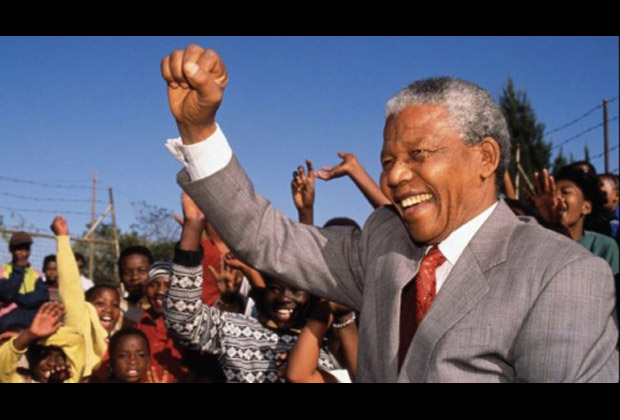
In the time since his death at age 95, Nelson Mandela’s thinking on the strategic direction of the liberation struggle in South Africa has been oversimplified by proponents of nonviolent and armed resistance alike. His leadership in the relatively peaceful end to the brutal apartheid system was indeed critical, as was his leadership three decades earlier in the shift from nonviolent to armed resistance by the African National Congress (ANC). Yet many analysts have largely ignored the critical events in South Africa which took place in between, during his nearly three decades in prison. While, on principle, Mandela refused to renounce violence from his prison cell as long as the far more violent apartheid regime refused to do the same, he also recognized the limits of guerrilla warfare in a country where the regime had all the advantages when it came to armed conflict. However morally justifiable armed struggle may have been in the face of such brutality, it simply was not working. Indeed, in the final years of his imprisonment, he - like other ANC leaders - recognized that it was the growing waves of strikes and boycotts, the establishment of parallel institutions, and other forms of unarmed resistance by the United Democratic Front (UDF) and the ANC’s political wing, that would eventually free South Africa from white minority rule.

Mandela And The Question Of Violence

Nowhere is that blindness more apparent then in the constant, puerile need to critique Mandela's turn toward violence. The impulse is old. "Why Won't Mandela Renounce Violence?" asked a New York Times column in 1990. Is that what we said to Savimbi? To Mobutu? Malcolm X understood: If violence is wrong in America, violence is wrong abroad. If it is wrong to be violent defending black women and black children and black babies and black men, then it is wrong for America to draft us, and make us violent abroad in defense of her. And if it is right for America to draft us, and teach us how to be violent in defense of her, then it is right for you and me to do whatever is necessary to defend our own people right here in this country. Martin Luther King Jr. agreed: As I have walked among the desperate, rejected and angry young men, I have told them that Molotov cocktails and rifles would not solve their problems ... But, they asked, what about Vietnam? They asked if our own nation wasn't using massive doses of violence to solve its problems, to bring about the changes it wanted. Their questions hit home, and I knew that I could never again raise my voice against the violence of the oppressed in the ghettos without having first spoken clearly to the greatest purveyor of violence in the world today, my own government. As did Mandela. Offered the chance to be free by the avowed white supremacist P.W. Botha if he would renounce violence, Mandela replied, “Let him renounce violence.”

South African ‘Shackdweller Movement’ to honor Mandela by Marching on the ANC

Today, the South African shackdwellers’ movement, "Abahlali baseMjondolo," will hold a protest in Cato Crest in honor of the late Tata Nelson Mandela. On Saturday, Abahlali had a meeting to discuss the meaning of Nelson Mandela for our country and our struggle and to discuss how we can honor him. In Johannesburg, Nelson Mandela gave legal support to the Sofasonke movement, a shackdwellers’ movement. He supported them to defend their land occupations. In Durban, the movement that he helped to radicalize supported the struggle against evictions in Umkhumbane, which is also known as Cato Manor. Cato Crest is part of Cato Manor. Today we are being evicted in Cato Crest. Today we are beaten, arrested, shot and murdered in Cato Crest. Today we do not count to the law in Cato Crest.

Memorial Service Celebrates Mandela Ending Apartheid& Role Cuba, African Countries

The people of South Africa came together to celebrate the life of former South African president Nelson Mandela. In the rain, tens of thousands entered the FNB Stadium in Johannesburg and were joined by world leaders, celebrities and royals from around the world, who wanted to be there for a memorial service that lasted more than four hours. President Barack Obama delivered a speech, and he shook the hand of Cuban President Raul Castro. When he arrived after being stuck in traffic, the crowd in the stadium cheered loudly. That is what is likely to dominate the reports on the memorial service, but this exclusive focus on Obama’s role in the memorial should be rejected. One of the most profound aspects of the memorial service was the dynamic created by the fact that it was taking place in South Africa and not a Western country. Leading the event were proud leaders from South Africa, and presidents or prime ministers of countries with a history of involvement in colonialism against African countries stood by listening. So, here are some of the highlights likely to be glossed over or entirely omitted from US news reports. Cuban assistance played a key role in bringing about an end to apartheid.

The Myths And Realities Of Nelson Mandela

Before Mandela advocated truth and reconciliation he was not a pacifist. He was not like Gandhi or Martin Luther King. He did not value non-violence for its own sake. He saw violence as a tool to be used or discarded pending the layout of the political battlefield. Nelson Mandela was never a pacifist. When the Ghandi route of non-violent civil disobedience brought only violence from the state, Mandela declared “The time comes in the life of any nation when there remain only two choices – submit or fight.That time has now come to South Africa. We shall not submit and we have no choice but to hit back by all means in our power in defence of our people, our future, and our freedom” He played a leading role in setting up the ANC’s guerrilla wing, and traveled abroad to gather support, even undergoing guerrilla training himself in Algeria, from the commanders of the FLN who had recently ejected the French colonials.

Desmond Tutu On Nelson Mandela: ‘Prison Became A Crucible’

But his anger was never greater than his patience or forgiveness. People say, look at what he achieved in his years in government – what a waste those 27 years in prison were. I maintain his prison term was necessary because when he went to jail, he was angry. He was relatively young and had experienced a miscarriage of justice; he wasn't a statesperson, ready to be forgiving: he was commander-in-chief of the armed wing of the party, which was quite prepared to use violence. The time in jail was quite crucial. Of course, suffering embitters some people, but it ennobles others. Prison became a crucible that burned away the dross. People could never say to him: "You talk glibly of forgiveness. You haven't suffered. What do you know?" Twenty-seven years gave him the authority to say, let us try to forgive. The most fitting memorial to Mandela is to make a success of what he helped to establish. He was clear that, ultimately, no one is indispensible. He was a great one for stressing that he was a loyal member of the ANC, and that no one was bigger than the movement. But, of course, we know better.

Nelson Mandela Passes Away — His Struggle Continues

Mandela’s country remains torn apart by grinding poverty, rampant inequality, murderous crime, a deadly AIDS epidemic, pervasive political corruption, and a resurgence of brutal state oppression. The story of post-apartheid South Africa, and the mixed legacy of Mandela’s heroic struggle for freedom, must certainly qualify as one of the most authentic tragedies in modern history. As I wrote in a lengthy essay during a visit to Johannesburg last month, a pernicious form of socio-economic apartheid continues to segregate the country into two polar extremes. The newfound vanities of the emerging interracial upper class are mirrored only by the nauseating proliferation of slums on the outskirts of the cities. Apart from the right to vote, not much has changed for the average black South African. Today, 47% of South Africans live in poverty, more than in 1994 when Mandela came to power and made his “unbreakable promise” to eradicate poverty and secure “housing for all”. Two decades later, the amount of South Africans living in slums has doubled.

Icon Nelson Mandela Dies, 1918-2013: First Black President Of South Africa

The anti-apartheid leader in South African who spent 27 years in prison and then was released to become the South Aftrica's first black president died today at 95 years old. We remember him in his own words and images. Three videos: the young Mandela at 22 describing his plans to free South Africans, video of his exit from prison and his inauguration speech as president. This is followed by quotations from Mandela on a range of issues, e.g. poverty, racism apartheid, love, freedom, optimism, forgiveness, liberation and more. Finally a series of photos highlighting key moments in his life.

South African Labor Goes Into Battle

"These strikes are due to the failure of most workers to benefit significantly from the end of apartheid in 1995. South Africa remains one of the most unequal societies in the world. A recent official survey revealed that median real salaries for formal-sector workers did not increase from 1997 to 2011. In contrast, the real wages of the top 10 percent of earners increased by a third over this period."

South Africa: The Rebellion Of The Poor

On 19 March the South African Minister of Police, Mr. Nathi Mthetwa, informed parliament about the number of ‘crowd management incidents’ that occurred during the three years from 1 April 2009. In 2010/11 there was a record number of crowd management incidents (unrest and peaceful), and the final data for 2011/12 are likely to show an even higher figure.[4] Already, the number of gatherings involving unrest was higher in 2011/12 than any previous year. During the last three years, 2009-12, there has been an average of 2.9 unrest incidents per day. This is an increase of 40 percent over the average of 2.1 unrest incidents per day recorded for 2004-09. The statistics show that what has been called the Rebellion of the Poor has intensified over the past three years.

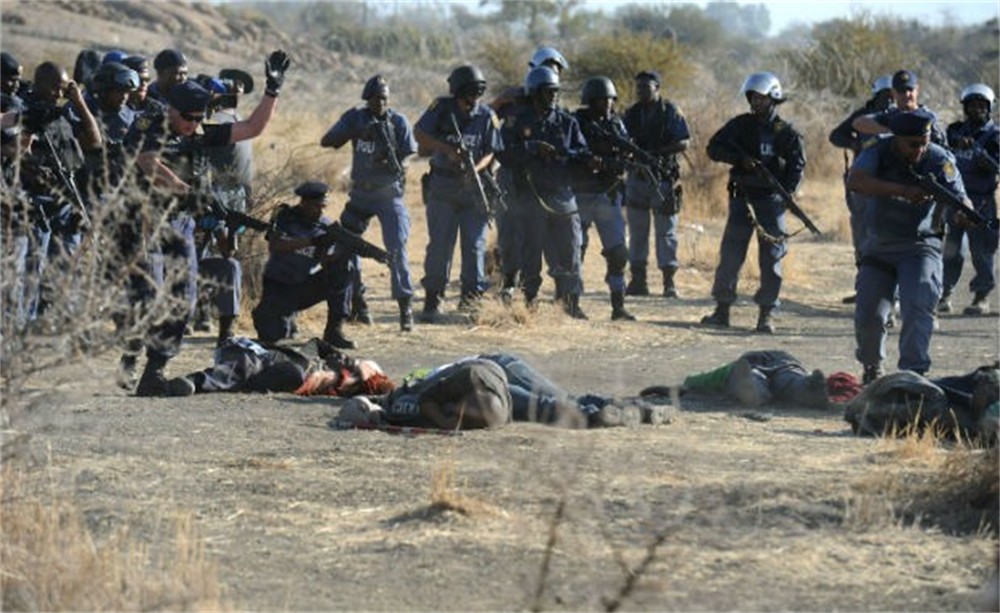
Justice Eludes South Africa Year After Marikana Massacre

"No one has been charged in the deaths of 34 people and the wounding of 78. A judicial inquiry into the violence has stalled because victims and their families can’t afford to pay for lawyers. Disputes continue over wages at the mine, where three days ago a female shop steward was shot dead."
assetto corsa mods

Urgent End Of Year Fundraising Campaign

Online donations are back! Keep independent media alive. 

Due to the attacks on our fiscal sponsor, we were unable to raise funds online for nearly two years.  As the bills pile up, your help is needed now to cover the monthly costs of operating Popular Resistance.

Urgent End Of Year Fundraising Campaign

Online donations are back! 

Keep independent media alive. 

Due to the attacks on our fiscal sponsor, we were unable to raise funds online for nearly two years.  As the bills pile up, your help is needed now to cover the monthly costs of operating Popular Resistance.

Sign Up To Our Daily Digest

Independent media outlets are being suppressed and dropped by corporations like Google, Facebook and Twitter. Sign up for our daily email digest before it’s too late so you don’t miss the latest movement news.