Skip to content

Privacy

New Snowden Documents Reveal NSA Can’t Hack Everyone

A new wave of U.S. National Security Agency (NSA) document leaks show the agency wasn’t able to spy on everyone thanks to some encryption tools several programs use that successfully thwart digital espionage. German magazine Der Spiegel reported the NSA couldn’t decipher communications such as emails and online chat messages from a handful of services that use encryption beyond the NSA’s code-cracking abilities, based on documents obtained from former NSA contractor and whistleblower Edward Snowden in 2013. Der Spiegel recently analyzed NSA documents Snowden previously released to news outlets in 2013. “[U]biquitous encryption on the Internet is a major threat to NSA’s ability to prosecute digital-network intelligence (DNI) traffic or defeat adversary malware,” an NSA employee said in an internal training document from 2012.

Hello Censorship If Secret TISA Pact Is Approved

Internet privacy and net neutrality would become things of the past if the secret Trade In Services Agreement comes to fruition. And on this one, the secrecy exceeds even that shrouding the two better-known corporate giveaways, the Trans-Pacific and Transatlantic partnerships. Yet another tentacle in the octopus of multi-national corporations’ attempt to achieve dictatorial control, the Trade In Services Agreement (TISA) is intended to eliminate government regulations in the “professional services” such as accounting and engineering but goes well beyond that, proposing sweeping de-regulation of the Internet and the financial industry. Another snippet of TISA’s text has been leaked, this time by the freedom-of-information organization Associated Whistleblowing Press.

Billion Dollar Surveillance Blimp To Launch Over Maryland

In just a few days, the Army will launch the first of two massive blimps over Maryland, the last gasp of an 18-year-long $2.8-billion Army project intended to use giant airships to defend against cruise missiles. And while the blimps may never stave off a barrage of enemy missiles, their ability to spot and track cars, trucks and boats hundreds of miles away is raising serious privacy concerns. The project is called JLENS – or “Joint Land Attack Cruise Missile Defense Elevated Netted Sensor System.” And you couldn’t come up with a better metaphor for wildly inflated defense contracts, a ponderous Pentagon bureaucracy, and the U.S. surveillance leviathan all in one.

Exposing The FBI

The Burglary tells the story of how, on March 8, 1971, in the midst of the Vietnam War, eight peace activists broke into an FBI office in Media, Pennsylvania, in an effort to discover whether the FBI was working, illegally, to suppress American dissent. Spiriting away all the records in the FBI office, these daring men and women soon learned that this federal crime-fighting bureau was, indeed, engaging in a broad range of unlawful activities. They photocopied some of the most revealing documents and mailed them, in the name of the Citizens’ Commission to Investigate the FBI, to members of congress and the press. After receipt of these materials, Betty Medsger, a journalist at the Washington Post, wrote an article published in that newspaper that sparked a public outcry.

What It’s Like To Be the Target Of NYPD Surveillance

It was here, on this corner, on a Friday in the fall of 2013, that Thadeaus received confirmation of something he had long suspected: He was being watched — closely — by the NYPD. The police knew the names of all of the organizations to which he belonged, and had informants inside at least one of them. They knew he would sometimes moonlight as a DJ and dutifully noted which parties he attended, which events he played. He learned from a New York Times journalist that he was under surveillance. The NYPD, he was told, suspected Thadeaus may have been "the bicycle bomber" — a shadowy figure responsible for detonating a makeshift grenade outside a military recruiting center in the middle of Times Square in 2008. Their evidence was thin: They knew he sometimes hung out with other bicycling enthusiasts and activists, and that he was, at one time, the administrator of an anarchist blog that posted a news article about the Times Square bombing several hours after it occurred. . . . Shortly after filing their complaint, a few of the activists involved went out to a café with a retired FBI agent, a man who had gone undercover with right-wing militias during his time with the bureau. They asked him, as someone who had infiltrated and surveilled groups, how they might prevent it from happening to them, or at least identify the informants in their midst. His advice? Don't even try. The NYPD and the FBI, he told them, "have endless resources to create covers for themselves. You should just keep doing the work that you're doing, and don't try to get to the bottom of it, because it will waste your time, it will be a distraction, and it will destroy your organizations."

Global Survey: 83% Say Internet Access Should Be A Human Right

A survey of Internet users in 24 countries has found that 83% believe affordable access to the Internet should be a basic human right, according to the “CIGI-Ipsos Global Survey on Internet Security and Trust.” According to responses, two thirds of Internet users are more concerned today about online privacy than they were compared to one year ago (64%). When given a choice of various governance sources for the Internet, the majority (57%) chose multi-stakeholder model “of technology companies, engineers, non-governmental organizations and institutions that represent the interests and will of ordinary citizens, and governments.”

Digital Privacy: New Frontier Of Human Rights

The impact of mass, digitally-enabled state surveillance upon individuals’ privacy has been described as “the new frontier of human rights” by Member of the European Parliament, Claude Moraes, who was giving an annual lecture on behalf of the Centre for Research into Information, Surveillance and Privacy at the London School of Economics on Friday. Moraes is chair of the European Parliament’s Committee on Civil Liberties, Justice and Home Affairs (LIBE), which conducted an inquiry into electronic mass surveillance of European Union citizens last year, in the wake of Edward Snowden’s revelations about the NSA’s digital dragnets.

How The USA Freedom Act Failed On All Fronts

Last night, I’m sure many hardworking privacy activists in the US poured a stiff drink after the Senate voted not to advance the USA Freedom Act, a bill intended to to reform some aspects of the US surveillance state. Personally, I was relieved. As the campaign director of an organisation that’s been fighting government data collection since before anyone had heard the name Edward Snowden, I have a little bit of insight into why the USA Freedom Act was narrowly defeated last night. Spoiler: It wasn’t ISIS. It wasn’t Republican hawkishness. It wasn’t even the Democrat’s cowardice. The USA Freedom Act failed because it was a weak reform bill that didn’t accomplish enough good to excite a grassroots base that would fight for it and ensure victory. You don’t have to be a political junkie or a policy wonk to know that getting a good law passed in this US Congress is nigh on impossible.

Why The World Needs Anonymous

Anonymous may strike a reader as unique, but its efforts represent just the latest in experimentation with anonymous speech as a conduit for political expression. Anonymous expression has been foundational to our political culture, characterizing monumental declarations like the Federalist Papers, and the Supreme Court has repeatedly granted anonymous speech First Amendment protection. The actions of this group are also important because anonymity remains important to us all. Universally enforcing disclosure of real identities online would limit the possibilities for whistle-blowing and voicing unpopular beliefs—processes essential to any vibrant democracy. And just as anonymity can engender disruptive and antisocial behavior such as trolling, it can provide a means of pushing back against increased surveillance.

Verizon’s Undeletable ‘Supercookies’ Track Users’ Web Activities

The profits made by Google and Facebook from trading users’ choices and habits to ad companies are prompting other communication giants such as Verizon, to collect data on their customers, mostly without their knowledge. Verizon Wireless has been actively implementing its new advertising program called Precision Market Insights (reportedly started in 2012), which tracks web activities of approximately 106 million Verizon customers when they are web surfing from portable devices, the Electronic Frontier Foundation reports. The tracker registers which sites people visit and how much time they spend there, and even what apps they use on their smartphones and how exactly. The most interesting is the way Verizon collects the valuable data – by forcibly installing “perma-cookies” that track people’s activities on the web on personal devices, reports Wired.

How Whisper App Tracks ‘Anonymous’ Users

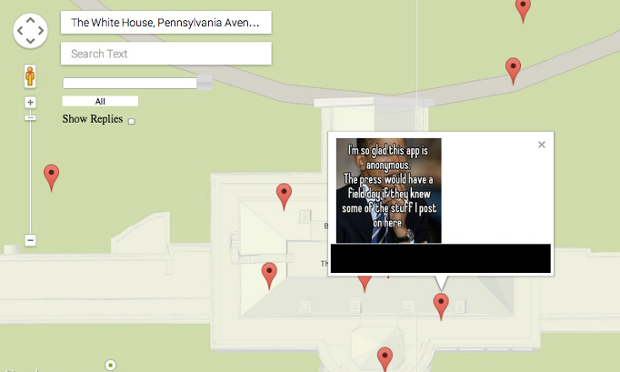
The company behind Whisper, the social media app that promises users anonymity and claims to be “the safest place on the internet”, is tracking the location of its users, including some who have specifically asked not to be followed. The practice of monitoring the whereabouts of Whisper users – including those who have expressly opted out of geolocation services – will alarm users, who are encouraged to disclose intimate details about their private and professional lives. Whisper is also sharing information with the US Department of Defense gleaned from smartphones it knows are used from military bases, and developing a version of its app to conform with Chinese censorship laws. The US version of the app, which enables users to publish short messages superimposed over photographs or other images, has attracted millions of users, and is proving especially popular among military personnel who are using the service to make confessions they would be unlikely to publish on Facebook or Twitter.

DC Police Using ‘Stingray’ Cell Phone Tracking Tool

An inherent attribute of how this technology functions is that it sweeps in information about large numbers of innocent bystanders even when police are trying to track the location of a particular suspect. If the MPD is driving around DC with Stingray devices, it is likely capturing information about the locations and movements of members of Congress, cabinet members, federal law enforcement agents, and Homeland Security personnel, consular staff, and foreign dignitaries, and all of the other people who congregate in the District…. If cell phone calls of congressional staff, White House aides, or even members of Congress are being disconnected, dropped, or blocked by MPD Stingrays, that's a particularly sensitive and troublesome problem. Wessler said the Fourth Amendment rights of tens of thousands of DC residents are likely violated whenever DC police uses Stingray, which sends out a more powerful signal than a cell tower and forces all mobile devices to report back serial numbers and locations.

Facebook Tells DEA To Stop Fake Profile Pages

Facebook wants assurances from the Drug Enforcement Administration that it's not operating any more fake profile pages as part of ongoing investigations. Facebook's chief security officer, Joe Sullivan, said in a letter Friday to DEA Administrator Michele Leonhart that law enforcement agencies need to follow the same rules about being truthful on Facebook as civilian users. Those rules include a ban on lying about who you are. Sullivan's letter was in response to a New York woman's federal lawsuit claiming that a DEA agent created a fake online persona using her name and photographs stored on her cellphone. In court filings, Sondra Arquiett said her pictures were retrieved from her cellphone after she was arrested in July 2010 on drug charges and her cellphone seized.

Students Sue Google For Monitoring Their Emails

In a challenge to one of Google's more controversial practices, a group of students in California are suing Google, claiming that the company's monitoring of Gmail violates federal and state privacy laws. The U.S. District Court for the Northern District of California is currently hearing the complaint from nine students whose emails were subject to Google surveillance because Gmail is a component of Apps for Education. Apps for Education is a suite of free, web-based education tools that has some 30 million users worldwide, most of whom are students under 18 exposed to the software via their schools. A Google rep told Education Week that the company scans and indexes emails from all Apps for Education users. The company uses the data for potential advertising, among other purposes.

FBI To Enlist Local Police In Mass DNA Collection

Remember that time the Supreme Court ruled that our DNA is basically just like our fingerprints, and cops can snatch it from us subsequent to arrest? Remember the giant biometrics project the FBI has been spending at least a billion dollars of our money building (with many of the details kept secret), called 'Next Generation Identification'? With those powers and monies combined, the FBI this week announced its plans "to accelerate the collection of DNA profiles for the government's massive new biometric identification database." Like with other biometrics collection schemes, the FBI aims to get local police to do the groundwork. What could go wrong?
assetto corsa mods

Urgent End Of Year Fundraising Campaign

Online donations are back! Keep independent media alive. 

Due to the attacks on our fiscal sponsor, we were unable to raise funds online for nearly two years.  As the bills pile up, your help is needed now to cover the monthly costs of operating Popular Resistance.

Urgent End Of Year Fundraising Campaign

Online donations are back! 

Keep independent media alive. 

Due to the attacks on our fiscal sponsor, we were unable to raise funds online for nearly two years.  As the bills pile up, your help is needed now to cover the monthly costs of operating Popular Resistance.

Sign Up To Our Daily Digest

Independent media outlets are being suppressed and dropped by corporations like Google, Facebook and Twitter. Sign up for our daily email digest before it’s too late so you don’t miss the latest movement news.