Skip to content

Surveillance

Billion Dollar Surveillance Blimp To Launch Over Maryland

In just a few days, the Army will launch the first of two massive blimps over Maryland, the last gasp of an 18-year-long $2.8-billion Army project intended to use giant airships to defend against cruise missiles. And while the blimps may never stave off a barrage of enemy missiles, their ability to spot and track cars, trucks and boats hundreds of miles away is raising serious privacy concerns. The project is called JLENS – or “Joint Land Attack Cruise Missile Defense Elevated Netted Sensor System.” And you couldn’t come up with a better metaphor for wildly inflated defense contracts, a ponderous Pentagon bureaucracy, and the U.S. surveillance leviathan all in one.

Exposing The FBI

The Burglary tells the story of how, on March 8, 1971, in the midst of the Vietnam War, eight peace activists broke into an FBI office in Media, Pennsylvania, in an effort to discover whether the FBI was working, illegally, to suppress American dissent. Spiriting away all the records in the FBI office, these daring men and women soon learned that this federal crime-fighting bureau was, indeed, engaging in a broad range of unlawful activities. They photocopied some of the most revealing documents and mailed them, in the name of the Citizens’ Commission to Investigate the FBI, to members of congress and the press. After receipt of these materials, Betty Medsger, a journalist at the Washington Post, wrote an article published in that newspaper that sparked a public outcry.

Penn Student Questioned In Dorm By Police Over Ferguson Posts

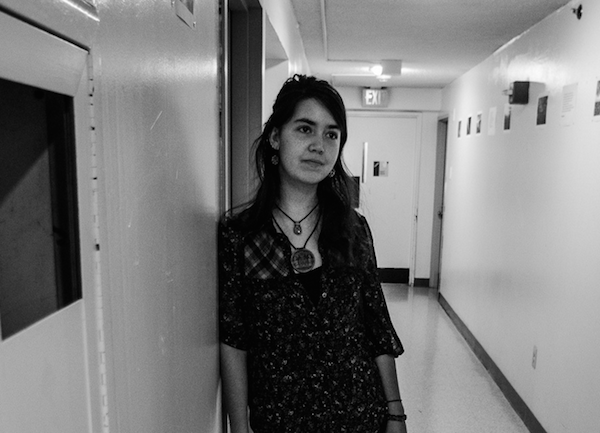
Recent organizing and demonstrations around the issue of police accountability in Philly, set in motion by grand jury decisions in Ferguson, MO and Staten Island, NY not to indict police officers who gunned down unarmed African American men, have taken a new, though rather historically familiar, twist. Laura Krasovitzky, a University of Pennsylvania student organizer, tells The Declaration that she was visited on the morning of December 8th by a Philadelphia Police Department detective, who she soon learned was in the Homeland Security Bureau, asking about posts in a Facebook group.

Congress Just Quickly And Quietly Expanded NSA Spying Powers

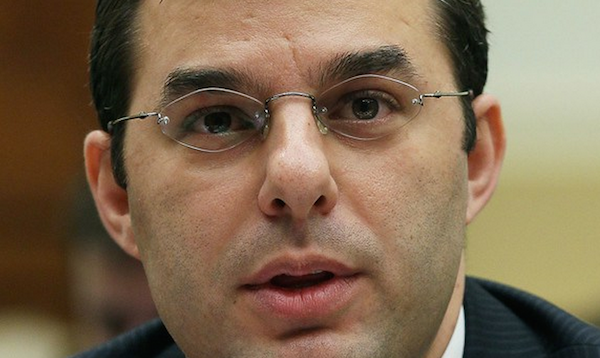
Congress just significantly increased the spying power of the National Security Agency without anyone really noticing. That is, with the exception of civil liberties and privacy hawk Rep. Justin Amash (R-Mich.). Reported National Journal: Congress this week quietly passed a bill that may give unprecedented legal authority to the government’s warrantless surveillance powers, despite a last-minute effort by Rep. Justin Amash to kill the bill. Amash staged an aggressive eleventh-hour rally Wednesday night to block passage of the Intelligence Authorization Act, which will fund intelligence agencies for the next fiscal year.

Homeland Security Agencies Exempted From Racial Profiling Rules

Key security agencies in the United States are expected to be exempted from new Justice Department rules announced by President Barack Obama’s administration to reduce racial profiling by federal law enforcement. The exemptions will permit Homeland Security agencies, including the Transportation Security Administration (TSA), Immigration and Customs Enforcement (ICE) and Customs and Border Protection (CBP), to continue to use racial profiling, according to The Washington Post. With the militarization and expansion of the region, which the US government considers the “border,” this means, as journalist Todd Miller has highlighted, 197 million Americans or 66 percent of Americans, who live “within the jurisdiction of US Customs and Border Patrol,” will not be protected from racial profiling.

Undercover Cops Busted At Anti-Police Brutality Protest

Have you ever been to a protest and wondered who the new, overly-zealous guy is? In activist circles, it’s pretty common for people to travel to neighboring cities, or even states for important rallies. But the circles are small, and someone usually knowns a person or two in common, even with people they just met. Sometimes, your gut is steering you right, and it’s not your imagination, nor being overly-suspicious: the new guy might just be an undercover cop. Now on the surface, the joke seems to be on the undercover officers. There is nothing illegal about protesting police brutality, or anything else really. So why would they waste their time going undercover as protesters?

Snowden Wins Swedish Human Rights Award

Whistleblower Edward Snowden received several standing ovations in the Swedish parliament after being given the Right Livelihood award for his revelations of the scale of state surveillance. Snowden, who is in exile in Russia, addressed the parliament by video from Moscow. In a symbolic gesture, his family and supporters said no one picked up the award on his behalf in the hope that one day he might be free to travel toSweden to receive it in person. His father, Lon, who was in the chamber for what was an emotional ceremony, said: “I am thankful for the support of the Right Livelihood award and the Swedish parliament. The award will remain here in expectation that some time – sooner or later – he will come to Stockholm to accept the award.” Snowden is wanted by the US on charges under the Espionage Act. His chances of a deal with the US justice department that would allow him to return home are slim and he may end up spending the rest of his days in Russia. His supporters hope that a west European country such as Sweden might grant him asylum. Members of the Green party called for him to be given sanctuary in Sweden.

What It’s Like To Be the Target Of NYPD Surveillance

It was here, on this corner, on a Friday in the fall of 2013, that Thadeaus received confirmation of something he had long suspected: He was being watched — closely — by the NYPD. The police knew the names of all of the organizations to which he belonged, and had informants inside at least one of them. They knew he would sometimes moonlight as a DJ and dutifully noted which parties he attended, which events he played. He learned from a New York Times journalist that he was under surveillance. The NYPD, he was told, suspected Thadeaus may have been "the bicycle bomber" — a shadowy figure responsible for detonating a makeshift grenade outside a military recruiting center in the middle of Times Square in 2008. Their evidence was thin: They knew he sometimes hung out with other bicycling enthusiasts and activists, and that he was, at one time, the administrator of an anarchist blog that posted a news article about the Times Square bombing several hours after it occurred. . . . Shortly after filing their complaint, a few of the activists involved went out to a café with a retired FBI agent, a man who had gone undercover with right-wing militias during his time with the bureau. They asked him, as someone who had infiltrated and surveilled groups, how they might prevent it from happening to them, or at least identify the informants in their midst. His advice? Don't even try. The NYPD and the FBI, he told them, "have endless resources to create covers for themselves. You should just keep doing the work that you're doing, and don't try to get to the bottom of it, because it will waste your time, it will be a distraction, and it will destroy your organizations."

All My Heroes Have FBI Files

Here are some of the people who have been targeted with an FBI and Grand Jury investigation allegedly related to providing “material support” to a foreign terrorist organization. Nine of the activists are trade unionists – founding members, officers, staff, member activists, and leaders in AFSCME, SEIU and Teamsters union locals. They are antiwar activists. The activists subpoenaed include 17 women and 6 men, ranging in age from early 20s to 71. Eight are parents of young children ranging in age from 18 months to 6 years of age. One is a great-grandmother. They are workers – including teachers, clerical workers, and cooks. They are mothers, fathers and community organizers.

Global Survey: 83% Say Internet Access Should Be A Human Right

A survey of Internet users in 24 countries has found that 83% believe affordable access to the Internet should be a basic human right, according to the “CIGI-Ipsos Global Survey on Internet Security and Trust.” According to responses, two thirds of Internet users are more concerned today about online privacy than they were compared to one year ago (64%). When given a choice of various governance sources for the Internet, the majority (57%) chose multi-stakeholder model “of technology companies, engineers, non-governmental organizations and institutions that represent the interests and will of ordinary citizens, and governments.”

Digital Privacy: New Frontier Of Human Rights

The impact of mass, digitally-enabled state surveillance upon individuals’ privacy has been described as “the new frontier of human rights” by Member of the European Parliament, Claude Moraes, who was giving an annual lecture on behalf of the Centre for Research into Information, Surveillance and Privacy at the London School of Economics on Friday. Moraes is chair of the European Parliament’s Committee on Civil Liberties, Justice and Home Affairs (LIBE), which conducted an inquiry into electronic mass surveillance of European Union citizens last year, in the wake of Edward Snowden’s revelations about the NSA’s digital dragnets.

How The USA Freedom Act Failed On All Fronts

Last night, I’m sure many hardworking privacy activists in the US poured a stiff drink after the Senate voted not to advance the USA Freedom Act, a bill intended to to reform some aspects of the US surveillance state. Personally, I was relieved. As the campaign director of an organisation that’s been fighting government data collection since before anyone had heard the name Edward Snowden, I have a little bit of insight into why the USA Freedom Act was narrowly defeated last night. Spoiler: It wasn’t ISIS. It wasn’t Republican hawkishness. It wasn’t even the Democrat’s cowardice. The USA Freedom Act failed because it was a weak reform bill that didn’t accomplish enough good to excite a grassroots base that would fight for it and ensure victory. You don’t have to be a political junkie or a policy wonk to know that getting a good law passed in this US Congress is nigh on impossible.

Streaming Video Drones Will Change Protests

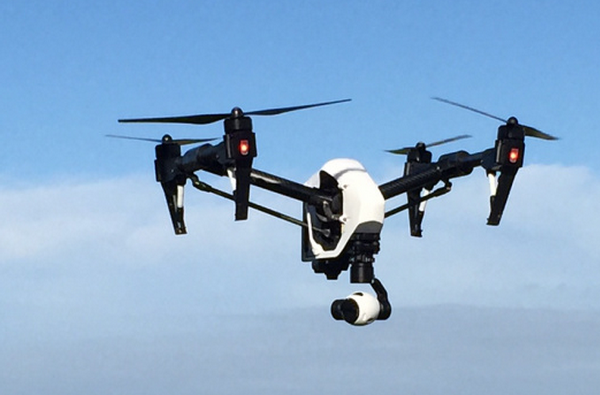
Camera-equipped drones are everywhere these days. You can see them on the weekends in San Francisco’s Dolores Park, buzzing high up above picnickers and Frisbee throwers. (You can even rent them by the day, from a company like Photojojo.) At my college reunion last summer, my classmates watched in awe as a $500 DJI Phantom drone zipped over the crowd, shooting still photos and video with the GoPro attached to its underside. Easy-to-fly photo drones are becoming cheaper every day. Parrot sells a line of sub-$500 mini-drones, and the auto-flight features on 3D Robotics’ $750 IRIS+ drone have made it a favorite of hobbyists. But despite the growing low-end drone market, there still isn’t a good mid-range option for those who want to use a drone for professional-quality TV and film production, but don’t have the budget for a $50,000 custom rig. That’s about to change.

Why the World Needs Anonymous

Anonymous may strike a reader as unique, but its efforts represent just the latest in experimentation with anonymous speech as a conduit for political expression. Anonymous expression has been foundational to our political culture, characterizing monumental declarations like the Federalist Papers, and the Supreme Court has repeatedly granted anonymous speech First Amendment protection. The actions of this group are also important because anonymity remains important to us all. Universally enforcing disclosure of real identities online would limit the possibilities for whistle-blowing and voicing unpopular beliefs—processes essential to any vibrant democracy. And just as anonymity can engender disruptive and antisocial behavior such as trolling, it can provide a means of pushing back against increased surveillance.

Why The World Needs Anonymous

Anonymous may strike a reader as unique, but its efforts represent just the latest in experimentation with anonymous speech as a conduit for political expression. Anonymous expression has been foundational to our political culture, characterizing monumental declarations like the Federalist Papers, and the Supreme Court has repeatedly granted anonymous speech First Amendment protection. The actions of this group are also important because anonymity remains important to us all. Universally enforcing disclosure of real identities online would limit the possibilities for whistle-blowing and voicing unpopular beliefs—processes essential to any vibrant democracy. And just as anonymity can engender disruptive and antisocial behavior such as trolling, it can provide a means of pushing back against increased surveillance.
assetto corsa mods

Urgent End Of Year Fundraising Campaign

Online donations are back! Keep independent media alive. 

Due to the attacks on our fiscal sponsor, we were unable to raise funds online for nearly two years.  As the bills pile up, your help is needed now to cover the monthly costs of operating Popular Resistance.

Urgent End Of Year Fundraising Campaign

Online donations are back! 

Keep independent media alive. 

Due to the attacks on our fiscal sponsor, we were unable to raise funds online for nearly two years.  As the bills pile up, your help is needed now to cover the monthly costs of operating Popular Resistance.

Sign Up To Our Daily Digest

Independent media outlets are being suppressed and dropped by corporations like Google, Facebook and Twitter. Sign up for our daily email digest before it’s too late so you don’t miss the latest movement news.