Skip to content

Veterans Administration

About The Lincoln Declaration

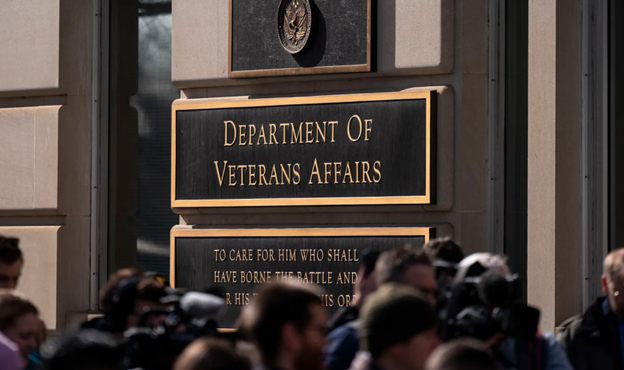
Early on the morning of Wednesday September 25th, a group of courageous physicians and other healthcare workers who have devoted their careers to the care of the nation’s veterans sent a letter of concern and protest to the Secretary of the Department of Veterans Affairs, the VA’s Inspector General and key members of Congress like those who serve on the Senate and House Committees for Veterans Affairs. The letter, which was signed by over 170 VA staff – some who put their names down and some who signed anonymously – was titled “The Lincoln Declaration: a Letter of Concern about the Future of Veterans’ Healthcare.” It’s title was taken– as is the VA’s mission –from Abraham Lincoln’s Second Inaugural Address when, towards the end of the Civil War he promised that the nation would “care for those who shall have borne the battle and for his widow and his orphan.”

The False Promises Of VA Privatization

James Jones is a 54-year-old disabled Army veteran. After four years of active duty—some of it in the Gulf War—and four years in the reserves, Jones says he has a “multitude” of health care problems. Ask him to list his health care needs and he sighs and reels off a long list. “Oh my, I have a multitude of stuff. There’s PTSD [post-traumatic stress disorder], a right arm injury, my right shoulder, chronic rhinitis from toxic exposure during the Gulf War, dental. It all adds up,” he says, laughing, “to a 100% disability rating in VA math.” That’s why he depends on the services provided by the health care system—the nation’s largest—run by the Department of Veterans Affairs (VA). Jones is also one of the hundreds of thousands of disabled veterans who work for the federal government, in his case the National Park Service. Plus, he’s one of the 25% of vets who live in a rural area like Wakauga County, North Carolina.

Most (But Not All) VA Workers Lose Union Bargaining Rights

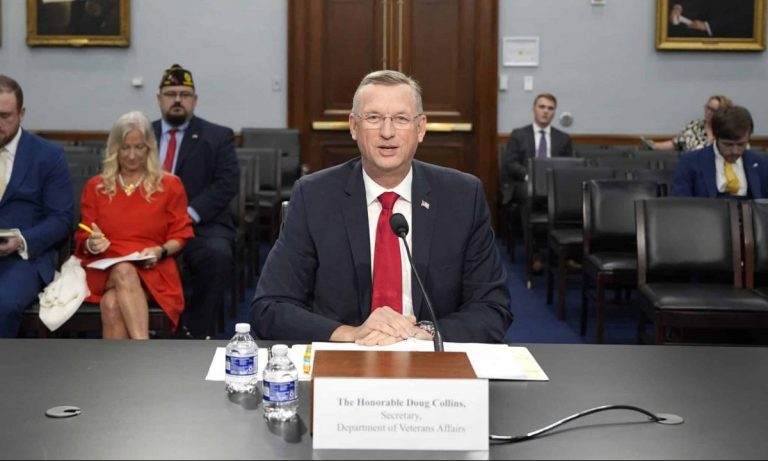
When President Trump’s cabinet picks trooped up to Capitol Hill earlier this year for Senate confirmation hearings, hardly any boasted about their past union connections. But Secretary of Veterans Affairs Doug Collins did. He helped win broad bipartisan approval for his nomination from a Senate Veterans Affairs Committee (SVAC) that includes Bernie Sanders (I-VT) by mentioning that he belonged to the United Food and Commercial workers, while working for five years at a Georgia grocery store chain. Said Collins: “I believe that the employees of the VA, whether they’re union or not, are very valuable and I respect that… I get the issue.”

How Trump’S 21st Century Version Of Fiscal Forestry Will Harm VA Care

In his brilliant book, Seeing Like a State: How Certain Schemes to Improve the Human Condition Have Failed, James C. Scott, warned of projects “driven by utopian plans and authoritarian disregard for the values, desires, and objections of their subjects.” Although the Yale Professor of Political Science and Anthropology, who died last year, wrote Seeing Like a State in 1998, his message is more important than ever as Donald Trump and his allies try to destroy and privatize the VA healthcare system and other government services. Like the other authoritarian schemers that Scott analyzes, Trump, Elon Musk and their faithful servant, VA Secretary Doug Collins view the world through a narrow lens that ignores the “far more complex and unwieldly reality” in which human beings live their lives and, in the case of the VA, experience health and illness.

Who’s Fighting Back (And Not) Against Cuts in Veteran’s Administration

Among the Republican voters experiencing buyer’s remorse are more than a few military veterans who chose Trump over Harris by a margin of 65 to 34%, according to some exit polls. Their shock and dismay surfaced in DC this month during the legislative conference of the reliably conservative and hawkish Veterans of Foreign Wars (VFW), which has 1.4 million members. In the run-up to that annual event, VFW national commander Al Lipphardt, urged his members to “march forth” and “engage with lawmakers” to “stop the bleeding” at the Department of Veterans Affairs (VA).

Local Veterans, Workers Call Out Union Busting At VA

Local veterans and union members who staff the Minneapolis VA Hospital have been publicly calling out the Trump administration in recent months for understaffing in VA facilities and a string of attacks on VA workers’ rights. Members of the American Federation of Government Employees, which represents about 260,000 VA workers, have rallied and demonstrated relentlessly at the busy intersection of Hiawatha Avenue and Highway 62, near the hospital. Their events are drawing support from activists in the Minnesota chapter of Veterans for Peace.

As The Veteran Suicide Crisis Persists, Washington Turns To Snake Oil And Swamp Creatures

In mid-August, former Veterans Affairs (VA) Secretary Anthony Principi (2001-2005) worked to get a number of fellow former VA chiefs to sign on to a draft Op-Ed encouraging the House to take up a Senate-passed suicide prevention bill —S. 785: The Commander John Scott Hannon Veterans Mental Health Care Improvement Act. The seemingly innocuous legislation actually represents a major step towards privatizing veterans’ mental health care.  It will give the VA Secretary broad authority to award $174 million in grants up to $750,000 in size to private sector programs that ostensibly enhance veterans’ mental health and reduce veteran suicide.

A Better Health Care System?

Suzanne Gordon, a longtime health care reporter and author of Wounds of War: How the VA Delivers Health, Healing, and Hope to the Nation’s Veterans, says the VA “outperforms the private sector with one hand tied behind its back.”   The VA delivers health care to around nine million veterans each year at more than 1,200 sites across the country. In Wounds of War, Gordon described the VA as resembling “the health care systems of almost all other industrialized nations: a full-service health care system that both pays for and delivers all types of care to those it serves.” The VA’s health care providers are salaried, rather than paid by the service, meaning they can actually spend time with their patients, and its integrated system cares for the whole patient, from when they leave the military to end-of-life care. This makes the VA uniquely invested in keeping its patients well.

How Profit And Incompetence Delayed N95 Masks While People Died

Before embarking on a 36-hour tour through an underground of contractors and middlemen trying to make a buck on the nation’s desperate need for masks, entrepreneur Robert Stewart Jr. offered an unusual caveat. “I’m talking with you against the advice of my attorney,” the man in the shiny gray suit, an American Flag button with the word “VETERAN” pinned to his blazer, said as we boarded a private jet Saturday from the executive wing at Dulles International Airport. It remains a mystery why the CEO of Federal Government Experts LLC let me observe his frantic effort to find 6 million N95 respirators and the ultimate unraveling of his $34.5 million deal to supply them to the Department of Veterans Affairs hospitals, where 20 VA staff have died of COVID-19 while the agency waits for masks.

VA Privatization Leaves Veterans Waist Deep In Another Big Muddy

Two years ago, President Trump persuaded a bipartisan coalition in Congress to pass the VA MISSION Act of 2018. It authorized a costly expansion of outsourcing by the Department of Veterans Affairs (VA), which provides healthcare for nine million former military personnel. Under the guise of giving VA patients more “choice” and speeding up their doctor appointments and hospital treatment, the Trump Administration has spent hundreds of millions of dollars on private sector providers, while refusing to fill an estimated 44,000 to 50,000 vacancies among VA caregivers.
assetto corsa mods

Urgent End Of Year Fundraising Campaign

Online donations are back! Keep independent media alive. 

Due to the attacks on our fiscal sponsor, we were unable to raise funds online for nearly two years.  As the bills pile up, your help is needed now to cover the monthly costs of operating Popular Resistance.

Urgent End Of Year Fundraising Campaign

Online donations are back! 

Keep independent media alive. 

Due to the attacks on our fiscal sponsor, we were unable to raise funds online for nearly two years.  As the bills pile up, your help is needed now to cover the monthly costs of operating Popular Resistance.

Sign Up To Our Daily Digest

Independent media outlets are being suppressed and dropped by corporations like Google, Facebook and Twitter. Sign up for our daily email digest before it’s too late so you don’t miss the latest movement news.